 Coach
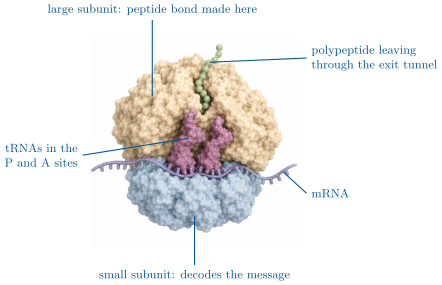
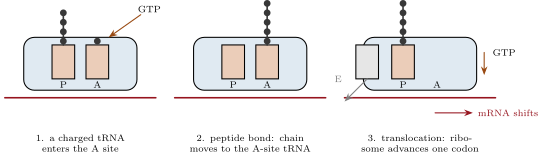
CoachThe ribosome is a particle of two subunits, each of ribosomal RNA and proteins (in bacteria: a small 30S subunit and a large 50S subunit, together 70S, ; eukaryotic ribosomes are larger, 80S). The small subunit binds the messenger and decodes it; the large subunit holds the tRNAs and forms the peptide bond — the catalyst is the ribosomal RNA itself. Three tRNA sites span both subunits: A (aminoacyl, where the next charged tRNA enters), P (peptidyl, holding the growing chain), E (exit).
Examples
Example 19.12 (The numbers of a cell)
A growing E. coli holds some ribosomes, each adding twenty residues a second: residues a second, a million proteins of residues in an hour — its own content, which is what doubling every hour requires. Half its energy goes to protein synthesis. A liver cell holds ten million ribosomes and makes proteins for weeks of use rather than for division; a plasma cell, secreting antibody, devotes nearly all of them to one protein and pours out two thousand molecules a second.