University Biology — Year 2 · Bachelor Year 2
3Mutations and Genome Diversification
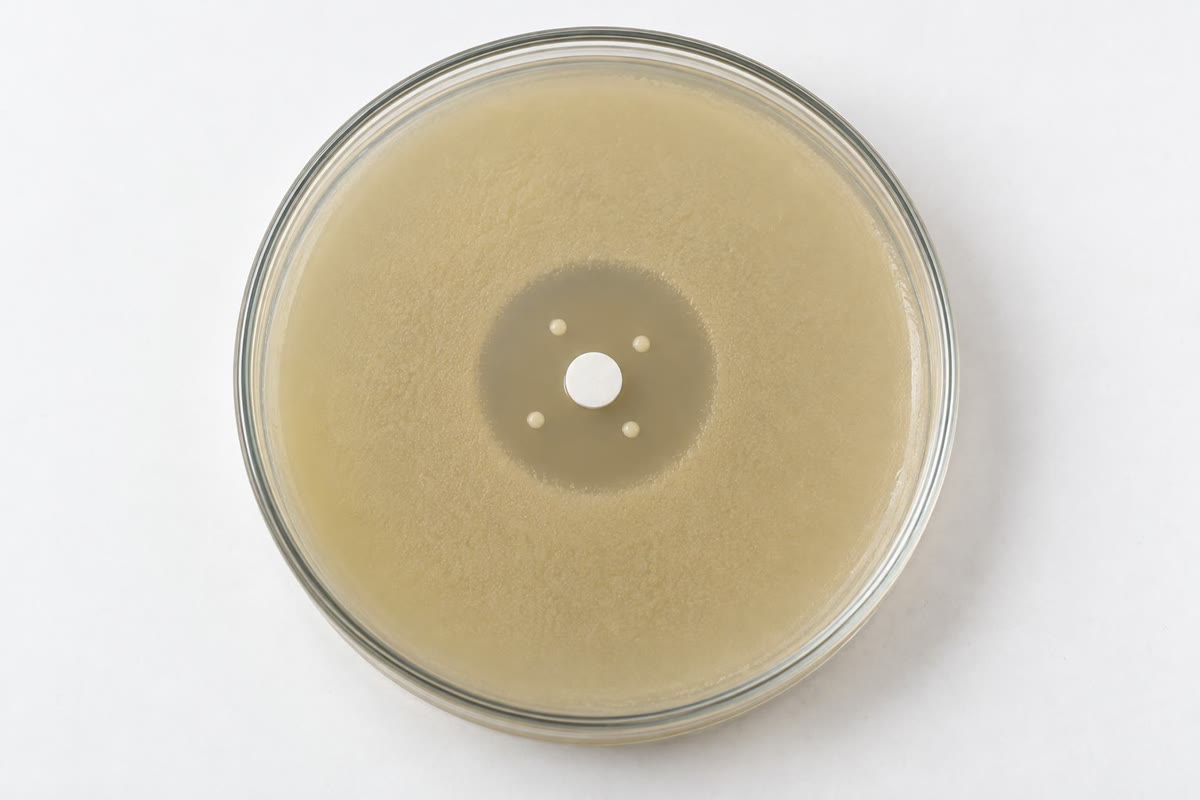
Spread a billion bacteria on a plate laced with an antibiotic and, the next morning, a handful of colonies have grown. Did the drug teach those cells to resist it, or were they already resistant before they met it? The question sounds philosophical and was settled by an experiment of great elegance in 1943: the resistant cells were there beforehand, produced by mutations that happened at random, without regard to their usefulness. This chapter is about the sources of that variation — the copying errors, the chemical accidents, the jumping genes, the genes traded between cells, the duplications of genes and of whole genomes — and about how fast they run. Selection, which sorts the variation, is the subject of Chapter 22; here the subject is where the raw material comes from.
3.1 Mutations
Definition 3.1 (Mutation, and its kinds)
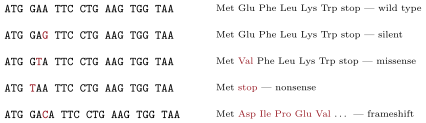
A mutation is a heritable change in the sequence of the genome. Point mutations change one or a few bases: a substitution replaces one base by another (a transition swaps purine for purine or pyrimidine for pyrimidine, AG or CT; a transversion swaps the classes); an insertion or deletion adds or removes bases. In a coding sequence a substitution is silent if the new codon specifies the same amino acid, missense if it specifies another, nonsense if it creates a stop; an insertion or deletion not a multiple of three shifts the reading frame (frameshift) and garbles every codon downstream. Chromosomal rearrangements move large segments: deletion, duplication, inversion, translocation between chromosomes. Genome mutations change the number of chromosomes: aneuploidy (one chromosome too many or too few, as in trisomy 21) and polyploidy (whole extra sets). A mutation in a somatic cell is inherited by that cell’s descendants only; a mutation in the germ line is inherited by the organism’s descendants, and only these matter for evolution.
Proposition 3.2 (Where mutations come from)
Three sources. Replication errors: DNA polymerase misplaces a base about once in ; its proofreading exonuclease removes most, leaving one in ; mismatch repair, which follows the replication fork and corrects the new strand against the old, brings the final error rate to about to per base per replication. Spontaneous chemistry: every day, in each human cell, some purines fall off their sugars (depurination) and a hundred cytosines lose an amino group (deamination, turning C into U, which pairs with A); both are repaired, but not always. Mutagens: ultraviolet light welds adjacent thymines into dimers; ionising radiation breaks strands; alkylating agents and nitrous acid alter bases; intercalating dyes slip between base pairs and cause frameshifts; oxygen radicals from respiration oxidise guanine. The rate per base is tiny; multiplied by the size of a genome and the number of cells, it is not.
Theorem 3.3 (Mutations per genome and per population)
If the mutation rate is per base pair per replication and the genome holds base pairs, each replication produces on average new mutations, and a population of cells produces per generation. For E. coli (, ): , so one cell in five hundred carries a new mutation — but a culture of cells makes two million per generation, and every one of the possible single-base changes arises somewhere in it every few generations. For a human ( per generation, per haploid set, two sets): each child carries about new mutations, one or two of them in coding sequence.
Proof. Each base is copied independently with probability of error, so the number of errors per genome copy is a sum of independent rare events, of mean (and approximately Poisson distributed). cells make copies. The human figure multiplies by for the diploid genome; the rate per generation is per generation, not per replication, because germ cells undergo many replications between fertilisation and the next. ∎
Theorem 3.4 (Mutants in a growing culture)
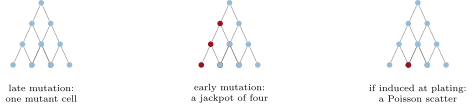
A culture grown from to cells, in which a given mutation occurs with probability at each cell division, contains at the end a mean number of mutation events , and a mean number of mutant cells
larger than the number of events because an early mutation founds a clone. The number of mutant cells varies enormously from culture to culture (rare early events give “jackpots”), whereas if the mutations were induced at plating, it would follow a Poisson law with variance equal to its mean. The fraction of cultures with no mutant at all is , which gives directly.
Proof. Growth from to cells takes divisions, each an opportunity for the mutation, so events occur in that interval; summing, events in all. A mutation occurring when the culture has cells founds a clone that grows in step with the culture and numbers cells at the end; the expected number of mutant cells is therefore . The events are rare and independent, so their number is Poisson with mean , and the probability of none is . ∎
Evidence. Luria and Delbrück (1943) grew twenty small cultures of E. coli from a few cells each, and in parallel took twenty samples from one large culture; they plated all forty with a bacteriophage that kills every sensitive cell and counted the resistant colonies. The samples from the single culture gave counts close to their mean, as a Poisson law predicts; the independent cultures gave counts of 0, 0, 1, 0, 3, 0, 107, 0, 5… — a variance many times the mean. Mutations to resistance had happened at random times before the cells met the phage, early ones producing jackpots. Lederberg and Lederberg (1952) confirmed it without ever exposing the selected cells to the agent: pressing a velvet pad on a plate and stamping copies, they found resistant colonies at the same positions on every replica, and isolated them from the untreated master plate. ∎
Proposition 3.5 (Repair, and its limits)
A cell corrects most damage before it becomes a mutation. Mismatch repair removes the wrong base from the newly made strand. Base excision repair cuts out a single damaged base (a uracil, an oxidised guanine) and fills the gap; it is why DNA uses thymine rather than uracil: a uracil in DNA can only be a deaminated cytosine, and is recognised as foreign. Nucleotide excision repair removes a stretch of a dozen bases around a bulky lesion such as a thymine dimer; people lacking it (xeroderma pigmentosum) develop skin cancers from ordinary sunlight. Recombinational repair rebuilds a broken chromosome from its sister copy. What escapes repair, or is repaired wrongly, is a mutation — and a cell that has lost a repair system (a mutator) mutates a hundred times faster, which is a short-term advantage under stress and a long-term burden. Repair mechanisms are treated in depth in the Year 3 volume.
3.2 Genes that move
Definition 3.6 (Transposable elements)
A transposable element is a DNA segment that can move to a new position in the genome. DNA transposons encode a transposase that cuts the element out and pastes it elsewhere (or copies it there); bacterial insertion sequences are the simplest (a transposase gene between two inverted repeats), and composite transposons carry extra genes — often antibiotic resistances — between two of them. Retrotransposons move by a copy-and-paste route through an RNA intermediate, copied back into DNA by a reverse transcriptase; they never leave their old site and so accumulate. An element landing in a gene disrupts it; landing near one, it may alter its expression; two copies in one chromosome provide sites for unequal crossing-over. Transposons and their relics make up half of the human genome and eighty percent of the maize genome; most are now immobile.
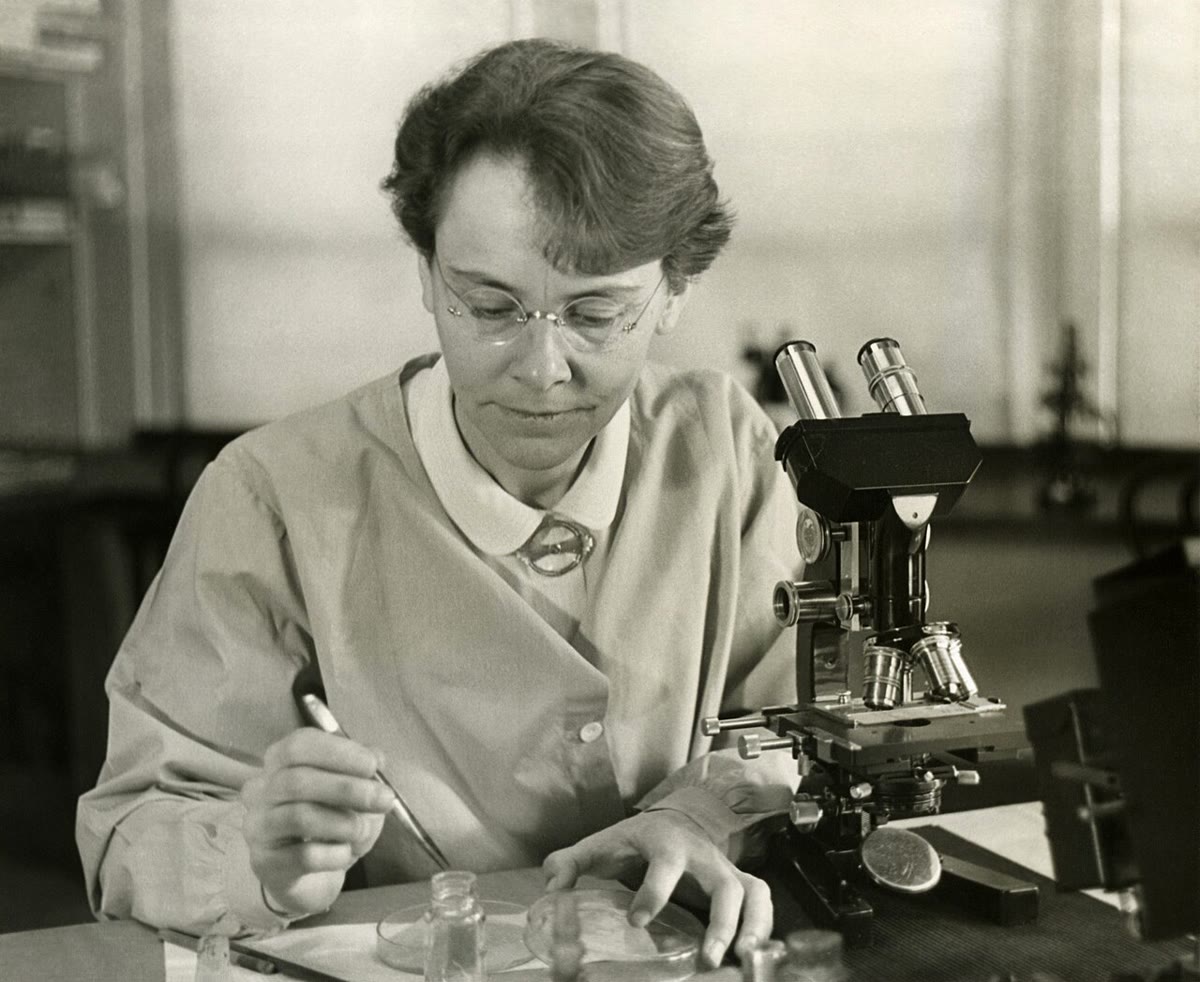
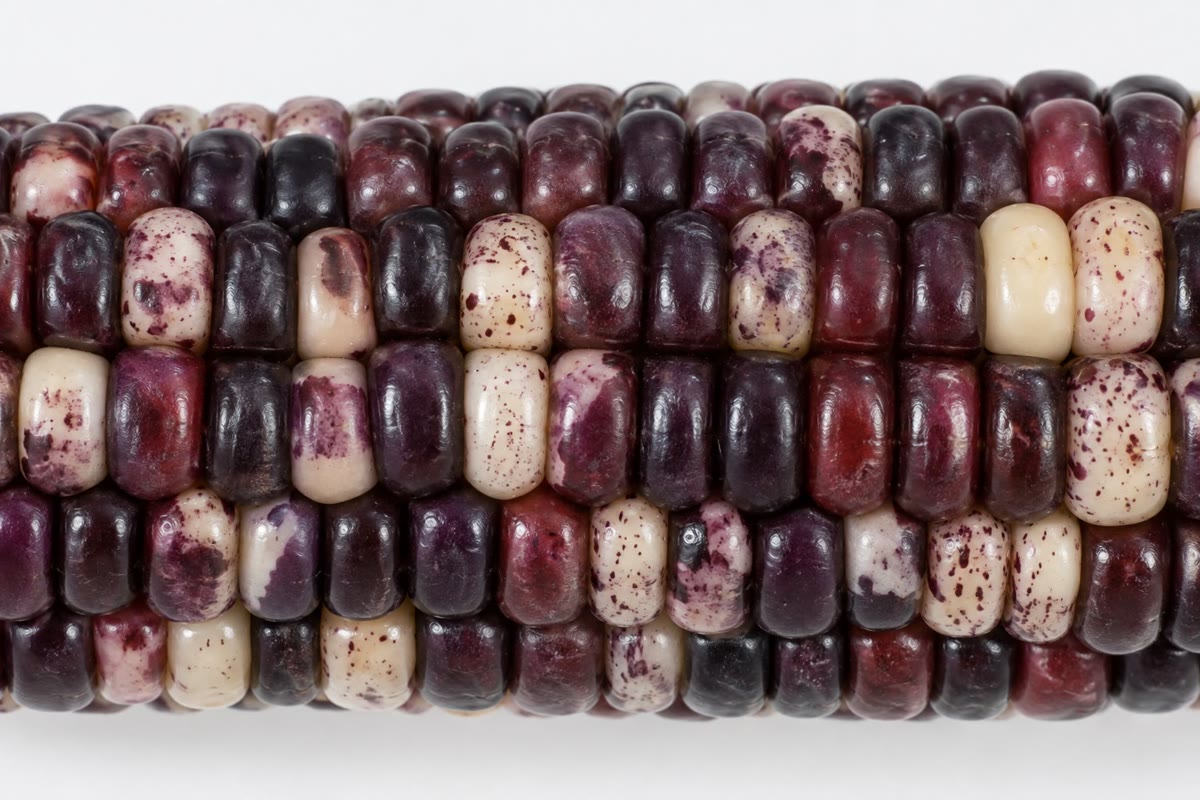
Evidence. McClintock (1940s–1950s) studied maize kernels whose purple pigment was lost in some cells and restored in others, giving speckled kernels. She showed by breeding and by chromosome observation that the instability was caused by an element (Dissociation) that broke the chromosome where it sat and moved between positions under the control of a second element (Activator), and that a gene was silenced when the element sat in it and reactivated when it left. Genes, she concluded, could change position; the idea was accepted only twenty years later, when bacterial insertion sequences were found, and earned her a Nobel Prize in 1983. ∎

Definition 3.7 (Horizontal gene transfer)
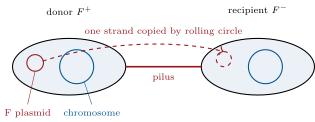
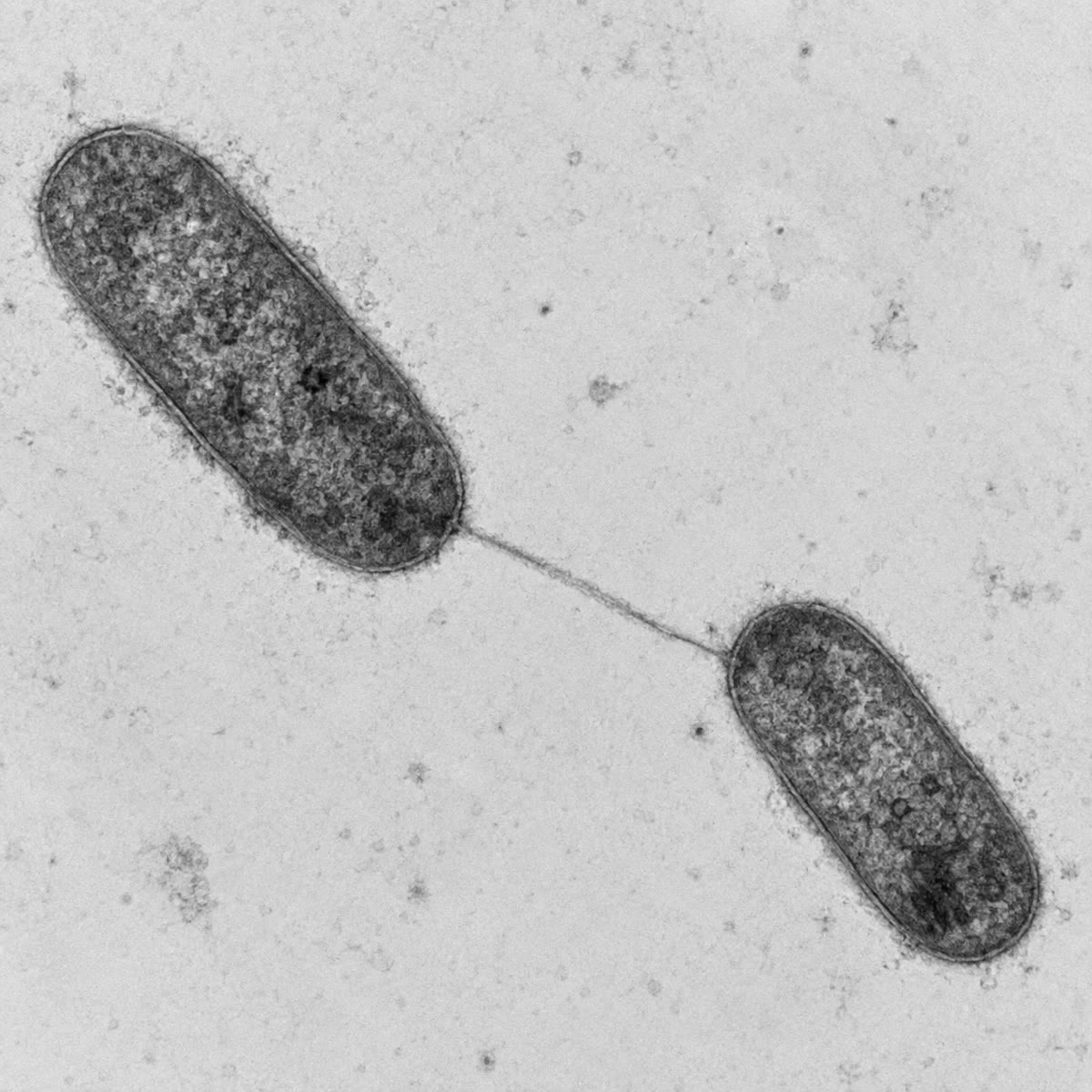
Prokaryotes acquire genes from cells that are not their parents by three routes. Transformation: a cell takes up naked DNA from its surroundings (released by dead cells) and recombines it into its chromosome; some species are naturally competent, and it is the route by which pneumococci exchange capsule genes. Conjugation: a donor carrying a conjugative plasmid (the F factor of E. coli) builds a pilus, draws a recipient close, and passes a single strand of the plasmid through a pore while replicating it by the rolling circle; if the plasmid has integrated into the chromosome (an Hfr strain), chromosomal genes are transferred in order behind it, and the time at which each enters maps the chromosome. Transduction: a bacteriophage packages a piece of host DNA by mistake and injects it into the next cell it infects. Together these routes move resistance genes between species within hospitals in years, and have moved metabolic genes across the whole bacterial tree over geological time, so that a prokaryote’s ancestry is a web as much as a tree (Chapter 24).
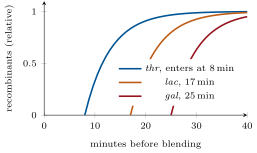
Evidence. Lederberg and Tatum (1946) mixed two strains of E. coli, each unable to make two different nutrients, and plated the mixture on a minimal medium on which neither could grow alone: colonies appeared, at about one per ten million cells, that could make all four — recombinants. Davis (1950) repeated it with the strains separated by a filter that let molecules through but not cells: no recombinants, so contact was needed. Hayes then showed the transfer was one-way, from a donor to a recipient, and Wollman and Jacob (1956) interrupted matings in a blender at intervals and found the donor’s genes entering the recipient in a fixed order, one after another, over about a hundred minutes. ∎
Example 3.8 (Resistance on the move)
A resistance gene typically arises once, by mutation or from the soil bacterium that makes the antibiotic, and then travels: from a chromosome onto a transposon, from the transposon onto a conjugative plasmid, from the plasmid across species by conjugation and across strains by transduction, and back into a chromosome by transformation. Plasmids carrying five or six resistances at once (assembled in integrons, which capture gene cassettes) were found in Japan in the 1950s, a few years after the drugs came into use; the gene for the carbapenemase NDM-1, first seen in 2008, reached every continent within three years on a plasmid. The evolution of resistance is mostly not the evolution of new genes but the movement of old ones.
3.3 Duplication: genes and genomes
Proposition 3.9 (Gene duplication and gene families)
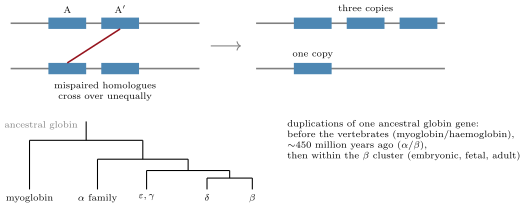
When two similar sequences sit in tandem on a chromosome, the homologues may pair out of register at meiosis and cross over unequally, so that one product carries three copies and the other one. A duplicated gene is redundant: one copy can keep the old job while the other accumulates mutations freely — usually decaying into a pseudogene, occasionally acquiring a new function (neofunctionalisation) or a share of the old one (subfunctionalisation). Repeated over hundreds of millions of years this builds gene families: the globins (a single ancestral gene became myoglobin, the cluster and the cluster, with embryonic, fetal and adult members expressed in turn), the olfactory receptors (a thousand genes in a mouse), the homeobox genes, the crystallins of the lens. Most of the genes of a genome belong to a family, and duplication is the main source of new genes.
Evidence. The human -globin cluster on chromosome 11 holds five functional genes (, , , , ) and a pseudogene, in the order in which they are switched on during development, all with the same exon–intron structure, their sequences more alike the more recently they diverged; the cluster on chromosome 16 has the same architecture. Deletions of one or more genes, produced by unequal crossing-over between the near-identical copies, are common and cause -thalassaemia; the reciprocal product, a chromosome with three genes, is found in the same populations. ∎
Definition 3.10 (Polyploidy)
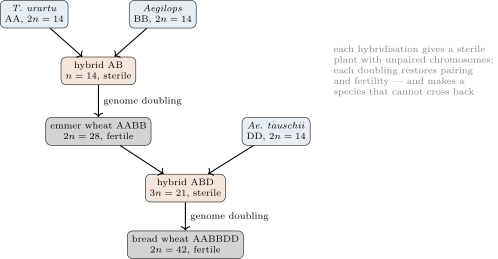
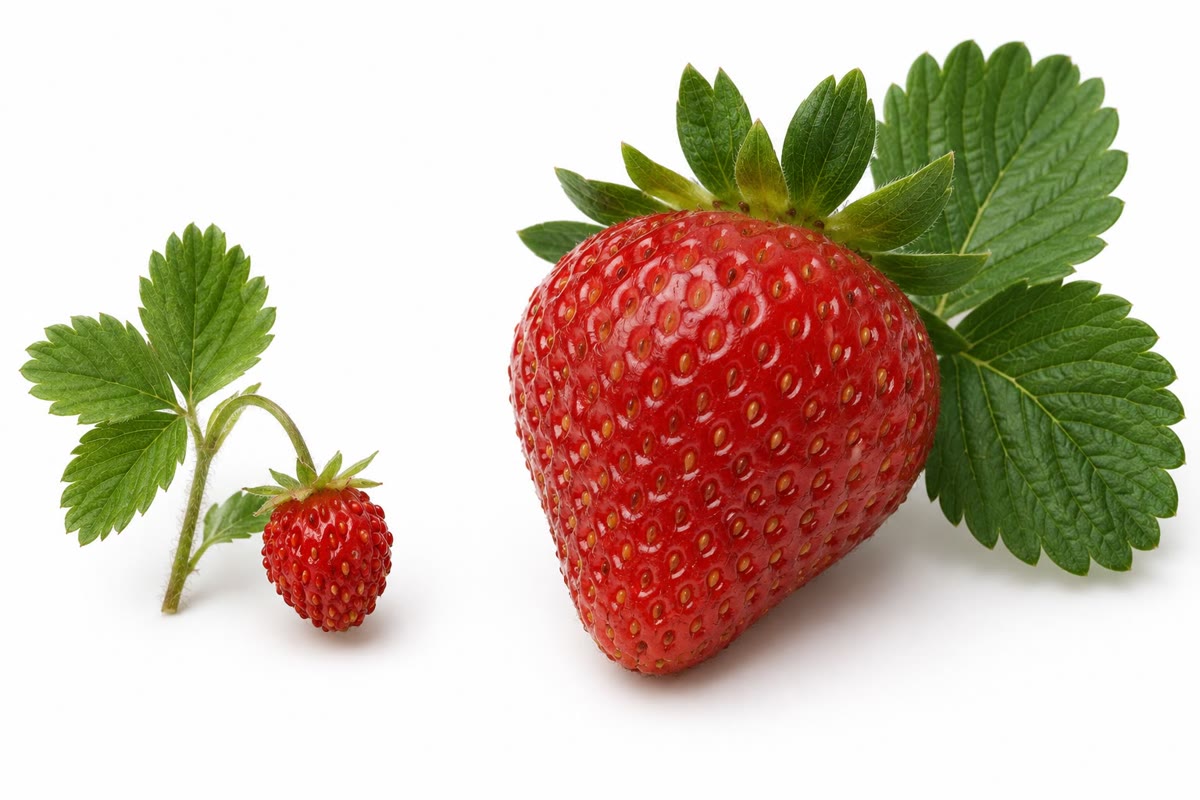
A polyploid carries more than two complete chromosome sets. An autopolyploid has several sets from one species (a failed meiosis gives a diploid gamete; two such gametes give a tetraploid); an allopolyploid combines the sets of two species after a hybridisation. The diploid hybrid AB, with no homologue for any chromosome, cannot pair them at meiosis and is sterile; if its genome doubles to AABB, every chromosome again has a partner, meiosis works, and the new plant is fertile — but cannot cross back with either parent (an AAB offspring is sterile). Polyploidy thus makes a new species in one step, and about a third of flowering-plant species arose this way: bread wheat is a hexaploid AABBDD of three grasses, the garden strawberry an octoploid, cotton and tobacco allotetraploids, and the vertebrate lineage itself doubled its genome twice near its origin. Polyploids are usually larger than their diploid ancestors (more DNA, bigger cells) and much prized by breeders.
3.4 Randomness and rate
Proposition 3.11 (Mutation is random with respect to need)
The fluctuation test and replica plating show that a mutation useful in a new environment arises at the same rate whether or not the environment is present: the environment selects among mutations, it does not call them forth. Mutation is not random in every sense — transitions outnumber transversions, CpG dinucleotides mutate ten times faster than other sites (their methylated cytosine deaminates to thymine, which repair does not recognise as foreign), some regions are hotspots, and stress can raise the overall rate — but it is blind to consequences. The mutation rate itself is a heritable trait, and selection tunes it: too high, and each generation inherits harmful changes; too low, and the population cannot follow a changing world. Mutator strains win briefly in a hospital and lose in the long run, and the rate of per base that most cells settle on is a compromise between the cost of errors and the cost of proofreading.
3.5 Exercises
Exercise 3.1 ★
Classify each change to the codon GAA (glutamate): GAG; GTA; TAA; insertion of a C after the first base. Which is a transition, which a transversion?
Solution
Solution of Exercise 3.1.
GAG: silent (still glutamate), a transition (AG). GTA: missense (valine), a transversion (AT). TAA: nonsense (stop), a transversion (GT). Inserting a base: a frameshift, which rewrites every codon after it.
Exercise 3.2 ★
With per base pair per replication and , how many new mutations does one E. coli division produce on average? How many per generation in a culture of cells?
Exercise 3.3 ★
Name the three routes of horizontal gene transfer and say, for each, what it requires (contact, a virus, free DNA) and what it typically transfers.
Solution
Solution of Exercise 3.3.
Transformation: uptake of free DNA from lysed cells, needs a competent recipient; transfers chromosomal fragments (capsule genes in pneumococci). Conjugation: cell-to-cell contact through a pilus, needs a conjugative plasmid in the donor; transfers plasmids (resistance genes) and, from an Hfr, chromosomal genes. Transduction: a bacteriophage that packaged host DNA; transfers a random fragment (generalised) or the genes next to the prophage site (specialised).
Exercise 3.4 ★
Distinguish autopolyploidy from allopolyploidy, with an example of each, and explain why a diploid hybrid of two species is usually sterile.
Solution
Solution of Exercise 3.4.
Autopolyploid: extra sets from one species, by a diploid gamete (tetraploid potato, many autotetraploid clovers). Allopolyploid: the sets of two species combined by hybridisation and then doubled (bread wheat, cotton, tobacco). The diploid hybrid AB has no two chromosomes alike, so none can pair at meiosis I; the chromosomes segregate at random and the gametes are unbalanced and inviable.
Exercise 3.5 ★★
A human germ line accumulates mutations per base pair per generation over a haploid genome of base pairs. How many new mutations does a child carry? If of the genome codes for protein and of coding substitutions change an amino acid, how many new amino-acid changes does the child carry?
Solution
Solution of Exercise 3.5.
new mutations. In coding sequence: ; changing an amino acid: — most children carry about one new amino-acid substitution.
Exercise 3.6 ★★
A culture grows from to cells; a given mutation occurs at per division. Compute the expected number of mutation events and of mutant cells. Why is the fraction of cultures with no mutant useless here for measuring , and what culture size would make it useful?
Solution
Solution of Exercise 3.6.
Events: . Mutant cells: . : every culture has mutants, so counting cultures without any measures nothing. One needs , i.e. , where and a few dozen cultures give to within a factor of two.
Exercise 3.7 ★★
Cytosine deaminates to uracil; 5-methylcytosine deaminates to thymine. Explain why the first is efficiently repaired and the second is not, and deduce why CpG sites (where cytosine is methylated) are mutation hotspots and are rarer in the genome than chance would predict.
Solution
Solution of Exercise 3.7.
Uracil does not belong in DNA, so a uracil-DNA glycosylase can remove every uracil it finds without ambiguity. Thymine is a normal base: after 5-methylcytosine deaminates, the GT mismatch is seen, but the repair machinery has no way to know which strand is wrong and half the time “corrects” the G, fixing a CT transition. Methylated CpG sites therefore mutate about ten times faster than other sites, and over evolutionary time they have been converted to TpG and CpA: mammalian genomes hold only about a fifth of the CpG that base composition predicts.
Exercise 3.8 ★★
In an interrupted-mating experiment, four genes enter the recipient at 8, 17, 25 and ; the whole chromosome () would take . Convert the times to positions in kilobases and compute the distances between consecutive genes.
Solution
Solution of Exercise 3.8.
per minute. Positions: 368, 782, 1150 and ; distances 414, 368 and .
Exercise 3.9 ★★
Draw the pairing and crossing-over that turns two chromosomes with two tandem -globin genes each into one with three and one with one. A person inherits a one-gene chromosome from each parent: how many genes do they have, and what is expected of their haemoglobin?
Solution
Solution of Exercise 3.9.
The second copy of one chromosome pairs with the first copy of the other; a crossover between them yields one chromatid carrying copy 1, copy 2 and copy 2 (three genes) and one carrying only copy 1. A person with a one-gene chromosome from each parent has two genes instead of four (): chains are made at half rate, the red cells are small and pale, with mild or no anaemia — -thalassaemia trait.
Exercise 3.10 ★★★
Bread wheat is AABBDD with . Give the chromosome number of its gametes, of the sterile hybrids at each step of its origin, and of a cross between bread wheat and emmer (AABB). Explain in terms of meiotic pairing why each doubling restored fertility and why the hexaploid cannot cross back with its parents.
Solution
Solution of Exercise 3.10.
Gametes: (one set each of A, B, D). Hybrids: AB, 14 chromosomes; ABD, 21. Bread wheat emmer: AABBD, 35 chromosomes — the A and B sets pair, the D set has no partners, and the plant is largely sterile. Each doubling gave every chromosome an identical homologue, so bivalents form and gametes are balanced; crossing back to a parent produces plants with one set unpaired, whose gametes are unbalanced, so the hexaploid is reproductively isolated from its ancestors — a species in one step.
Exercise 3.11 ★★★
In a gut population of bacteria, a resistance plasmid spreads by conjugation at a rate proportional to encounters between carriers and non-carriers : with . Solve, starting from one carrier, and compute the time for half the population to carry the plasmid. What happens if the antibiotic is then withdrawn and the plasmid costs its host in growth rate?
Solution
Solution of Exercise 3.11.
Logistic growth: . Half the population when : . Without the antibiotic, plasmid-free cells grow faster, so the ratio of carriers to non-carriers decays as with per hour (generation time ): from to takes , eleven days — and continued transfer can keep the plasmid indefinitely at a low frequency, ready for the next course of the drug.
Exercise 3.12 ★★★
“Mutation is random; evolution is not.” Discuss, using the fluctuation test, replica plating, and the fact that the mutation rate is itself under selection.
Solution
Solution of Exercise 3.12.
The fluctuation test showed that resistance mutations arise before and without the selecting agent, at random times, so mutation is blind to what would be useful; replica plating showed the same without exposing the selected cells at all. Evolution is not random because selection sorts these blind variants by their consequences, consistently and cumulatively. The one place where randomness is itself shaped is the rate: lineages with too many or too few errors lose, so the mutation rate is an adapted compromise — but what each mutation does remains unpredictable and unchosen.
3.6 Problem: A Fluctuation Test
Problem 3.1
Weekend problem — a fluctuation test is run and analysed, the mutation rate of a strain extracted from it and scaled to its genome and its population, the spread of a resistance plasmid modelled, and the cost of a mutator weighed, ending on the strain’s mutation rate per base and the plasmid’s time to take over
Twenty cultures of E. coli are each started from cells in and grown to cells; each is then spread on a plate with a bacteriophage, and the resistant colonies are counted: 0, 0, 0, 1, 0, 0, 3, 0, 0, 1, 0, 0, 0, 0, 107, 0, 2, 0, 0, 5. In parallel, twenty samples of are taken from one large culture at the same density and plated likewise: 14, 15, 13, 21, 15, 14, 26, 16, 20, 13, 17, 12, 18, 14, 16, 19, 15, 13, 17, 16. Genome: base pairs, coding. Resistance to the phage can arise by any one of distinct single-base changes in one receptor gene.
Part I — The test.
- Compute the mean and the variance of the twenty independent cultures.
- Compute the mean and the variance of the twenty samples.
- For a Poisson distribution the variance equals the mean. Which set is Poisson, and what does each set’s distribution say about when the mutations occurred?
- Explain the count of 107.
- How many of the independent cultures contain no mutant? Use to estimate , the mutation rate to resistance per cell division.
- Compute the expected number of mutant cells per culture from and compare with the observed mean.
- Why would the samples from the single culture have been useless for estimating by the method?
Part II — Scaling to the genome.
- Deduce the mutation rate per base pair per replication from and the number of resistance-conferring changes.
- Compute the mean number of new mutations per genome per replication, .
- A one-litre culture at cells per millilitre doubles once. How many new mutations arise in the population?
- How many distinct single-base changes are possible in this genome? On average, how many times does each arise in that one doubling?
- Explain why, in such a population, resistance to any single antibiotic that one mutation can defeat is essentially guaranteed to be present.
- Explain why combining two antibiotics that need two independent mutations changes this, with a number.
Part III — A plasmid spreads. In a gut holding cells, one cell acquires a conjugative resistance plasmid. Carriers transmit it on contact: , with .
- Show that solves the equation with .
- Compute the time at which half the cells carry the plasmid.
- Compute the time at which do.
- How many conjugation events per hour take place at the moment when half the cells are carriers?
- Compare with the time for a resistant mutant to reach half the population by growing faster than the rest under the antibiotic (generation time for the sensitive cells): starting from one cell, how long does it take?
- Conclude on why resistance spreads mainly by transfer rather than by descent.
Part IV — A mutator. A strain lacking mismatch repair mutates times faster. Suppose of mutations in coding sequence are harmful.
- Compute its and the mean number of harmful mutations per cell per generation.
- After generations, what fraction of a lineage’s descendants carry no harmful mutation at all (Poisson)?
- Compute the same for the wild type.
- In the fluctuation test above, what mean count would the mutator have given, and what fraction of cultures with no mutant?
- Explain in two sentences why mutators are found among hospital isolates and are rare in nature.
- State the result: , , for the strain, and the times for the plasmid to reach half and of the gut.
Solution
Solution of Problem 3.1.
1. Sum 119, mean ; mean of squares ; variance . 2. Sum 324, mean ; mean of squares ; variance . 3. The samples from one culture are Poisson (variance close to the mean): they are random draws from one fixed mutant fraction. The independent cultures have a variance ninety times the mean: their mutants arose at different, random times during growth, and the earlier the mutation the larger its clone. 4. A jackpot: a mutation in one of the first few divisions, whose clone then grew with the culture to a hundred cells. 5. Fourteen of twenty: ; ; per division. 6. mutant cells; observed — agreement within the noise of twenty cultures. 7. No sample was empty (all share the parent culture’s mutants), so gives no estimate; the samples measure the mutant fraction of one culture, which depends on when its mutations happened to occur. 8. per base pair per replication. 9. . 10. cells new mutations. 11. possible changes; each arises times. 12. Every single-base change, including every one that confers resistance to a drug defeated by one mutation, is present in dozens of cells before the drug is added; the drug merely selects them. 13. Two independent mutations in the same cell occur at per division: in cells, per generation — a doubly resistant cell essentially never pre-exists, which is why tuberculosis is treated with several drugs at once. 14. With and : , ; and , the same; . 15. : . 16. , : . 17. transfers per hour. 18. Growth rates and ; the ratio mutant/sensitive grows as with ; from to 1 takes , twelve days. 19. Transfer is proportional to the product of carriers and non-carriers and runs at the rate of encounters, not of divisions; descent is limited by the mutant’s growth advantage, which is small. A plasmid crosses the population in two days, a favoured mutant in two weeks. 20. ; harmful: per generation. 21. Mean : , one descendant in nine unscathed. 22. Wild type: per generation, in 200: . 23. Mean mutant cells; : no empty culture. 24. Under intense, changing selection (a hospital’s rotating antibiotics) the hundredfold supply of new variants outweighs the load, and mutators hitch-hike with the resistances they generate. In a stable environment there is nothing to gain and one harmful mutation per hundred generations to lose, so mutator lineages are purged. 25. per division to resistance, per base pair per replication, mutations per genome per replication; the plasmid reaches half the gut in and of it in .