Coach
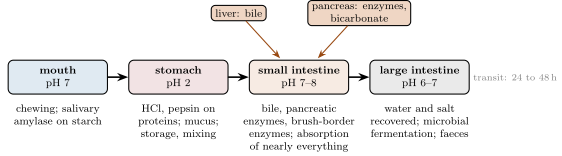
CoachA heterotroph must take from its food energy and carbon, the amino acids and fatty acids it cannot make (Chapter 16), vitamins, minerals and water. Food arrives as macromolecules — starch, protein, fat — that cannot cross a membrane. Digestion is their hydrolysis, by enzymes, into monomers small enough to be taken up: glucose, amino acids, fatty acids and glycerol, nucleotides. Absorption is the transport of those monomers across the epithelium of the gut into the blood or lymph. In animals digestion is extracellular, in the lumen of a tube open at both ends, which lets food be processed in stages as it moves, and lets the tube’s regions specialise.