 Coach
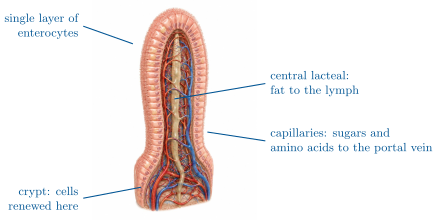
CoachThe small intestine folds its lining into circular folds, then into villi a millimetre high, each covered by a single layer of enterocytes whose apical membranes bear microvilli — the brush border — so that a tube of offers some of membrane (Chapter 4). Inside each villus run a capillary network, which carries away sugars and amino acids to the liver by the portal vein, and a central lacteal, a lymphatic vessel that carries away fat. The enterocytes live four days and are replaced from the crypts between the villi.
Examples
Example 22.9 (The water budget)
Of the nine litres that enter a human gut each day, the small intestine absorbs eight, the colon a further one, and leaves in the faeces. The small intestine’s sodium-coupled uptake of glucose drags water with it — which is why a solution of glucose and salt, taken by mouth, rehydrates a child with cholera when the toxin has turned the crypts into secretors: the symporter is untouched and absorbs water faster than the toxin loses it (Chapter 7).
Example 22.4 (A meal’s chemistry)
A slice of bread with butter and cheese: the starch is attacked by salivary amylase in the mouth, stopped by the acid of the stomach, resumed by pancreatic amylase in the duodenum and finished by the brush-border maltase on the enterocytes themselves; the cheese protein is unfolded by the acid, cut by pepsin, cut further by trypsin and chymotrypsin, and finished to amino acids and dipeptides at the brush border; the butter is melted, emulsified by bile, split by lipase into fatty acids and monoglycerides, and ferried in micelles to the membrane. Three hours from mouth to blood.