University Biology — Year 3 · Bachelor Year 3
4Genomics and Sequencing
The first complete genome of a free-living organism, the of a bacterium, was published in 1995 after a year’s work by a team of forty. The human genome, billion base pairs, took an international consortium thirteen years and about three billion dollars and was declared finished in 2003. Today a bench-top machine reads a human genome overnight for a few hundred dollars, a hospital sequences the tumour of a patient to choose a drug, and a museum extracts and reads the genome of a forty-thousand-year-old bone. The technology that made this possible, the mathematics that turns millions of short reads into a genome, and what the finished genomes have taught about the size, content and history of our DNA are the subject of this chapter. The chapter after it takes up the algorithms that compare the sequences once they are in hand.
4.1 Reading DNA
Definition 4.1 (Sequencing by chain termination)
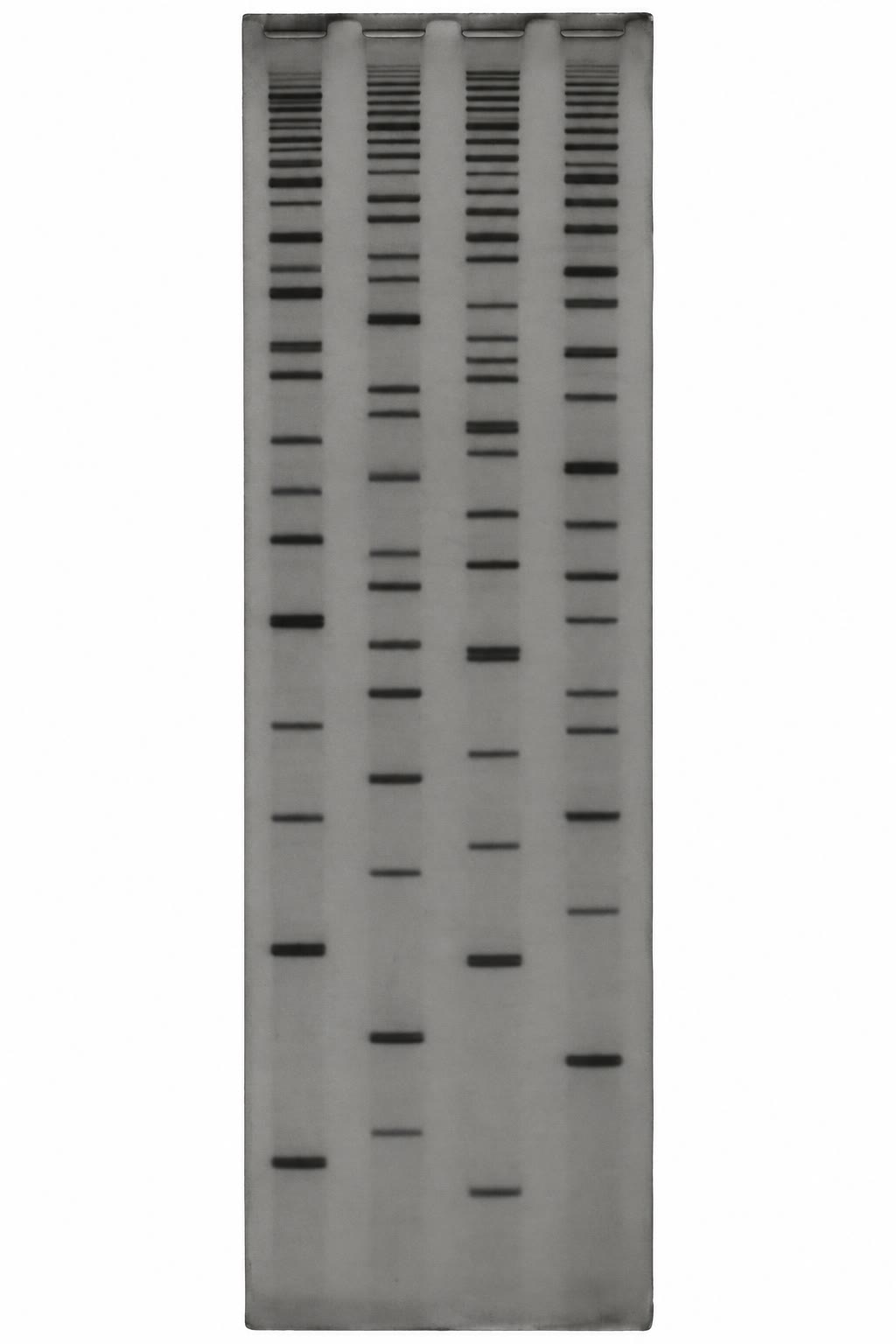
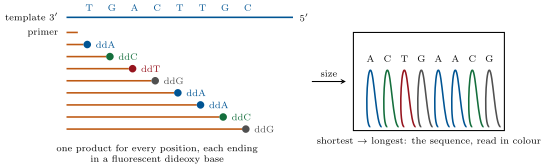
Sanger sequencing copies a single-stranded template from a primer with DNA polymerase in the presence of the four normal nucleotides and a small proportion of dideoxynucleotides, which lack the 3 hydroxyl and so terminate the chain wherever they are incorporated. Each dideoxynucleotide carries a different fluorescent dye. The product is a mixture of fragments, one for every position of the template, each ending in a base of known identity; separated by size in a capillary of gel, they pass a detector in order of length, and the sequence of colours is the sequence of the template. A run reads with an error rate below ; it remains the method for verifying a construct or a single gene.
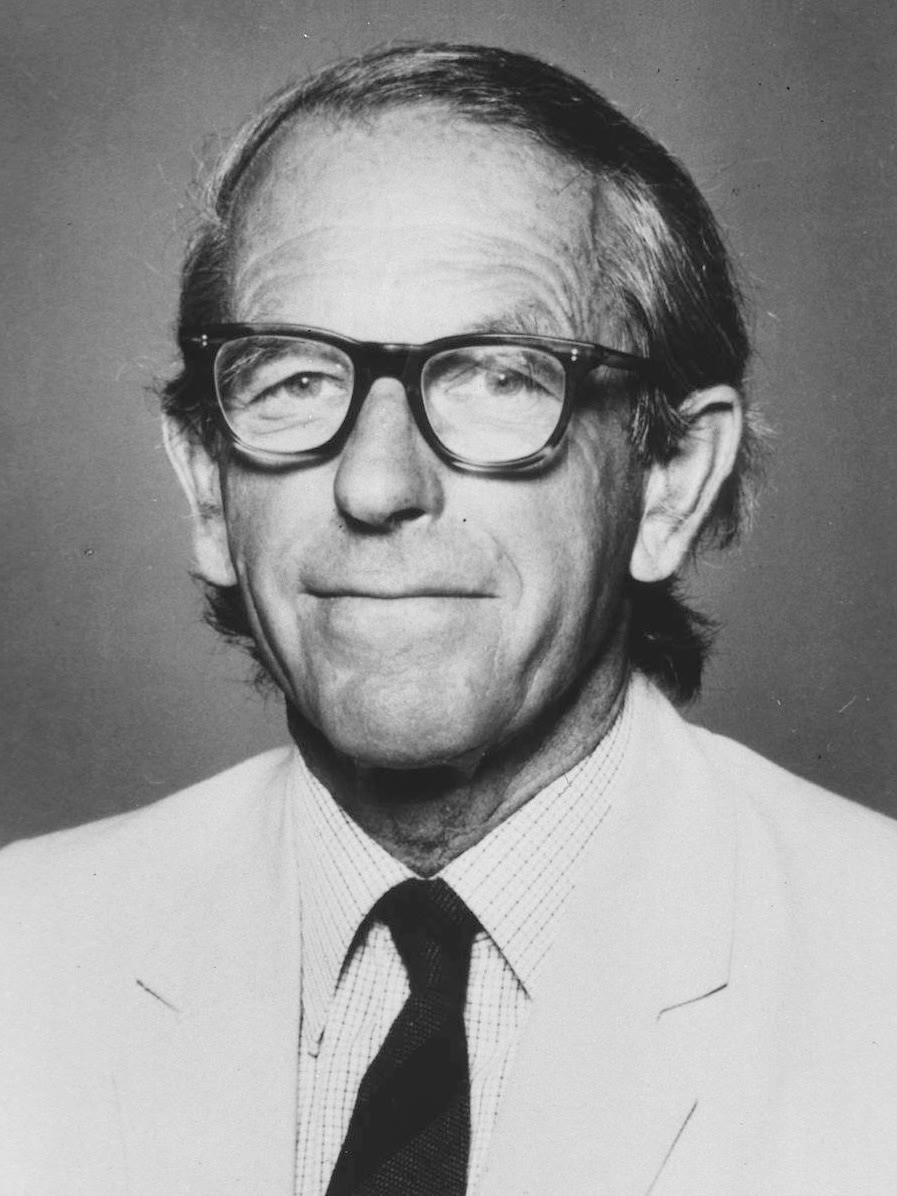
Evidence. Sanger, Nicklen and Coulson published the method in 1977 and used it that year to read the of the phage X174 — the first complete DNA genome — and in 1981 the of the human mitochondrion. Fleischmann and colleagues (1995) read the of Haemophilus influenzae by breaking the whole genome into random fragments, sequencing of them and assembling the reads by computer — the whole-genome shotgun strategy that every later project scaled up. ∎
Definition 4.2 (Massively parallel sequencing)
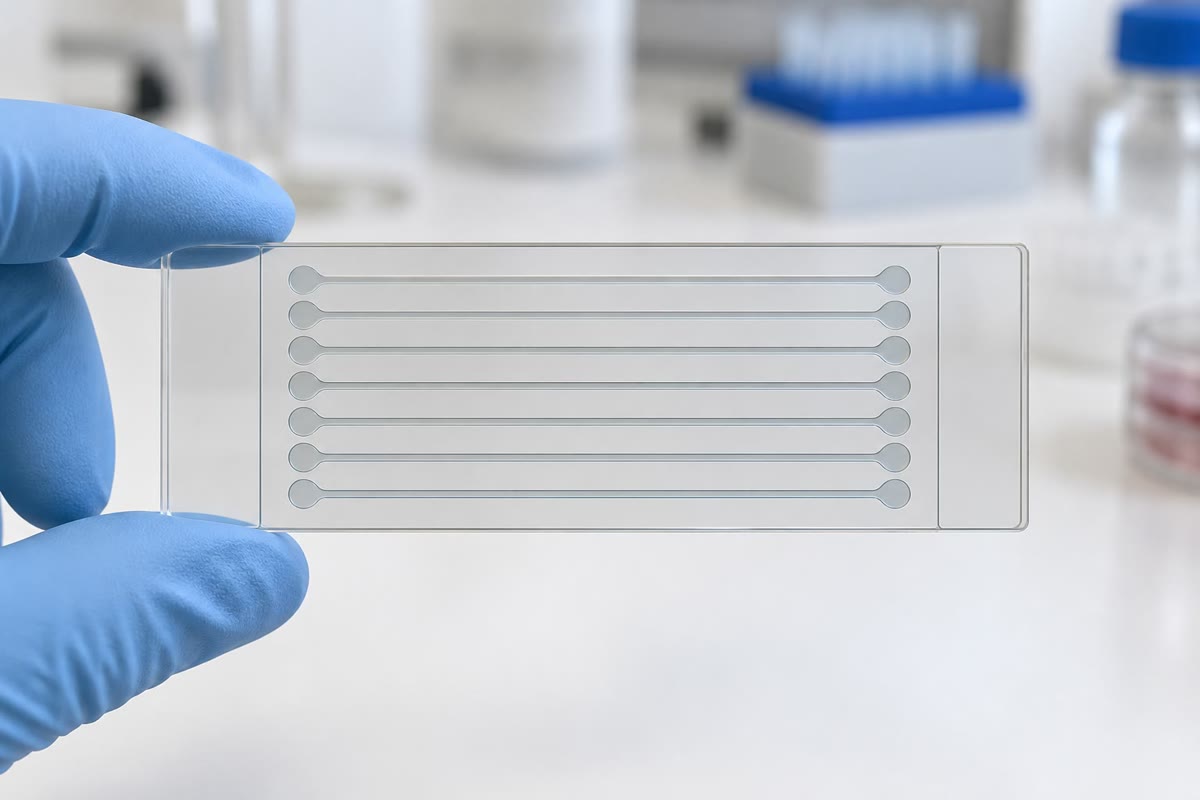
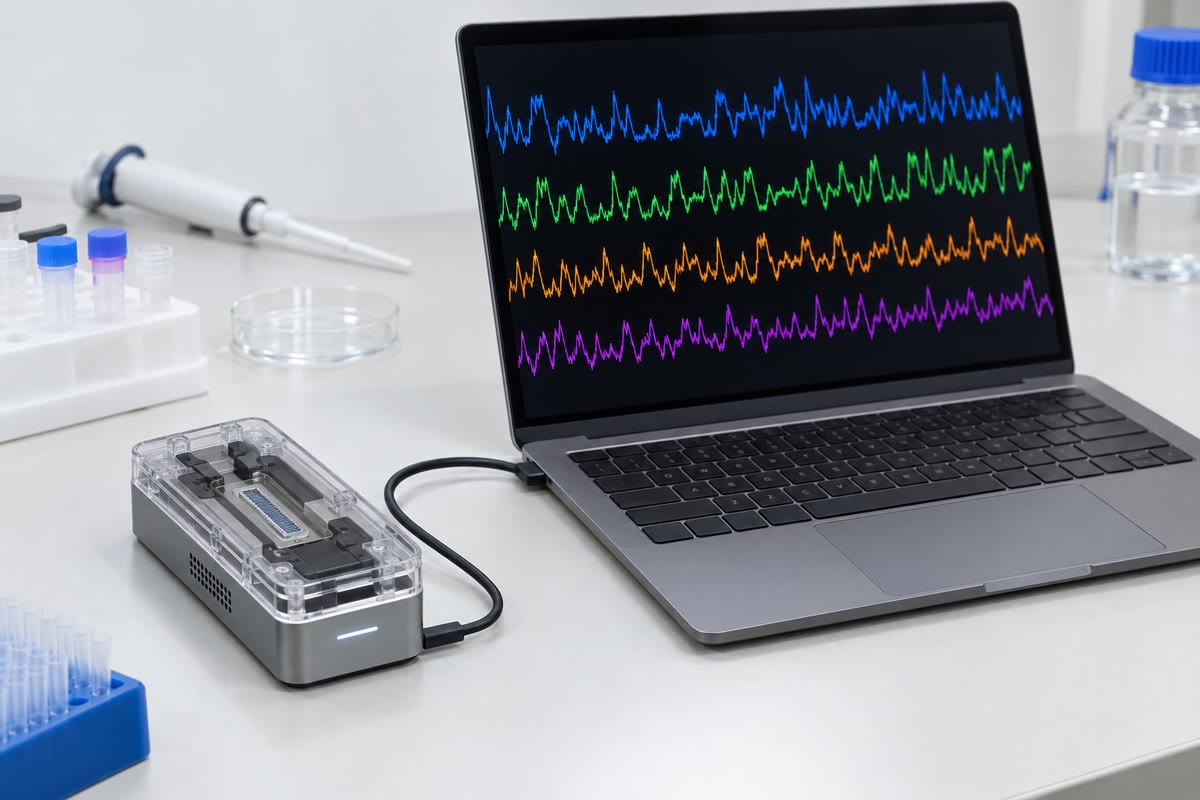
Second-generation instruments read millions to billions of fragments at once. In sequencing by synthesis the fragments, with adapters ligated to their ends, are bound to a glass flow cell and amplified in place into clusters of identical molecules; the clusters are then extended one base per cycle with fluorescent, reversibly blocked nucleotides, imaged, unblocked, and extended again, so that each cycle adds one base to every cluster’s read. Reads are , usually from both ends of a fragment (paired ends), with an error rate of about per base, and one run yields up to bases. Third-generation long-read instruments read single molecules without amplification: by watching one polymerase incorporate fluorescent nucleotides in real time, or by threading the DNA through a protein nanopore and recording the ionic current, which each sequence of bases modulates in its own way. Reads of and more span the repeats that short reads cannot, at a higher raw error rate that consensus reduces.
Theorem 4.3 (Coverage and gaps in a shotgun project)
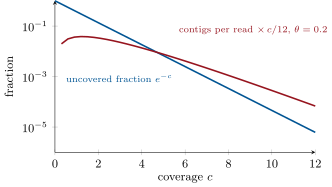
Let reads of length be taken at random positions along a genome of length , and let be the coverage, the average number of reads covering a base. Then a given base is covered by a number of reads that is Poisson with mean : the fraction of the genome left unsequenced is
and if two reads are recognised as overlapping only when they share at least bases, so that , the expected number of contigs (islands of overlapping reads) is
and their mean length is , approximately.
Proof. Read start points fall at random with density per base. A base is covered by the reads that start in the bases before it; the number of starts in a window of length is Poisson with mean , and the probability of none is . A read is the rightmost of its contig if no other read starts within the bases after its own start (a read starting later would overlap it by less than and not be joined); that probability is , and since each contig has exactly one rightmost read, the expected number of contigs is . The mean contig length follows from divided by the number of contigs, corrected for the uncovered fraction. ∎
Example 4.4 (How much is enough)
At the unsequenced fraction is — for a genome, twenty million bases in some tens of thousands of gaps. At it is , in total. Human genomes are routinely sequenced at not because of coverage gaps () but because each base must be read several times on each of the two chromosomes to call a heterozygous variant with confidence against an error rate of per read. Bacterial genomes are sequenced at – for the same reason and because it is cheap. The formula also shows what coverage cannot fix: a repeat longer than a read is a place where the overlap graph branches, and no amount of short reads resolves it. That is what long reads are for.
4.2 From reads to a genome
Definition 4.5 (Assembly and annotation)
Assembly reconstructs a genome from its reads by overlap: in an overlap graph each read is a node joined to the reads it overlaps; in a de Bruijn graph, used for billions of short reads, every -mer (subsequence of length ) is a node and the genome is a path through them. Both are broken by repeats longer than the read, which give branching paths. Contigs are ordered and oriented into scaffolds by paired-end reads and long-range information (long reads, optical maps, chromosome-contact maps), and the scaffolds are placed on chromosomes. Assembly quality is summarised by the N50: the contig length such that half of the assembled bases lie in contigs at least that long. Annotation then finds the genes: in bacteria, open reading frames longer than chance; in eukaryotes, by combining sequence signals (splice sites, promoters, codon bias), homology to known proteins, and transcripts sequenced from RNA. The result, for a species, is a reference genome to which every later read from that species is aligned rather than assembled anew.
Method 4.6 (From a sample to variants)
For a resequencing study of an individual against a reference: (1) extract DNA, fragment it to , ligate adapters (the library); (2) sequence to the coverage required (30 for a human genome, 100 for an exome, which captures the of the genome that codes for protein); (3) align each read to the reference, tolerating mismatches; (4) at each position count the bases in the reads: a position where about half the reads disagree with the reference is a heterozygous variant, where nearly all disagree a homozygous one, where a few disagree an error; (5) filter by depth, base quality and strand balance; (6) annotate each variant with its effect on any gene (synonymous, missense, nonsense, splice, frameshift) and its frequency in population databases; (7) for a diagnosis, keep the rare variants predicted damaging in genes consistent with the phenotype, and confirm by Sanger sequencing.
4.3 What genomes look like
Proposition 4.7 (Genome size and gene number)
Genome sizes span a factor of among eukaryotes — for yeast, for the worm, for the fly, for a human, for an onion, for a lungfish, for the lily Paris japonica — while gene numbers span barely a factor of : in yeast, in the worm, in the fly, about protein-coding genes in a human, in rice. This is the C-value paradox: genome size does not measure complexity, and neither does gene number. What varies is the non-coding content — introns, transposable elements, satellite repeats — and the number of proteins a genome can produce is multiplied far beyond its gene count by alternative splicing (Chapter 2) and by regulation, which is where the complexity of an organism is mostly written. Bacterial genomes, by contrast, are compact and their size does track gene number: about one gene per kilobase, coding in E. coli.
Example 4.8 (The human genome by content)
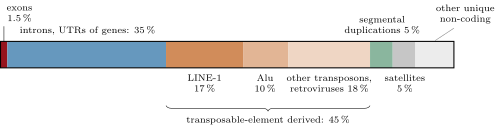
Of the : protein-coding exons, ; introns and untranslated regions of genes, about ; transposable elements and their fossils, about — LINE-1 retrotransposons , Alu elements (over a million copies of a sequence), endogenous retroviruses ; segmental duplications ; simple repeats and satellites, including the centromeres, about ; the rest unique non-coding sequence, where the regulatory elements live. Some genes still encode active LINE-1 machinery, and new insertions occur about once in every twenty births. About of the genome is under detectable purifying selection — far more than the exons — and most of that is regulatory.
Definition 4.9 (Comparative genomics)
Genes in two species descended from one gene in their common ancestor are orthologues; genes within a species descended from a duplication are paralogues. Blocks of chromosome in which gene order is conserved between species are syntenic; synteny lets a gene be located in one genome from its position in another and reveals the rearrangements that separate two karyotypes (about between human and mouse). Sequences conserved across distant species that code for no protein — conserved non-coding elements, some ultraconserved to the base over between human and fish — are mostly enhancers of developmental genes. Whole-genome duplications have marked the history of lineages: two rounds at the origin of vertebrates (the four Hox clusters of mammals against the one of invertebrates), one in the ancestor of salmonids, one in the yeast lineage, several in flowering plants; the duplicate genes are mostly lost over tens of millions of years, and the survivors diverge in function.
Example 4.10 (Human and chimpanzee)
Aligned single-copy sequence differs between human and chimpanzee by of bases — some million substitutions — and by insertions and deletions that together amount to another of each genome. Two humans differ at about one base in a thousand, some million sites, plus a few thousand structural variants; two chimpanzees, whose population has been larger for longer, at rather more. A child carries about new mutations absent from both parents, four fifths of them from the father, and the number rises by about two per year of paternal age — the arithmetic of Chapter 3 applied to the many divisions of spermatogenesis.
4.4 Genomes and traits
Definition 4.11 (Genome-wide association)
A single-nucleotide polymorphism (SNP) is a position at which two bases each occur in at least of a population; about ten million are common in humans. A genome-wide association study (GWAS) genotypes hundreds of thousands of SNPs in thousands of people with a disease and thousands without, and asks at each SNP whether one allele is more frequent in the cases. Because a million tests are made, a result counts only below a significance threshold of about ( divided by the million effectively independent tests). Associated SNPs mark a region, not a causal variant, since neighbouring alleles travel together (linkage disequilibrium) over tens of kilobases. For most common diseases the associated alleles each shift risk by a few percent and lie mostly in regulatory sequence; their combined effect, summed over thousands of SNPs as a polygenic score, explains a fraction of the heritability and predicts risk about as well as family history.
Remark 4.12 (What genomics has and has not delivered)
Sequencing has been decisive where a single gene has a large effect: several thousand Mendelian diseases have their gene, and sequencing the exome of a child with an undiagnosed disorder yields a diagnosis in about a third of cases. Cancer genomes reveal which drivers a tumour carries and which drugs may work (Chapter 11); pathogen genomes trace outbreaks strain by strain (Chapter 12); ancient genomes have rewritten human prehistory, showing that people outside Africa carry about Neanderthal DNA. For common diseases — diabetes, heart disease, schizophrenia — genomics has delivered thousands of small effects and few mechanisms, and the promise of prediction from a genome for a healthy person remains modest. The genome is a parts list; the biology of how the parts interact is not read off it.
4.5 Exercises
Exercise 4.1 ★
Explain why a dideoxynucleotide terminates a growing DNA chain, and why a Sanger reaction must contain both normal and dideoxy forms of each nucleotide.
Solution
Solution of Exercise 4.1.
A dideoxynucleotide has no 3 hydroxyl, so no phosphodiester bond can be made to the next nucleotide and the chain stops. With only dideoxy forms every chain would stop at the first position; with only normal forms none would stop. The mixture makes termination a random event at each position, so that the products form a complete ladder, one length for every base of the template.
Exercise 4.2 ★
A run produces paired reads of . What coverage does that give of a human genome? Of a bacterial genome?
Solution
Solution of Exercise 4.2.
bases. Human: . Bacterium: .
Exercise 4.3 ★
Define contig, scaffold and N50. An assembly of has ten contigs of and of . What is its N50?
Solution
Solution of Exercise 4.3.
A contig is a contiguous sequence assembled from overlapping reads; a scaffold is an ordered, oriented set of contigs with gaps of estimated size between them; the N50 is the contig length at which the sorted contigs reach half the assembled bases. Here the ten contigs alone contain , past the half-way point (the seventh reaches ): N50 .
Exercise 4.4 ★
State the C-value paradox with two examples, and say what mostly accounts for the excess DNA of large genomes.
Solution
Solution of Exercise 4.4.
Genome size does not track organismal complexity: an onion has five times the DNA of a human, a lungfish forty times; yeast and the worm differ tenfold in DNA with similar gene numbers. The excess is non-coding: transposable elements and their remains, introns, satellite repeats.
Exercise 4.5 ★★
Using Theorem 4.3, find the coverage needed to leave at most one base in a million unsequenced, and the expected number of contigs for a genome read at with reads and a minimum overlap of .
Exercise 4.6 ★★
A heterozygous variant is covered by reads. Assuming each read shows either allele with probability , what is the probability that fewer than reads show the variant allele (so that it might be mistaken for errors)? Use a normal approximation with mean and standard deviation . Why is the standard?
Exercise 4.7 ★★
A genome has a repeat of present in copies. Explain why an assembly from reads collapses it, what the resulting graph looks like, and what read length would resolve it.
Solution
Solution of Exercise 4.7.
Every read from inside the repeat is identical whichever copy it came from, so the assembler builds one node with paths entering and leaving; it cannot tell which entry pairs with which exit, and the assembly breaks into gaps, the repeat present once with a coverage times the mean. Reads longer than the repeat plus unique flanks on both sides — or more — span each copy and resolve it.
Exercise 4.8 ★★
Two humans differ at one base in a thousand. How many differences in their exomes ( of coding sequence)? If two thirds of coding differences are synonymous or benign and the rest alter a protein, how many protein-altering variants does one person carry relative to another?
Solution
Solution of Exercise 4.8.
coding differences; one third, about , alter the protein.
Exercise 4.9 ★★
A GWAS tests SNPs at threshold . How many false positives are expected if no SNP is truly associated? A SNP allele raises the risk of a disease with frequency to . Explain why such an effect is undetectable in a study of a thousand people and useless for an individual, yet may still point to a mechanism.
Solution
Solution of Exercise 4.9.
Expected false positives . A relative risk of on a disease changes a few cases per thousand; a thousand people contain about twenty cases, far too few to see it (power grows with the number of cases and the square of the effect). For an individual, percentage points is meaningless. But the allele marks a gene whose modest change in activity alters disease risk — the gene, and its pathway, may be a drug target whose complete inhibition has a large effect.
Exercise 4.10 ★★★
Bacterial genomes are about coding; the human genome . Give three hypotheses — population genetic, structural and regulatory — for the difference, and for each a genomic observation that supports or undermines it.
Solution
Solution of Exercise 4.10.
Population genetic: in bacteria, with enormous populations, selection removes even slightly costly insertions; in mammals, with small effective populations, drift lets mildly deleterious non-coding DNA accumulate — supported by the inverse correlation across lineages between genome size and population size, undermined by exceptions. Structural: eukaryotic genomes are invaded by transposons that bacteria, with a bias toward deletion and no meiotic refuge for selfish elements, purge — supported by the correlation of genome size with transposon content. Regulatory: complex development needs more regulatory DNA — supported by the conserved non-coding elements around developmental genes, undermined by the fact that only of the human genome shows any selection at all, so most non-coding DNA is not regulatory.
Exercise 4.11 ★★★
Derive the Lander–Waterman contig count for reads of two different lengths mixed: short reads of length and long reads of length , overlaps counted with the same minimum . (Treat each read as the rightmost of its contig if no read of either kind starts within its own length minus .) Show that a few long reads reduce the contig count more than the same number of bases in short reads.
Solution
Solution of Exercise 4.11.
Starts of both kinds fall with total density . A read of length is rightmost in its contig if no read of either kind starts in the bases after it: probability . Hence contigs . A long read is rightmost with an exponentially smaller probability than a short one, and each long read also removes the chance of a gap over its whole length; the same number of bases as short reads adds many start points but each protected window is short, so the long reads win.
Exercise 4.12 ★★★
The four Hox clusters of mammals are argued to descend from one cluster by two rounds of whole-genome duplication at the base of the vertebrates. State what pattern of paralogues across the genome, and what pattern in the genomes of lampreys and of the invertebrate chordates, that hypothesis predicts, and how one would distinguish it from two independent duplications of the cluster alone.
Solution
Solution of Exercise 4.12.
Two whole-genome duplications predict that the fourfold pattern is genome-wide: quartets of paralogous chromosome segments (paralogons) carrying the same gene families in the same order, with the duplications dated to the same time for all families; a single cluster in amphioxus and Ciona, which diverged before the events; and in lampreys, which diverged around them, an intermediate or independently derived state. Independent duplications of the Hox cluster alone predict paralogons for Hox only, neighbours with different histories, and duplication dates that differ between families. The genome-wide paralogons and the shared dating, as observed, favour whole-genome duplication.
4.6 Problem: Two Genomes on One Machine
Problem 4.1
Weekend problem — a bacterium and a human sequenced on the same run: the reads shared out, the coverage and the gaps computed, the contigs counted, the heterozygous variants called against the error rate, the content of the human genome weighed, and an association study sized, ending on the contig count at low coverage, the coverage that makes a variant call safe and the number of new mutations in a child
Data: one run yields reads of . A bacterial genome is ; the human genome (haploid). Minimum overlap . Error rate per base per read. Human coding sequence ; the genome is transposon-derived, with million Alu copies of . Two humans differ at one site in . Mutation rate per base per generation.
Part I — The bacterium.
- The bacterium is given of the run. How many reads, and what coverage?
- What fraction of its genome is unsequenced? How many bases is that?
- Compute and the expected number of contigs.
- An earlier pilot used only reads. Coverage, uncovered fraction, and contig number?
- The genome contains copies of a rRNA operon. Explain what happens to them in the assembly and how many contig ends this alone produces.
- The bacterium has about one gene per kilobase. How many genes, and, if of the genome is coding, what is the mean gene length?
Part II — The human.
- The rest of the run goes to one human genome. Coverage of the diploid genome per haploid copy (that is, total bases divided by )?
- At a heterozygous site each of the two alleles is covered by about half the reads. With the coverage of question 7, what is the expected number of reads showing each allele?
- An error shows a wrong base in a read with probability . At a homozygous site covered by reads, what is the expected number of reads showing any particular wrong base ( each)? Why does a rule “call a variant if at least reads and at least of reads show it” reject errors at this coverage?
- How many heterozygous sites does one human carry (half of the differences between two random genomes lie in each, roughly: take one site in )? How many in coding sequence?
- The reads are aligned to a reference. Explain why reads from Alu elements often align to the wrong copy and what consequence this has for calling variants inside them.
- A child is sequenced with both parents. How many new mutations do you expect? How many reads in the child, at this coverage, must show a variant absent from both parents for it to be believed, and why is the parents’ coverage as important as the child’s?
- A clinical laboratory captures the exome () and sequences it at . How many reads does that take, and why is it cheaper per patient than a genome at although its coverage is higher?
Part III — The content of a genome.
- What fraction of the human genome is Alu, and what fraction of the reads of question 7 come from Alu elements?
- The reference is but a diploid cell holds ; and a onion has about genes. What is the coding fraction of the onion genome, if its genes average of coding sequence?
- Human and chimpanzee differ at of aligned bases. How many substitutions is that in of alignable sequence? Split evenly between the two lineages over million years, what mutation rate per base per year does this imply, and per generation of years? Compare with the direct measurement given in the data.
- Two vertebrate genome duplications should give up to four copies of each ancestral gene. Humans have about genes and the invertebrate chordate Ciona about . What fraction of the duplicates has been lost, on the hypothesis that the ancestor had ?
- Explain why gene number is a poor measure of organismal complexity, with the alternative splicing count of Chapter 2 as one argument.
- of the genome is under purifying selection but only codes for protein. What is the rest likely to be, and how would you test one candidate element?
Part IV — An association study.
- SNPs are tested. State the Bonferroni threshold for a family-wise error of , and the expected number of false positives at .
- A disease has prevalence . A risk allele of frequency raises the odds by . Compute the disease risk of a carrier of two copies, of one copy and of none, taking the non-carrier risk as . (Multiply the odds.)
- Two hundred such alleles are found. Explain what a polygenic score is, and why the score of a person in the top may correspond to a several-fold risk although each allele does almost nothing.
- Explain why a SNP that reaches significance is usually not the causal variant, and what experiment would identify the causal one in the region.
- An ancient genome from a -year-old bone is sequenced at . What fraction of it is read? Why can this still answer questions about population history that a modern genome alone cannot?
- Summarise: the number of contigs in the pilot assembly (question 4), the coverage per haploid genome that gives about reads per allele (question 7–8), and the number of new mutations in a child (question 12).
Solution
Solution of Problem 4.1.
1. reads; . 2. : effectively no base uncovered. 3. ; contigs : one contig in theory, gaps only at repeats. 4. ; uncovered , about ; contigs . 5. The seven operons give identical reads and collapse into one contig, entered by seven unique left flanks and left by seven right flanks whose pairing is unknown: contig ends, seven gaps. 6. About genes; coding bp, mean gene . 7. . 8. About reads per allele. 9. reads showing a given wrong base — the chance of three or more is about — and of is reads; an error passes neither test, while a real heterozygous allele is expected in . 10. heterozygous sites; in coding sequence . 11. A read from an Alu matches many of the million copies almost equally well, so it is placed on the wrong copy or given a low mapping confidence. Differences between copies then look like heterozygous variants, and true variants are hidden among them: variant calls inside Alu are usually filtered out, and the elements are blind spots of short-read sequencing. 12. new mutations. About reads should show the variant in the child; but if a parent’s site is covered by only five reads, a heterozygous allele is missed with probability and an inherited variant is miscalled as new — so the parents must be sequenced as deeply as the child. 13. reads, twenty times fewer than the genome: the sequencing cost falls twentyfold, more than the cost of the capture step. 14. bp, about of the genome; of the reads, some . 15. bp; . 16. substitutions, per lineage; rate per base per year, per generation of 25 years — about twice the pedigree rate of , a known discrepancy that suggests longer past generation times or an older split. 17. Four copies of would be ; remain, so of the extra copies only survive: of the duplicates were lost. 18. Worm and human have the same number of genes; complexity lies in how they are used — alternative splicing multiplies one gene into thousands of proteins ( for Dscam), regulation combines transcription factors and enhancers in cell-type-specific ways, non-coding RNAs add layers, and proteins interact in networks. 19. Regulatory elements (enhancers, promoters, insulators), non-coding RNA genes, splicing and localisation signals, origins and structural sequences. Test an enhancer candidate by placing it before a reporter gene in a transgenic embryo and looking at where the reporter is expressed, then deleting the element in the genome with CRISPR and measuring the neighbouring genes. 20. ; at , false positives expected. 21. Non-carrier odds ; one copy odds , risk ; two copies odds , risk . 22. The score sums, over the alleles, the number of risk copies a person carries weighted by each allele’s log odds ratio. The count has mean and standard deviation ; the top carries about alleles more than average, and : nearly threefold the odds of an average person, from alleles that individually change risk by . 23. Alleles within a block of tens of kilobases are inherited together (linkage disequilibrium), so any of them shows the same association; the genotyped SNP is merely the one on the array. To find the causal variant: sequence the region in cases and controls, narrow the set statistically, then test each candidate — reporter assays for enhancer activity of each allele, editing each allele in cells and measuring the nearby genes’ expression, colocalisation with expression-quantitative-trait signals. 24. of the genome is read. It gives a direct sample of a population at a known time in the past — allele frequencies before later migrations and admixture, the length of Neanderthal segments (long, because few generations of recombination had broken them) and hence a date for the admixture — which modern genomes can only infer through models. 25. About contigs in the pilot; per haploid genome, about reads per allele; some new mutations in a child.