University Physics — Year 3 · Bachelor Year 3
20Photons and Phonons
Quantum theory was born in this chapter’s subject. In 1900 the spectrum of glowing bodies refused to obey classical physics — worse, classical physics predicted infinite energy at short wavelengths, the “ultraviolet catastrophe” — and Planck’s desperate remedy, energy in packets of , turned out to be the century’s master key. With the machinery now assembled — mode counting from Chapter 7, oscillator thermodynamics from Chapter 17 — Planck’s law takes half a page: a gas of photons, one Bose-occupied oscillator per cavity mode. The same half page, with sound in place of light, is Debye’s theory of solids and the heat capacity Einstein’s model missed. And filling every cubic centimetre of the universe is the subject’s masterpiece: the 2.725-kelvin cosmic microwave background, the most perfect blackbody ever measured — the thermal radiation of the young universe itself, still arriving.
20.1 Planck’s law, derived
Theorem 20.1 (The blackbody spectrum)
A cavity at temperature supports electromagnetic modes — standing waves counted exactly as in Proposition 7.5, twice for polarisation:
Each mode is a quantum oscillator holding, at equilibrium, photons (Exercise 17.5; equivalently, bosons at ). The energy per volume and frequency is therefore
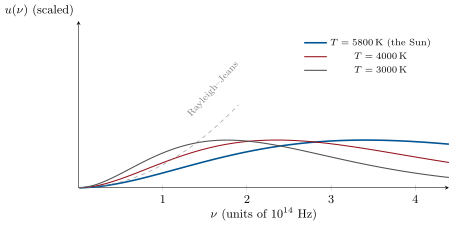
Planck’s law (1900). Its consequences, all as measured: the peak at (Wien’s displacement law of the Year 2 volume, now derived); the total flux from a black surface with
(Stefan–Boltzmann, its constant now built from , , ); and the photon density per cubic metre.
Partial proof. Multiply the mode count by . The total energy integral, with and (admitted), gives and, with the standard flux factor , the stated . Wien’s law is the maximisation of Exercise 20.1. At low frequency () each mode carries — Rayleigh–Jeans, correct for radio, catastrophic if extended to all : Planck’s cutoff is equipartition’s licence (Theorem 17.5) being revoked mode by mode. ∎
Example 20.2 (Three thermometers)
The Sun (): peak at — our eyes evolved onto its maximum. A body at : peak near , radiating from every square metre of skin (mercifully, the room radiates back; Exercise 20.2). The universe (): peak near in frequency form (), photons per cubic centimetre — the cosmic microwave background, this chapter’s grand example (Problem 20.1).
Proposition 20.3 (Thermodynamics of light)
The photon gas has energy density (), pressure
entropy density , and photon number . Consequences: an adiabatically expanding radiation-filled box cools as — the expanding universe’s photons cooled from K to today’s K by a stretch factor while keeping a perfect Planck spectrum; and in massive stars the growth lets radiation pressure rival gas pressure, setting an upper limit to stellar masses (Chapter 27).
Partial proof. : an isotropic gas of particles at speed delivers one-third of its energy density as pressure (the factor , as in the kinetic theory of the Year 1 volume). Entropy from applied to . Adiabatic: constant gives . ∎
20.2 Phonons: Debye’s completion
Theorem 20.4 (The Debye model)
A crystal’s vibrations are elastic waves quantised exactly like light: phonons, three polarisations at sound speed , counted like photons but with the total capped at modes — the cap defining the Debye temperature
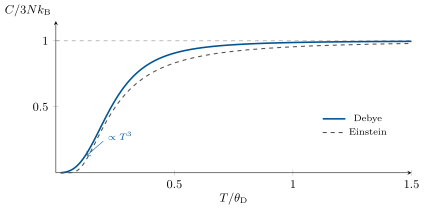
The heat capacity interpolates between the two classic laws:
the law that low-temperature calorimetry demanded and Einstein’s single frequency could not give (Exercise 17.6). The reason is the same as for light: however cold the crystal, arbitrarily cheap long-wavelength sound quanta exist, and their photon-like counting gives the photon-like .
Partial proof. Repeat the photon computation with , three polarisations, and the mode total fixing the cutoff. At the cutoff is invisible and the energy integral gives ; at high every one of the modes carries . The full interpolation integral is admitted. ∎
Example 20.5 (Phonons are real particles)
Phonons scatter neutrons and X-rays with energy and (crystal) momentum conservation — the measured dispersion curves of Chapter 23 are their spectroscopy. They carry heat: an insulator’s thermal conductivity is a phonon gas’s , and diamond — stiff, light, pure — outconducts copper fivefold at room temperature by phonons alone (Exercise 20.12). And they die out at low temperature as , which is why cryogenic engineers speak of crystals going “acoustically silent”.
Method 20.6 (Radiation-gas craft)
(1) Count modes ( per polarisation in 3D); occupy with ; integrate — expect energies and counts and capacities. (2) Peaks via Wien; totals via Stefan; per-mode classical only below . (3) For solids, cap the modes at (); Einstein’s form for optical-branch modes, Debye’s for acoustic. (4) Adiabatic radiation: . (5) Check the two constants of the trade: and .
20.3 Exercises
Exercise 20.1 ★
(a) From Planck’s law in wavelength form, show the peak obeys const (the transcendental equation may be cited: ). (b) Compute the peak wavelengths for the Sun, a filament, a body and the sky. (c) Which of the four does the human eye sample well, and what fraction of a filament’s output is visible (estimate: small)? (d) Why are “infrared cameras” the right tool for people and buildings?
Solution
Solution of Exercise 20.1.
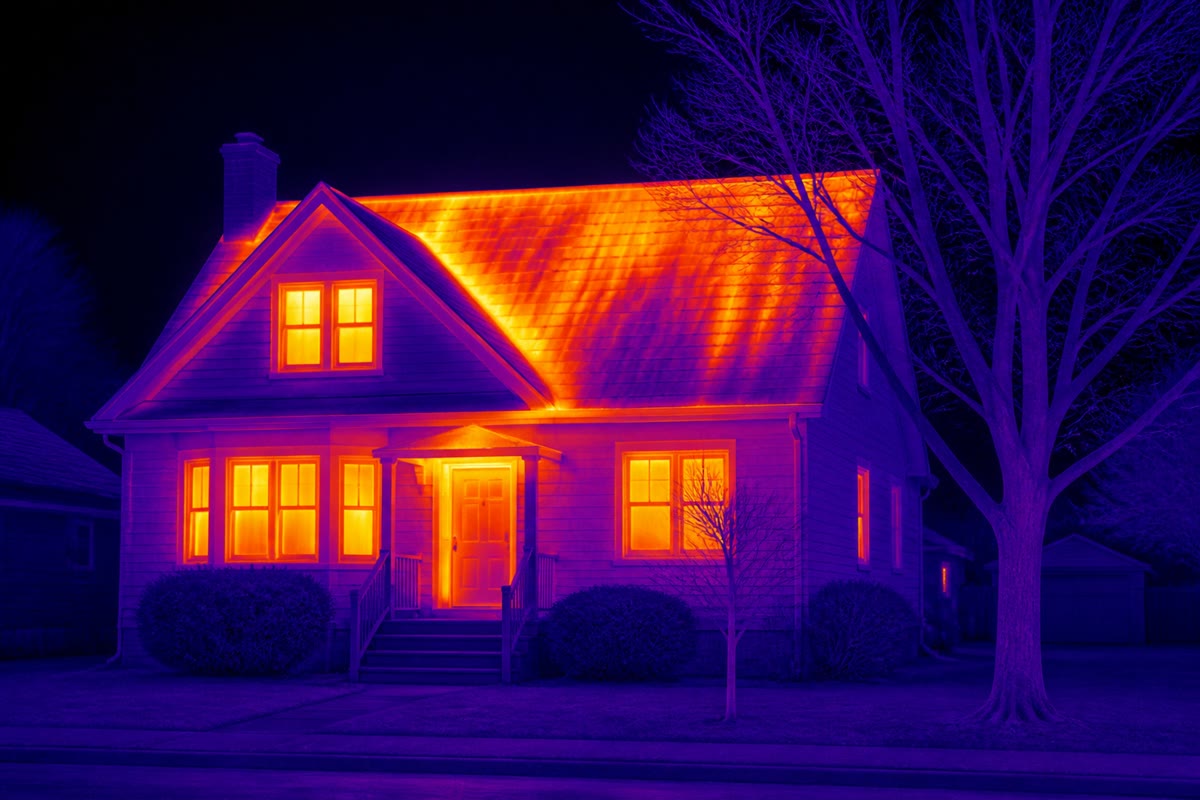
(a) Setting gives , : . (b) , , and . (c) Only the Sun’s; a filament peaks in the near infrared and delivers only a few per cent of its power as light — the inefficiency that retired it. (d) People and buildings “shine” at ten microns: thermal imagers are cameras for the second peak.
Exercise 20.2 ★
Radiative budgets. (a) A person (, skin ) in a room: net radiated power . (b) Compare with the body’s metabolism: why do we tolerate it (clothing, and the room radiating back)? (c) The Earth absorbs sunlight over and radiates over : derive with , albedo , and evaluate. (d) The measured surface average is : name the mechanism of the difference (Problem 9.1).
Solution
Solution of Exercise 20.2.
(a) . (b) The room’s return flux is inside the difference already; clothing inserts warm intermediate surfaces — radiation is a two-way ledger. (c) . (d) The bonus is the greenhouse effect: the infrared blanket of Problem 9.1, quantified in Exercise 20.9.
Exercise 20.3 ★
Counting photons. (a) With per cubic metre: the photon density of the background. (b) Sunlight at Earth: from and a mean photon energy , compute the photon flux per square metre per second. (c) A incandescent bulb (5% visible): visible photons per second. (d) Why is “photon counting” routine for astronomers but absurd for heaters?
Solution
Solution of Exercise 20.3.
(a) per cm. (b) photons per square metre per second. (c) per second. (d) Astronomical signals arrive photons at a time — rates a counter can resolve; a heater’s per second is a continuum for any detector.
Exercise 20.4 ★
The catastrophe and its tail. (a) Show classical equipartition ( per mode) gives , divergent when integrated. (b) Where does Planck’s law reduce to it? (c) Radio astronomers measure the CMB at : check there and justify their “antenna temperature” habit of quoting intensities in kelvin. (d) At the CMB’s peak, evaluate : is the peak classical?
Solution
Solution of Exercise 20.4.
(a) per mode times the mode count: integrated, infinite — the catastrophe. (b) For . (c) : deep in the classical tail, where intensity — hence “brightness temperature” in kelvin. (d) : the peak is where Planck’s quantum discount is in full force.
Exercise 20.5 ★★
Radiation pressure. (a) Derive from isotropy (or accept the kinetic factor) and evaluate the pressure of sunlight at Earth’s orbit; compare with atmospheric pressure. (b) Inside the Sun (): compute and compare with the gas pressure . (c) Radiation pressure grows as , gas pressure as : show why sufficiently massive (hence hotter) stars become radiation-dominated and unstable — the Eddington ceiling near . (d) Lasers: a beam focused to push — what force? Why do “tractor beams” stay in movies while optical tweezers (gradients, piconewtons) are real tools?
Solution
Solution of Exercise 20.5.
(a) For the directed solar beam : eleven orders below the atmosphere — sails work only because space subtracts everything else. (b) : less than one part in a thousand of the gas pressure — the Sun is gas-supported. (c) : more massive stars burn hotter, and the flood eventually rivals gravity’s grip on the gas — luminous instability caps stars near . (d) : tractor beams remain fiction; tweezers use field gradients on microscopic objects, where piconewtons rule (Problem 16.1).
Exercise 20.6 ★★
The universe’s stretch. The CMB was emitted at recombination (, Exercise 18.12 territory) and arrives at . (a) From , the stretch factor of all lengths since emission. (b) Show a Planck spectrum stays Planck under uniform stretching of every wavelength (what happens to ?). (c) The emitted peak (visible orange light!) arrives where? (d) Why is the sky therefore dark to the eye yet blazing to a microwave receiver?
Solution
Solution of Exercise 20.6.
(a) . (b) Every mode’s stretches by the same factor: the shape maps onto itself with — a Planck curve cannot be un-Plancked by expansion. (c) The deep-red peak arrives at . (d) The same sky is empty at and saturated at a millimetre: darkness is a wavelength statement.
Exercise 20.7 ★★
Debye temperatures from sound. (a) Evaluate for copper (, ) and compare with the calorimetric . (b) Diamond: , : compute and compare with . (c) Lead: soft and heavy — explain its in one sentence. (d) State the rule connecting a solid’s stiffness, atomic mass and its quantum-freezing temperature.
Solution
Solution of Exercise 20.7.
(a) against the fitted : right scale (a proper average over longitudinal and transverse speeds closes the gap). (b) — matching: diamond is the extreme case. (c) Low sound speed (soft) and heavy atoms both push down: lead’s lattice is classical almost immediately. (d) -like: stiff and light freezes late, soft and heavy freezes early.
Exercise 20.8 ★★
Copper at one kelvin. (a) Using with from Example 19.3 and the Debye coefficient for : compute both terms per mole at . (b) Which wins, and by how much? (c) At what temperature do they cross? (d) Why is this regime the calorimetrist’s window onto the electronic density of states?
Solution
Solution of Exercise 20.8.
(a) Electronic: gives ; lattice: — the Debye term gives . (b) Electrons, by an order of magnitude. (c) Near (Exercise 19.5). (d) Below the crossover the measured intercept is : a thermometer-and-heater experiment reads the Fermi-surface density of states.
Exercise 20.9 ★★
One-layer greenhouse. Let the surface (temperature ) sit under one thin atmospheric layer (temperature ) transparent to sunlight but opaque to thermal infrared. (a) Write energy balance for the layer (absorbs , radiates ) and for the surface (absorbs sunlight plus ). (b) Show where . (c) With : evaluate and compare with (the real atmosphere is a partial, multi-layer blanket). (d) Connect to Problem 9.1: which molecular physics makes the layer opaque in the infrared yet transparent in the visible?
Solution
Solution of Exercise 20.9.
(a) Layer: absorbs , emits (both faces): . Surface: . (b) Eliminate : , i.e. . (c) — overshooting the real because the real blanket is partial and layered. (d) The vibrational quanta of triatomic trace gases: transparent at , opaque at — Problem 9.1’s molecule.
Exercise 20.10 ★★★
Stefan’s constant from scratch. (a) Assemble with and the given , obtaining with . (b) The flux from a black surface is (accept the geometric quarter): form and evaluate it numerically from , , . (c) Compare with . (d) Historical inversion: Planck fitted his law to spectra and extracted both and (hence Avogadro’s number) in 1900 — state why the blackbody curve pins two constants at once.
Solution
Solution of Exercise 20.10.
(a) . (b–c) — from three constants, on the nose. (d) The curve’s shape fixes (through ) and its absolute scale fixes : two equations, two constants — Planck read and from one fit, years before Perrin’s grains.
Exercise 20.11 ★★★
Einstein’s A and B (1917). Two-level atoms (energies ; populations ) sit in radiation of spectral density . Absorption rate: ; stimulated emission: ; spontaneous: . (a) Write the equilibrium balance. (b) Demand that the Boltzmann ratio and Planck’s hold simultaneously for all : derive and
(c) Interpret: why does thermal equilibrium force spontaneous emission to exist, and fix its rate from the stimulated one? (d) The : connect to Exercise 13.8’s lifetimes and to why lasing is hard at X-ray frequencies.
Solution
Solution of Exercise 20.11.
(a) . (b) Solve for : ; matching Planck’s form for all forces and . (c) Without , no balance is possible against Planck’s law: equilibrium itself demands that excited atoms decay unprompted, at a rate tied to the stimulated one — Einstein predicted spontaneous emission from thermodynamics, a decade before quantum mechanics derived it. (d) : ultraviolet states decay in nanoseconds (Exercise 13.8), so inversions are ruinously expensive at short wavelengths — the X-ray laser problem.
Exercise 20.12 ★★★
Diamond, the phonon superhighway. Thermal conductivity of an insulator: per volume, with the phonon mean free path. (a) For diamond at (, i.e. partially frozen; ; ): compute and compare with copper’s . (b) Why is so long in diamond (stiff, light, isotopically clean — what scatters phonons?). (c) Isotopically purified diamond nearly doubles : what does that reveal about phonon scattering by isotopic mass disorder? (d) Two uses: heat spreaders in electronics; and why a diamond feels cold to the lip — explain the sensation.
Solution
Solution of Exercise 20.12.
(a) : five times copper. (b) Stiff and light means fast phonons; a pure, perfect, light lattice offers little to scatter them — reaches thousands of lattice constants. (c) Even the mass difference of C atoms scatters phonons measurably: isotopic disorder is a genuine resistance, removed by purification. (d) Heat spreaders under power chips; and the lip’s heat rushes away so fast that a genuine diamond feels startlingly cold — the jeweller’s touch test is a phonon measurement.
20.4 Problem: The oldest light
Problem 20.1
Weekend problem — reading the cosmic microwave background
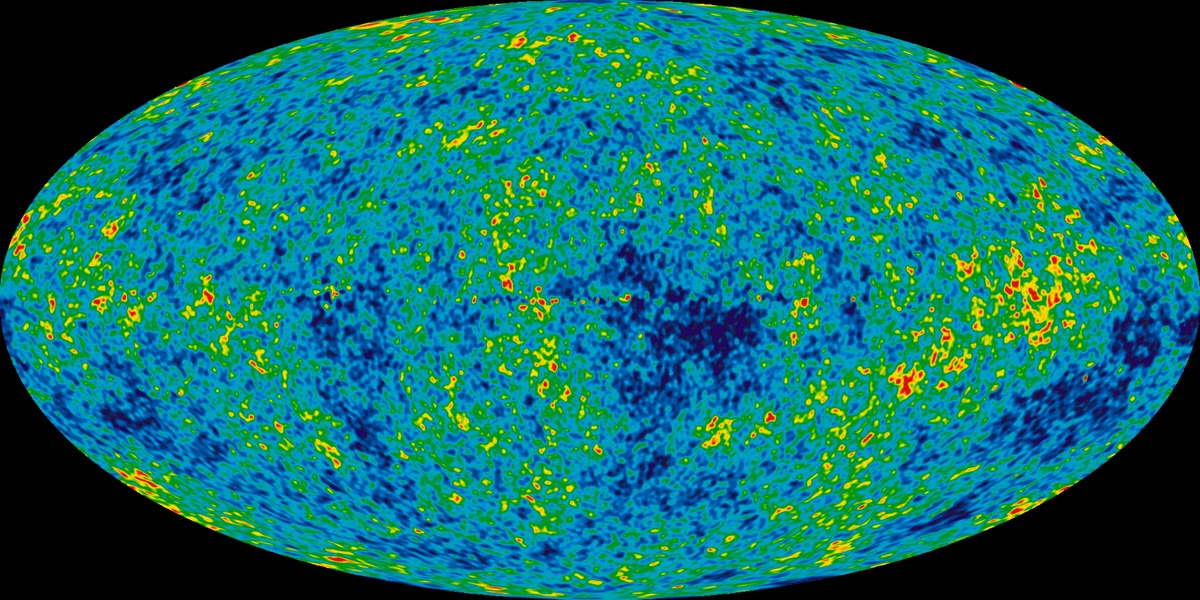
Point any millimetre-wave receiver at any patch of sky and it reports the same signal: a Planck spectrum at , smoother than any furnace mankind has built. It is the flash of the universe’s recombination (Exercise 18.12), stretched eleven-hundred-fold, and it carries the census of the cosmos. Data: ; ; , ; baryon density today ; critical density .
Part I — The spectrum.
- Compute the CMB’s peak (Wien) wavelength and its photon density per cubic centimetre.
- Compute its energy density, in and in , and its mass-equivalent fraction of the critical density.
- COBE’s spectrum (1990) matched Planck to a few parts in — the audience applauded the graph. Why is a perfect thermal spectrum from empty sky so hard to explain by anything except a hot dense past?
- At emission the same photons formed a blackbody: check the stretch factor .
- Why did the universe become transparent at just that temperature (recall which equilibrium of Chapter 18 switched off)?
- The night sky is dark (Olbers’ paradox of the old astronomy): in what precise sense is it actually bright — at what wavelength and temperature?
Part II — The census.
- Compute the photon-to-baryon ratio .
- That number — around two billion photons per proton — is one of cosmology’s fundamental data: state what it measures about the matter–antimatter asymmetry (recall Exercise 18.12: the photons are mostly annihilation products).
- Compare the CMB’s energy density with starlight’s ( averaged over the universe): which light dominates the cosmos?
- The CMB outweighs, in photons, everything stars have ever shone: why does this make the early universe “radiation-dominated”, and what took over later (the versus scalings against matter’s )?
- Estimate the epoch of matter–radiation equality: with radiation density scaling as and matter as , and today’s ratio , find .
- Neutrinos decoupled earlier and cooled slightly more (they missed the annihilation reheat of Exercise 18.12): the predicted — evaluate it, and marvel at a prediction of a neutrino sea nobody has yet directly detected.
Part III — The anisotropies.
- The CMB is hotter in one direction and cooler opposite: interpret via the Doppler physics of Chapter 4 and extract our velocity ().
- After removing that dipole, ripples of remain (COBE 1992, then WMAP, Planck): what do they map at ?
- Those density seeds grew into galaxies: why does gravity amplify overdensities (which instability), and why did growth need matter–radiation equality to begin in earnest?
- The strongest ripple size (about one degree on the sky) is an acoustic wavelength — sound in the photon–baryon plasma (this chapter’s gas plus Chapter 3’s waves!): what sets its scale (the distance sound travels before recombination)?
- Measuring that angle against the known physical scale triangulates the geometry of the universe: state the result (flat, to percent precision).
- The monopole, the dipole, the ripples: rank what each has taught (a hot past; our motion; the seeds and geometry of everything).
Part IV — The heirloom.
- Penzias and Wilson found the signal in 1965 as irremovable antenna noise (after evicting the pigeons): why was an isotropic, season-independent excess at inexplicable as any local or galactic source?
- About of an untuned analogue television’s static was this signal: reflect in one sentence.
- The CMB passes through galaxy clusters and gets slightly kicked to higher frequency by hot electrons (the Sunyaev–Zel’dovich effect): why does this make clusters visible as shadows at low frequency, and what is such a shadow’s special virtue (independent of distance)?
- Today’s frontier hunts the CMB’s polarisation for the imprint of primordial gravitational waves: which chapters of this book would that discovery marry (Chapter 6’s polarisation, gravity’s waves)?
- Compute the flux of CMB photons through your body ( per unit area, body cross-section ): how many relics of the Big Bang cross you per second?
- The CMB singles out a rest frame (the one where the dipole vanishes): explain why this does not contradict relativity — what kind of frame is preferred by the matter content rather than by the laws?
- Summarise the named result: a -kelvin Planck curve filling the sky — photons per cubic centimetre, two billion per baryon, peak at — is the thermal receipt of the hot beginning: statistical physics as cosmology’s foundation stone.
Solution
Solution of Problem 20.1.
1. ; photons per cm. 2. ; mass-equivalent : about of critical. 3. A thermal spectrum requires emitter and radiation to have equilibrated — impossible for any collection of stars, dust or plasmas added along different sightlines; only a universe that was once itself a hot opaque cavity fits. 4. . 5. Saha’s equilibrium crossed to neutral atoms: free electrons vanished, Thomson scattering ceased, and the photons have flown untouched since. 6. Bright at millimetre wavelengths, at : Olbers’ sky is ablaze — redshift moved the blaze out of the visible. 7. photons per baryon. 8. The photons are the ashes of matter–antimatter annihilation; the baryons are the one-per-billion excess that survived: measures the primordial asymmetry — still unexplained. 9. against : the relic light outshines, in energy density, everything the stars have ever emitted. 10. Radiation dilutes as (number , each photon stretched ), matter as : early on radiation ruled; matter overtook at equality, letting structure grow. 11. . 12. : a predicted cosmic neutrino background, thermal physics’ boldest unclaimed cheque. 13. : the Solar System’s motion through the relic frame. 14. The temperature (hence density and velocity) ripples of the universe at 380 000 years old: a photograph of the seeds. 15. Overdense patches pull harder and grow (the gravitational instability); before equality, radiation pressure sprang them back — growth waited for matter to rule. 16. The distance sound ( in the photon–baryon fluid) travelled by recombination — the sound horizon, an acoustic ruler buried in the sky. 17. The angle matches a flat universe’s geometry to about a per cent: parallel lines, cosmically, stay parallel. 18. Monopole: the hot beginning. Dipole: our . Ripples: the origin of structure and the geometry of space — each decimal place a discovery. 19. It was equal in every direction, day and night, summer and winter, pigeon-free: nothing local, galactic or instrumental is that isotropic — only the sky itself. 20. A hiss on every untuned set: the Big Bang was on television all along. 21. Hot cluster electrons Compton-kick CMB photons upward in frequency: below the crossover the cluster removes photons — a silhouette whose depth is distance-independent, letting surveys find clusters at any redshift. 22. Primordial gravitational waves would twist the CMB’s polarisation into “B modes”: relativity’s waves read in Thomson-scattered light — two of this book’s threads knotted. 23. : about Big-Bang photons cross you per second, unfelt. 24. It is a frame picked out by the contents (where the radiation is isotropic), not by the laws: relativity forbids only law-preferred frames — moving through the CMB is detectable, moving through spacetime is not. 25. A Planck curve on every sightline — photons per cubic centimetre, per baryon, ripples at : statistical physics’ blackbody, promoted to the foundation document of cosmology.