University Chemistry — Year 1 · Bachelor Year 1
27The p-Block I: Boron, Carbon and Nitrogen Groups
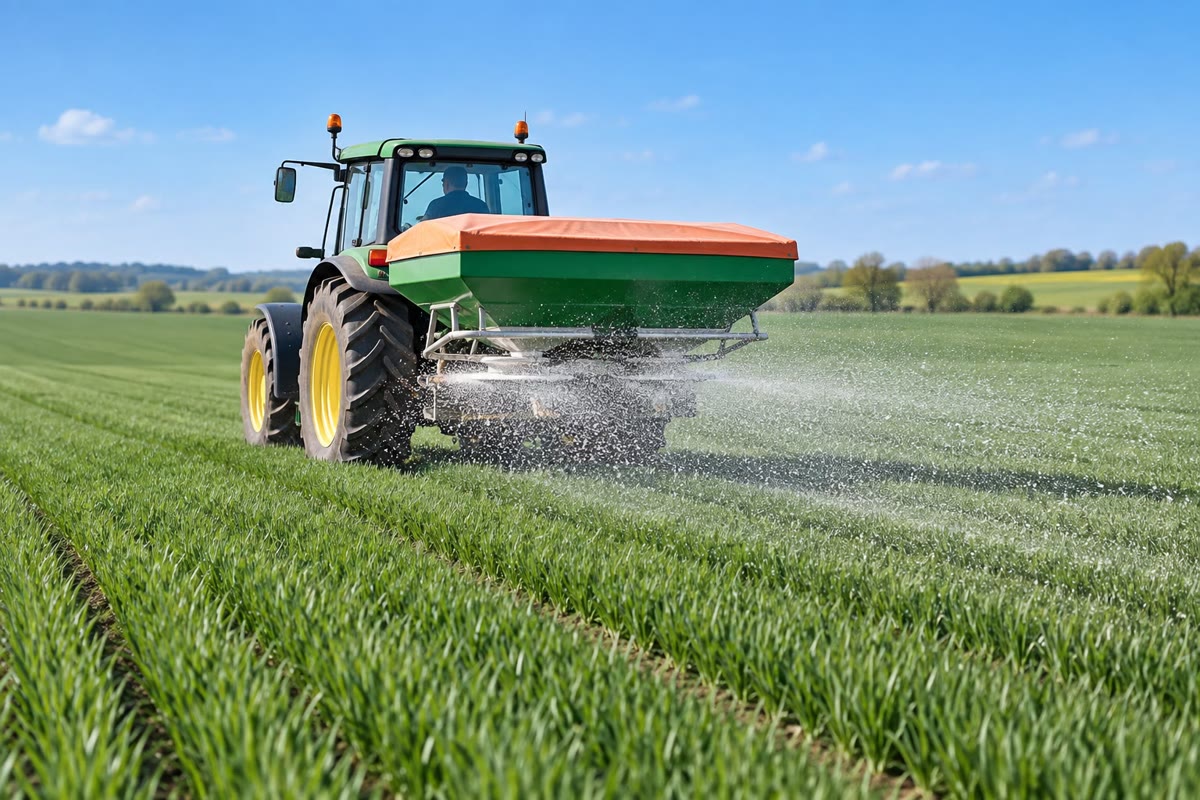
The air we breathe is four-fifths nitrogen, yet plants starve for it: the triple bond is so strong that almost nothing breaks it. For most of history, the nitrogen of crops came from manure, from bacteria living on the roots of legumes, and from mined nitrates. Early in the twentieth century a reaction between nitrogen and hydrogen over an iron catalyst changed that; today the world makes about 160 million tonnes of nitrogen a year as ammonia, and roughly half the nitrogen in a human body has passed through an ammonia plant. Groups 13, 14 and 15 hold the elements of that story — nitrogen and phosphorus for fertilisers, carbon and silicon for life and rocks, boron and aluminium for glass and light alloys. This chapter surveys them with the tools of the earlier chapters.
You already know
Allotropes of carbon and the structure of silicon and silica (Chapter 6); the character of oxides (Definition 26.4); oxidation numbers and standard potentials (Chapter 13); amphoteric hydroxides (Chapter 11); equilibrium constants from Gibbs energies (Chapter 7).
27.1 Group 13: boron and aluminium
Boron is a metalloid that forms covalent compounds with an incomplete octet: in and boric acid , boron has six valence electrons and acts as a Lewis acid (Chapter 3). Boric acid is a weak acid not by losing a proton but by accepting a hydroxide ion, . Borax, a sodium borate, is used in glass and detergents.
Definition 27.1 (Oxoacid)
An oxoacid is an acid in which the acidic hydrogen atoms are bound to oxygen atoms that are bound to a central atom: , , (), (), . The more oxygen atoms without hydrogen around the central atom, the stronger the acid.
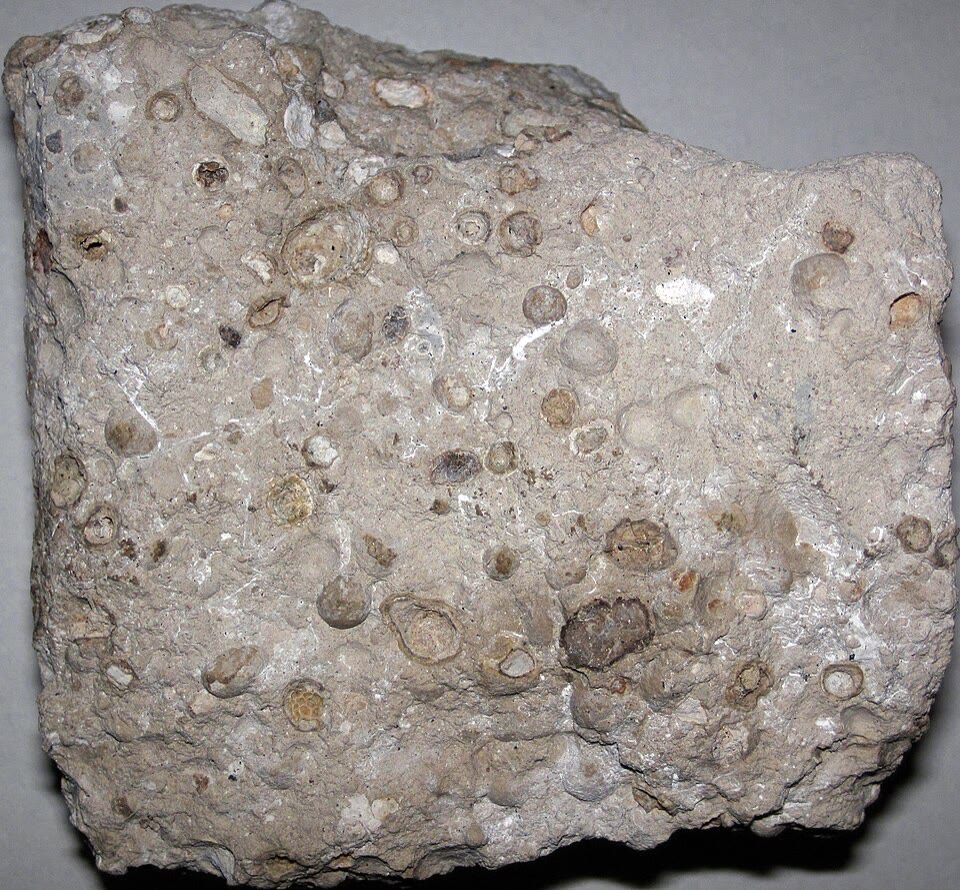
Aluminium, below boron, is a metal, but its small, highly charged ion gives it an amphoteric oxide and hydroxide (Section 11.5). Its ore is bauxite, a mixture of aluminium hydroxides with iron oxides and silica; in 2025 the world mined about 440 million tonnes of bauxite and refined about 150 million tonnes of alumina from it.
Proposition 27.2 (The Bayer process)
Hot concentrated sodium hydroxide dissolves the aluminium of bauxite as and leaves the iron oxides (red mud); cooling and seeding the filtered solution precipitates pure , calcined to alumina, .
Proof. has at (Chapter 11): at high the aluminium is in solution, while iron(III) hydroxide, not amphoteric, stays solid (Exercise 11.12). Dilution and cooling lower the and shift the quotient so that for the reverse reaction: the hydroxide precipitates. Calcination removes water. ∎
Alumina is then reduced to aluminium by electrolysis in molten cryolite, an industry studied in the Year 2 volume.
27.2 Group 14: carbon and silicon
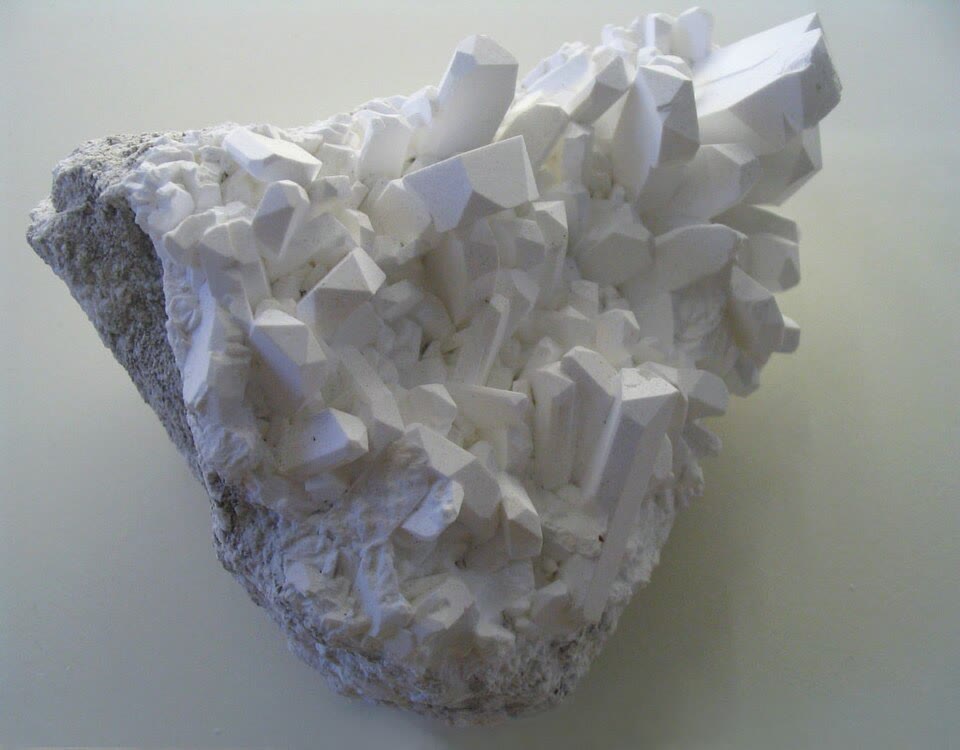
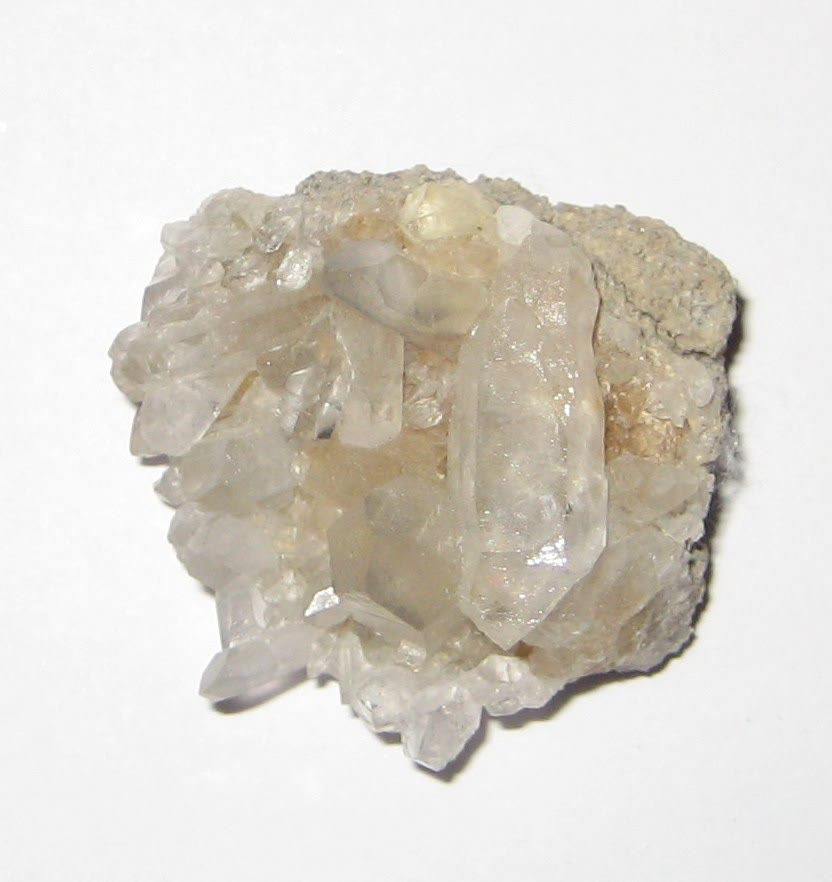
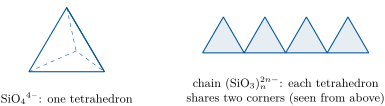
Carbon and silicon both form four bonds, but differently. Carbon forms strong double bonds: is a molecule, , a gas. Silicon hardly does: is a covalent network of tetrahedra sharing all their corners, a hard solid, quartz (Chapter 6). Carbon dioxide is an acidic oxide, giving carbonic acid, hydrogencarbonates and carbonates (Chapter 10); silica is an acidic oxide too, attacked by molten alkali to give silicates.
Proposition 27.3 (Silicate units)
Silicates are built of tetrahedra; the number of corners shared with other tetrahedra fixes the formula of the anion: none, (isolated tetrahedra); two, chains ; three, sheets ; four, the neutral framework .
Proof. A shared oxygen belongs half to each tetrahedron. A tetrahedron sharing corners owns oxygen atoms entirely and by halves: oxygens per silicon. Each unshared oxygen carries a charge (it has one bond), each shared one none: the charge per silicon is . : ; : per silicon; : , that is ; : . ∎
Definition 27.4 (Inert-pair effect)
The inert-pair effect is the increasing stability, going down groups 13 to 15, of the oxidation state two below the group’s highest: thallium(I) rather than (III), lead(II) rather than (IV), bismuth(III) rather than (V). The ns pair of the heavy elements is held tightly and takes little part in bonding.
The effect explains why lead(IV) oxide is a strong oxidant ( V, Chapter 13), while carbon(IV) and silicon(IV) are the stable states of their elements.
27.3 Group 15: nitrogen
Proposition 27.5 (The nitrogen ladder)
Nitrogen takes every oxidation number from to : and (III), (II), (I), (0), (I), (II), and (III), (IV), and (V).
Proof. Apply the rules of Proposition 13.3 to each formula, with H at I and O at II: in , ; in , ; and so on. ∎
Definition 27.6 (Nitrogen fixation)
Nitrogen fixation is any process that converts the dinitrogen of the air into a compound (ammonia, nitrate) that living organisms or industry can use: biological fixation by bacteria, fixation by lightning, and the industrial synthesis of ammonia.
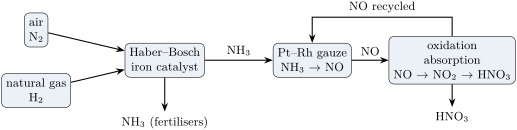
The Haber–Bosch process combines nitrogen and hydrogen over an iron catalyst, . The reaction is favoured at room temperature ( at , from the Gibbs energy of formation of ammonia), but too slow; the catalyst works only when hot, and the choice of temperature and pressure that reconciles rate and yield is made in the Year 2 volume. Ammonia is then oxidised to nitric acid by the Ostwald process.
Method 27.7 (Balancing chained industrial equations)
- Balance each step: (1) ; (2) ; (3) .
- Multiply the steps so that each intermediate formed is consumed (the of step 3 returns to step 2).
- Add: with full recycling of NO, the overall equation is , one nitric acid per ammonia.
- Use the overall equation for mass balances, the steps for the design of each reactor.
History — Fritz Haber
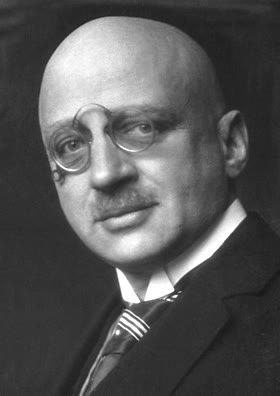
Fritz Haber showed that ammonia could be made from nitrogen and hydrogen under pressure over a catalyst; Carl Bosch turned the laboratory reaction into an industrial process. Haber received the Nobel Prize in Chemistry for 1918. The same man directed the first large-scale use of chlorine as a weapon in the First World War: chemistry that feeds half of humanity and chemistry that kills are separated by the choices of chemists. (Photograph: The Nobel Foundation, published 1919, public domain, Wikimedia Commons.)
27.4 Phosphorus and the trends down the groups
Phosphorus, below nitrogen, does not form triple bonds: white phosphorus is made of tetrahedra, strained and reactive (it ignites in air and is kept under water); red phosphorus is a polymer, much less reactive. Burning phosphorus gives , the most acidic of the common oxides, which with water gives phosphoric acid, 2.15, 7.21, 12.34 (Chapter 10). Phosphate rock, mined at about 250 million tonnes in 2025, is turned by sulfuric acid into phosphate fertilisers.
Down each group the elements become more metallic (boron to thallium, carbon to lead, nitrogen to bismuth), their oxides more basic, and the lower oxidation states more stable: the inert-pair effect. Across a period, the oxides become more acidic, from basic to the acidic oxides of phosphorus and sulfur.
27.5 Exercises
Exercise 27.1 ★
Give the oxidation number of nitrogen in (both atoms), , , and .
Solution
Solution of Exercise 27.1.
: III in , V in . : V. : III. : II. : III.
Exercise 27.2 ★
Draw the Lewis structures of , and of the adduct ; identify the Lewis acid and base.
Solution
Solution of Exercise 27.2.
: boron with three bonds and six electrons, trigonal planar. : three bonds and a lone pair. The lone pair of N forms a dative bond to B: is the Lewis acid, the Lewis base; in the adduct both atoms are tetrahedral.
Exercise 27.3 ★
Write the reactions of , (molten) and with sodium hydroxide, and of with an acid and a base.
Solution
Solution of Exercise 27.3.
; ; ; ; .
Exercise 27.4 ★
Compute the equilibrium constant of at from .
Solution
Solution of Exercise 27.4.
, , .
Exercise 27.5 ★★
Using the counting of Proposition 27.3, give the formula of a ring of six tetrahedra each sharing two corners (as in beryl) and of a double chain in which half the tetrahedra share two corners and half share three.
Solution
Solution of Exercise 27.5.
Ring of six units: . Double chain, per four silicons: two with two shared corners (3 O, charge each), two with three ( O, charge each): .
Exercise 27.6 ★★
Compute the mass of alumina obtained from one tonne of bauxite containing of by mass, with recovery.
Solution
Solution of Exercise 27.6.
of is , giving of , ; at : .
Exercise 27.7 ★★
Show that boric acid is a Lewis acid rather than a Brønsted acid, and explain why its solution is nevertheless acidic.
Solution
Solution of Exercise 27.7.
Boron has an empty orbital and accepts the lone pair of a hydroxide ion taken from water: . The proton released comes from a water molecule, not from boric acid.
Exercise 27.8 ★★
Balance the oxidation of ammonia to with the oxidation numbers and give the number of electrons exchanged per .
Solution
Solution of Exercise 27.8.
N goes from III to II, five electrons per ; each takes four. : .
Exercise 27.9 ★★
Ammonium nitrate is made from ammonia and nitric acid. Write the reaction, and compute the mass of ammonia needed (both for the nitric acid and for the neutralisation) per tonne of ammonium nitrate.
Solution
Solution of Exercise 27.9.
. One tonne is ; of ammonia to neutralise and to make the nitric acid: .
Exercise 27.10 ★★★
Explain why nitrogen is a diatomic gas and phosphorus a solid of molecules, and why carbon dioxide is a gas and silica a solid, using the strength of bonds between second-period and third-period atoms.
Solution
Solution of Exercise 27.10.
Second-period atoms are small: their p orbitals overlap well side by side and form strong bonds, so and are small stable molecules. Third-period atoms are larger; their overlap is poor, and they prefer more single bonds: tetrahedra, the network.
Exercise 27.11 ★★★
Show with the standard potentials that lead(IV) oxide oxidises chloride ions to chlorine in acid, whereas silicon(IV) oxide does nothing of the sort. Relate this to the inert-pair effect.
Solution
Solution of Exercise 27.11.
V: . Lead(IV) is unstable with respect to lead(II) (inert pair); silicon(II) is not a stable state and is not an oxidant.
Exercise 27.12 ★★★
The world produced about 160 million tonnes of nitrogen as ammonia in 2025. What mass of ammonia is that, and what mass of hydrogen did it contain? Where does that hydrogen mostly come from?
Solution
Solution of Exercise 27.12.
of ammonia, containing of hydrogen, made mostly from natural gas (methane and steam).
27.6 Problem: From Air to Fertiliser
Problem 27.1
Weekend problem — the nitrogen triple bond, ammonia synthesis, the three steps of nitric acid manufacture, ammonium nitrate, and the mass of nitric acid obtainable from one tonne of ammonia
A fertiliser plant converts ammonia into nitric acid and ammonium nitrate. Molar masses (): 28.0, 2.0, 17.0, 63.0, 80.0, 32.0; at .
Part I — Nitrogen.
- Draw the Lewis structure of and say why it is unreactive.
- Give the oxidation number of N in , , , , and .
- Name three natural or industrial ways of fixing nitrogen.
- Why are plants unable to use directly?
- Which element is oxidised and which reduced in the synthesis of ammonia?
- Write the synthesis of ammonia.
Part II — Ammonia.
- Compute the equilibrium constant of the synthesis at .
- Why is the synthesis nevertheless run hot, over a catalyst?
- Compute the masses of and for one tonne of ammonia.
- What volume of air ( by volume, ideal gas, , ) contains that nitrogen?
- Where does the hydrogen come from?
- Why is ammonia itself used as a fertiliser in some countries, and why is it often converted first?
Part III — Nitric acid.
- Balance step 1, , with oxidation numbers.
- Balance step 2, .
- Balance step 3, . Which kind of redox reaction is it?
- Combine the steps with complete recycling of NO into the overall equation.
- Compute the mass of oxygen consumed per tonne of ammonia.
- Why is a platinum–rhodium gauze used in step 1?
Part IV — Ammonium nitrate and mass balances.
- Write the formation of ammonium nitrate.
- What fraction of the ammonia must be turned into nitric acid to make only ammonium nitrate?
- Compute the mass of ammonium nitrate from one tonne of ammonia shared in that way.
- What percentage of nitrogen does ammonium nitrate contain?
- Why must ammonium nitrate be stored away from fuels and heat?
- Compute the mass of nitric acid obtainable from one tonne of ammonia (complete conversion).
Solution
Solution of Problem 27.1.
1. :N N: — a triple bond, very strong, with no polarity. 2. 0, III, II, IV, V, and III/V in . 3. Bacteria on the roots of legumes, lightning, the Haber–Bosch process. 4. Breaking the triple bond needs a catalyst that plants do not have; bacteria with the enzyme nitrogenase do. 5. Nitrogen is reduced (0 to III), hydrogen oxidised (0 to I). 6. . 7. . 8. At the reaction is far too slow; the catalyst works only hot, and the conditions are a compromise discussed in the Year 2 volume. 9. of ammonia: of , ; of , . 10. ; air . 11. From natural gas (steam reforming of methane), with a by-product. 12. Injected into soil it is a cheap fertiliser, but it is a toxic gas; solids (urea, ammonium nitrate) are easier to store and spread. 13. N: III II (5 electrons), O: 0 II (4 per ): . 14. . 15. : a disproportionation (N IV to V and II). 16. . 17. . 18. It makes the oxidation fast and selective for NO, instead of the more stable . 19. . 20. Half. 21. of , . 22. . 23. It contains an oxidant (nitrate) and a reductant (ammonium) in the same crystal: heated or mixed with fuels, it can decompose explosively. 24. of nitric acid per tonne of ammonia.