Milk keeps a week in the refrigerator and a day on a summer table. The box of a medicine says “store below 25∘C” and carries an expiry date two or three years ahead, which the manufacturer had no time to observe directly. Equilibrium constants say where a reaction ends; they say nothing of how long it takes to get there. That is the domain of chemical kinetics. This chapter defines the rate of a reaction, the rate laws that express it in terms of concentrations, the integrated forms that predict concentrations at any time, the experimental methods that determine a rate law, and the Arrhenius law that describes the effect of temperature — the tool by which the shelf life of a medicine is predicted in a few weeks of experiments.
You already know
Book 1 (grade 12) introduced the rate of appearance and disappearance of a species, the kinetic factors (concentration, temperature, catalyst) and the half-life of a first-order reaction. The extent ξ of a reaction was defined in Definition 7.6.
A bottle of milk left in the sun next to an open refrigerator. The reactions that spoil it go several times faster at summer temperature than in the cold.
8.1 The rate of a reaction
Definition 8.1(Rate of reaction, rates of formation and disappearance)
For a reaction 0=∑iνiAi taking place in a closed reactor of constant volume V, the rate of reaction is
v=V1dtdξ=νi1dtd[Ai](any i),
in molL−1s−1. The rate of formation of a product is d[Ai]/dt; the rate of disappearance of a reactant is −d[Ai]/dt.
Proposition 8.2(One rate for all species)
The rate of reaction does not depend on the species chosen to follow it: for aA+bB⟶cC+dD,
v=−a1dtd[A]=−b1dtd[B]=c1dtd[C]=d1dtd[D].
Proof.[Ai]=(ni,0+νiξ)/V with V constant, so d[Ai]/dt=(νi/V)dξ/dt=νiv. ∎
Example 8.3(Decomposition of dinitrogen pentoxide)
For 2NX2OX54NOX2+OX2: v=−21dtd[NX2OX5]=41dtd[NOX2]=dtd[OX2]. Nitrogen dioxide appears four times as fast as dioxygen, and dinitrogen pentoxide disappears twice as fast as dioxygen appears.
8.2 Rate laws and orders
Definition 8.4(Rate law, orders, rate constant)
A rate law expresses the rate as a function of the concentrations. A reaction has an order when its rate law takes the form
v=k[A]p[B]q⋯;
the exponents p, q, … are the partial orders with respect to A, B, …, their sum is the overall order, and k is the rate constant, which depends on temperature only. Orders are found by experiment; they need not equal the stoichiometric coefficients, and they can be fractional or zero.
Remark 8.5(Units of k)
Since v is in molL−1s−1, k is in molL−1s−1 for order 0, s−1 for order 1, Lmol−1s−1 for order 2, and in general (mol/L)1−ns−1 for overall ordern. The unit of k tells the overall order.
Remark 8.6(Reactions without order)
Not every reaction has an order. The rate of some reactions is a fraction whose denominator contains concentrations, or depends on the concentration of a product. Such rate laws are explained by the mechanism of the reaction (Chapter 9). A reaction may also have an order at the beginning only: the initial rate law.
8.3 Integrated rate laws and half-lives
Definition 8.7(Half-life)
The half-lifet1/2 of a reactant is the time after which half of its initial amount has been consumed.
Theorem 8.8(Integrated rate laws)
For a reaction aA→products of rate v=−a1dtd[A]=k[A]n, with [A](0)=a0:
Proof. Write c=[A], so dc/dt=−akcn. Order 0: dc/dt=−ak, hence c=a0−akt (valid until c=0). Order 1: dc/dt=−akc is a first-order linear differential equation whose solution is c=a0e−akt. Order 2: dc/c2=−akdt; integrating from 0 to t, −1/c+1/a0=−akt, so 1/c=1/a0+akt. Half-lives: set c=a0/2 in each law and solve for t. ∎
Proposition 8.9(The half-life test)
The half-life is independent of the initial concentration if and only if the reaction is of order 1. It is proportional to a0 for order 0 and to 1/a0 for order 2. A first-order reaction loses half of what is left in each successive half-life: after m half-lives a fraction 2−m remains.
Proof. For order n=1, separating variables gives t1/2=(n−1)aka0n−12n−1−1, which depends on a0 unless n=1; for n=1, t1/2=ln2/(ak). For order 1, c(t+t1/2)=c(t)/2 at every t, since e−ak(t+t1/2)=e−akt/2. ∎
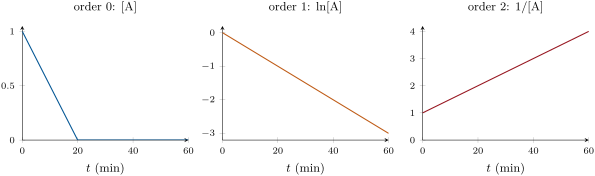
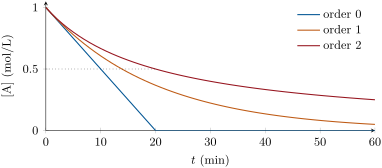
Three reactions with the same initial concentration (1.00mol/L) and the same initial rate (0.050molL−1min−1). Top: each integrated law becomes a straight line in its own coordinates. Bottom: the concentrations; the half-lives are 10, 13.9 and 20 minutes.
8.4 Finding a rate law
Method 8.10(The integral method)
To test an order with measurements [A](t): plot [A], ln[A] and 1/[A] against t; the plot that is a straight line gives the order, and its slope gives k (slope −ak, −ak or +ak respectively).
Method 8.11(The half-life method)
Measure the half-life for several initial concentrations: constant, order 1; proportional to a0, order 0; proportional to 1/a0, order 2. In a single experiment, compare the times to go from a0 to a0/2 and from a0/2 to a0/4: equal times mean order 1.
Definition 8.12(Initial rate)
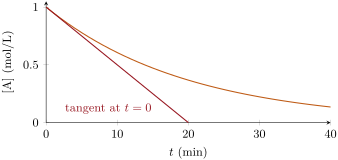
The initial ratev0 is the rate at t=0, read as the slope of the tangent at the origin of the curve [A](t), divided by the stoichiometric coefficient. At that moment the concentrations are the known initial ones and no product interferes.
Method 8.13(The method of initial rates)
For v0=k[A]0p[B]0q: run experiments that change [A]0 alone; then lnv0=ln(k[B]0q)+pln[A]0, and the slope of lnv0 against ln[A]0 is p. In practice, doubling [A]0 multiplies v0 by 2p. Do the same for B.
Definition 8.14(Isolation method, apparent order)
In the isolation method, all reactants but one are put in large excess (ten times or more). Their concentrations stay practically constant, and v=k[A]p[B]q≈k′[A]p with k′=k[B]0q: the reaction behaves as if of apparent orderp with the apparent rate constantk′. This is also called degeneracy of the order.
Reading an initial rate: the tangent at the origin (red) of a first-order curve meets the time axis at t0=20min, so v0=1.00mol/L/20min=0.050molL−1min−1.
In the lab— Following a reaction in time
A rate law is built from concentrations measured while the reaction runs. When a reactant or a product is coloured, a spectrophotometer records the absorbance, proportional to its concentration (Beer–Lambert, Chapter 17); when ions appear or disappear, a conductimeter follows the conductivity; when a gas forms in a closed vessel, a manometer follows the pressure. Otherwise samples are taken at known times, the reaction is stopped (quenched) by cooling or dilution, and each sample is titrated. The temperature of the vessel is held constant by a thermostatic bath, because k depends strongly on it.
8.5 Temperature: the Arrhenius law
Definition 8.15(Activation energy)
The activation energyEa of a reaction of rate constantk(T) is defined by
dTdlnk=RT2Ea,
in J/mol. When Ea is independent of T, integrating gives k=Ae−Ea/RT, where the constant A, of the unit of k, is the pre-exponential factor.
Theorem 8.16(Arrhenius law)
For most reactions, over a moderate range of temperature, the rate constant follows the Arrhenius law
k(T)=Ae−Ea/RT,
with A and Ea>0 independent of T: lnk is a linear function of 1/T of slope −Ea/R.
Proof.Admitted at this level.∎
Remark 8.17(The meaning of Ea)
The law is empirical. Its interpretation — only the molecular collisions that carry at least an energy of the order of Ea lead to reaction, and the fraction of such collisions varies as e−Ea/RT — is sketched with the energy profiles of the next chapter and made quantitative by the theories of reaction rates in the Year 3 volume.
Method 8.18(Determining Ea)
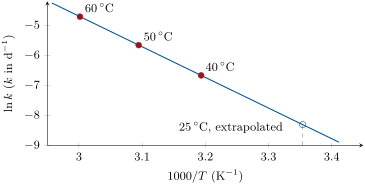
From rate constants at several temperatures, plot lnk against 1/T (in kelvin): the slope is −Ea/R, the intercept lnA. With two temperatures only,
Ea=1/T1−1/T2Rln(k2/k1).
Example 8.19(A rule of thumb)
For Ea=53kJ/mol, going from 25 to 35∘C multiplies k by exp(8.31453000(298.151−308.151))=2.0. The familiar rule “ten degrees more, twice as fast” holds near room temperature for reactions of activation energy around 50kJ/mol; for larger Ea the factor is larger.
Arrhenius plot of the degradation of a medicine (weekend problem): three measured rate constants (red) lie on a line of slope −Ea/R; extrapolated to 25∘C, it gives the shelf life at room temperature.
History— Arrhenius, 1889
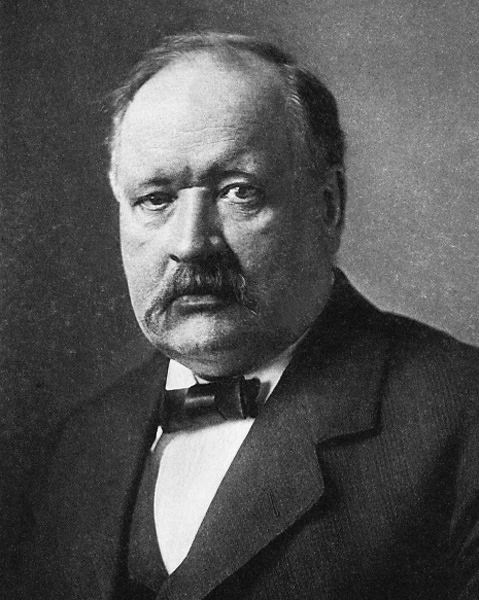
The Swedish chemist Svante Arrhenius, studying the inversion of sucrose by acids in 1889, proposed that only a small fraction of the molecules, those in an “activated” state, react, and that this fraction grows with temperature as e−E/RT. The idea, controversial at first, became the foundation of chemical kinetics. Arrhenius received the Nobel Prize in Chemistry in 1903, for his theory of electrolytic dissociation.
v=41×2.0×10−4=5.0×10⁻⁵molL−1s−1; dioxygen forms at the same rate, 5.0×10⁻⁵; NX2OX5 disappears at 2v=1.0×10⁻⁴molL−1s−1.
Exercise 8.2★
Give the unit of the rate constant for overall orders 0, 1, 2 and 3, concentrations in mol/L and times in seconds.
Solution
Solution of Exercise 8.2.
Order 0: molL−1s−1; order 1: s−1; order 2: Lmol−1s−1; order 3: L2mol−2s−1.
Exercise 8.3★
A first-order reaction A⟶B has k=3.0×10⁻³s−1. Compute its half-life and the fraction of A left after 10min.
Solution
Solution of Exercise 8.3.
t1/2=ln2/k=0.693/(3.0×10−3)=231s. After 600s, e−kt=e−1.8=0.165: 16.5 % left.
Exercise 8.4★
When the initial concentration of a reactant is halved, its half-life doubles. What is the order? What if the half-life is halved?
Solution
Solution of Exercise 8.4.
A half-life proportional to 1/a0 means order 2. If halving a0 halves the half-life, t1/2∝a0: order 0.
Exercise 8.5★★
The concentration of a reactant A (A⟶P) is measured: at t=0, 10, 20, 30 and 40min, [A]=0.100, 0.0741, 0.0549, 0.0407 and 0.0301mol/L. Determine the order and the rate constant.
Solution
Solution of Exercise 8.5.
[A] is not linear in t (losses 0.0259, 0.0192, 0.0142, 0.0106). ln[A]=−2.303, −2.602, −2.902, −3.202, −3.503: it drops by 0.300 every 10min, a straight line. Order 1, k=0.0300min−1.
Exercise 8.6★★
For A+B⟶P, v0=2.0×10⁻⁶molL−1s−1 for [A]0=[B]0=0.010mol/L; 8.0×10⁻⁶ when [A]0 is doubled; 4.0×10⁻⁶ when [B]0 is doubled. Find the partial orders, the rate law and the rate constant.
Solution
Solution of Exercise 8.6.
Doubling [A]0 multiplies v0 by 4=22: order 2 in A. Doubling [B]0 multiplies it by 2: order 1 in B. v=k[A]2[B] with k=2.0×10⁻⁶/(0.0102×0.010)=2.0L2mol−2s−1.
Exercise 8.7★★
The rate law of A+B⟶P is v=k[A][B]. With [B]0=0.50mol/L and [A]0=5.0×10⁻³mol/L, A disappears with first-order kinetics and an apparent constant of 0.012s−1. Explain and compute k.
Solution
Solution of Exercise 8.7.
B is in hundred-fold excess: its concentration stays 0.50mol/L, and v=k′[A] with k′=k[B]0. Hence k=0.012/0.50=0.024Lmol−1s−1.
Ea=Rln5/(1/300−1/320)=8.314×1.609/(2.083×10−4)=64.2kJ/mol. At 310K: lnk=ln(1.0×10⁻³)+REa(3001−3101)=−6.908+0.831, k=2.3×10⁻³s−1.
Exercise 8.9★★
The reaction 2A⟶P has the rate lawv=−21dtd[A]=k[A]2 with k=0.50Lmol−1s−1. Starting from [A]0=0.020mol/L, compute the half-life and the concentration after 100s.
Solution
Solution of Exercise 8.9.
Here a=2: 1/[A]=1/a0+2kt, t1/2=1/(2ka0)=1/(2×0.50×0.020)=50s. At 100s: 1/[A]=50+100=150L/mol, [A]=6.7×10⁻³mol/L.
Exercise 8.10★★★
For a first-order reaction, show that the time needed to consume a fraction f of the reactant is tf=−ln(1−f)/(ak). Compare the times for 50 %, 75 %, 90 % and 99.9 %, in half-lives.
Solution
Solution of Exercise 8.10.
[A]=a0(1−f)=a0e−aktf gives tf=−ln(1−f)/(ak), and in half-lives tf/t1/2=−ln(1−f)/ln2: 1 for 50 %, 2 for 75 %, 3.32 for 90 %, 9.97 for 99.9 %: about ten half-lives for the reaction to be “finished”.
Exercise 8.11★★★
A skin patch releases a drug at a constant rate of 0.40mg/h as long as its reservoir, initially 10mg, is not empty. Write the law of the amount left, give its order, its half-life and the time after which the patch is exhausted. Why do zero-order kinetics suit a drug patch?
Solution
Solution of Exercise 8.11.
m(t)=10−0.40t (mg, h): order 0. Half-life10/(2×0.40)=12.5h; empty after 25h. The dose delivered per hour does not depend on what is left: a steady supply, which is the purpose of a patch.
Exercise 8.12★★★
Show that the rule “ten degrees more, twice as fast” between 298.15K and 308.15K corresponds to Ea≈53kJ/mol. What factor does the same activation energy give between 0∘C and 10∘C?
Solution
Solution of Exercise 8.12.
Ea=Rln2/(1/298.15−1/308.15)=8.314×0.693/(1.088×10−4)=52.9kJ/mol. Between 273.15 and 283.15K: exp(8.31452900(273.151−283.151))=2.3: the same activation energy gives a larger factor at lower temperature.
8.7 Problem: The Shelf Life of a Medicine
Problem 8.1
Weekend problem — an accelerated stability test: first-order degradation at 60 °C, three temperatures, the Arrhenius plot, and the shelf life at room temperature
To predict the shelf life t90 of a tablet (the time after which 10 % of the active ingredient has degraded), a laboratory stores samples at high temperature and measures the percentage of ingredient left. At 60∘C:
time (days)
0
10
20
30
40
ingredient left (%)
100.0
91.4
83.5
76.3
69.8
At 40 and 50∘C the rate constants found are 1.27×10⁻³d−1 and 3.48×10⁻³d−1. Take R=8.314J/(molK) and one month =30.4d.
Part I — The order at 60 °C.
Compute the losses over each 10-day interval. Is the reaction of order 0?
Compute ln(% left) at each time. What do you conclude?
Compute the shelf life t90 at 25∘C, in days and in months.
Solution
Solution of Problem 8.1.
1. Losses 8.6, 7.9, 7.2 and 6.5 points: not constant, so not order 0. 2.ln: 4.605, 4.515, 4.425, 4.335, 4.245; it drops by 0.090 every 10 days: a straight line, order 1. 3.k60=0.090/10=9.0×10−3d−1. 4.t1/2=ln2/k60=77d. 5.100e−0.54=58.3%. 6.t90=ln(10/9)/k60=0.1054/0.0090=11.7d. 7. 90 % left: e−kt90=0.9, so t90=ln(10/9)/k. 8.t90/t1/2=ln(10/9)/ln2=0.152. 9. For order 1 the fraction left depends on kt only, not on the initial amount. 10. At 25∘C the degradation takes years; heating accelerates it (Arrhenius) so that it can be measured in weeks. 11. For order 2 the half-life is 1/(aka0): a tablet twice as strong would degrade twice as fast in relative terms and keep less long. 12.1/T (K−1): 3.1934×10⁻³, 3.0945×10⁻³, 3.0017×10⁻³; lnk: −6.669, −5.661, −4.711. 13. Slope =(−4.711+6.669)/(3.0017×10−3−3.1934×10−3)=−1.021×104K. 14.Ea=8.314×1.021×104=85kJ/mol. 15. Predicted lnk50=−4.711−1.021×104×(3.0945−3.0017)×10−3=−5.658, measured −5.661: on the line. 16.A=k60eEa/RT=0.0090e10215/333.15=1.9×1011d−1. 17.exp(1.021×10⁴(298.151−308.151))=3.0: more than the factor 2 of the rule, because Ea is larger than 53kJ/mol. 18.k30=k60exp(−1.021×10⁴(303.151−333.151))=4.3×10⁻⁴d−1. 19.t90=0.1054/4.33×10−4=243d, 8.0 months. 20.1−e−3×0.0090=2.7%. 21. The shelf life falls quickly with temperature (8 months at 30∘C against 14 at 25∘C): the expiry date is valid only below 25∘C. 22.k25=k60exp(−1.021×10⁴(298.151−333.151))=2.46×10⁻⁴d−1. 23.t90=0.1054/2.46×10−4=428d, that is 14 months: the date printed on the box, obtained from six weeks of measurements.