High School Biology · Grades 10–12
34Adaptive Immunity and Vaccination
In 1796 a country doctor scratched matter from a milkmaid’s cowpox blister into the arm of a boy, waited six weeks, and then inoculated him with smallpox. The boy did not fall ill. Nothing in the doctor’s world explained why; the body, it seemed, had been taught. Two centuries later smallpox is extinct, and the teaching is understood down to the molecules: a set of cells that carry, between them, a receptor for almost any molecule that could ever exist, that multiply when their molecule appears, and that remember. This chapter describes that system, its two arms, its memory, the vaccines built on it — and the virus that destroys it.
34.1 Antigens and lymphocytes
Definition 34.1 (Antigen, lymphocyte)
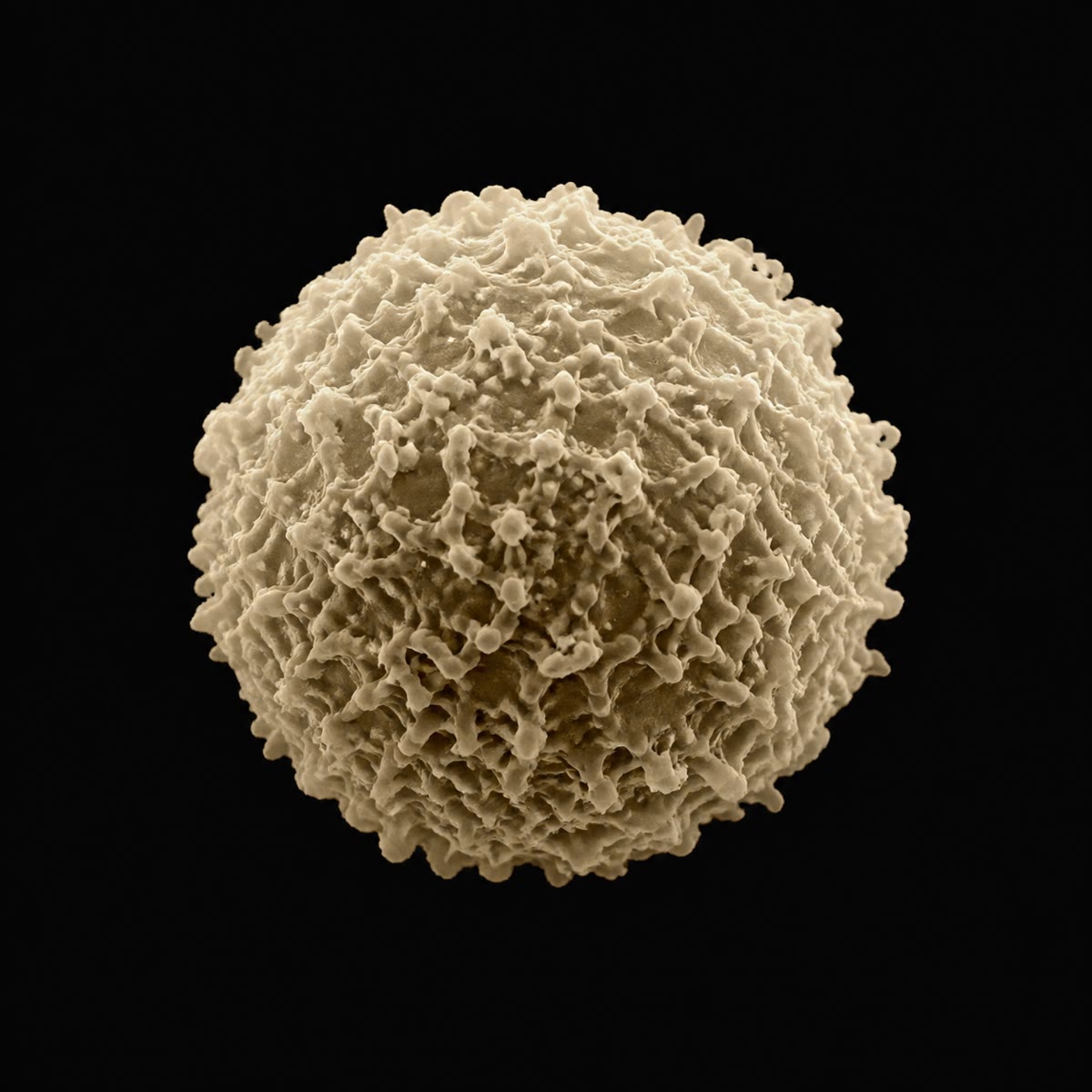
An antigen is any molecule that the adaptive immune system can recognise: typically a protein or sugar of a microbe, a toxin, a foreign cell’s surface — or, in error, one of the body’s own. The recognising cells are the lymphocytes, white cells made in the bone marrow and gathered in the lymph nodes, the spleen and the lymphoid tissue of the gut. Each lymphocyte carries thousands of copies of one receptor, and every receptor binds one antigen only. The B lymphocytes mature in the marrow and will make antibodies; the T lymphocytes mature in the thymus and act by contact and by signals.
Proposition 34.2 (A repertoire made in advance)
The receptor of each lymphocyte is assembled, while the cell matures, by a random rearrangement of gene segments, different in every cell. The body thus holds some different receptors before ever meeting an antigen — enough that nearly any molecule finds a few cells that bind it. Lymphocytes whose receptor binds the body’s own molecules are eliminated during maturation; the rest wait, a few cells for each possible antigen, until their antigen arrives.
Proof. Admitted at this level. ∎
34.2 Clonal selection
Proposition 34.3 (Selection and expansion)
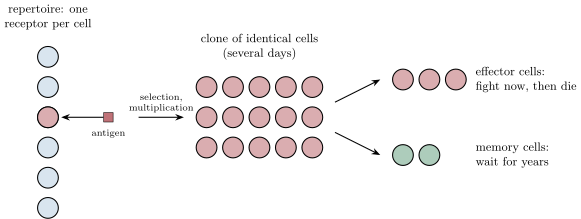
When an antigen enters, only the lymphocytes whose receptor fits it respond: they are selected, and they multiply by mitosis into a clone of thousands of identical cells over several days — clonal selection. The clone then differentiates: most cells become effector cells that fight the antigen for a week or two and die; a minority become long-lived memory cells, which persist for years and, if the antigen returns, respond faster and in far greater numbers. The response is specific because only the fitting clones expand; it is slow the first time because they start from a handful of cells; it is fast the second time because the memory cells are already many.
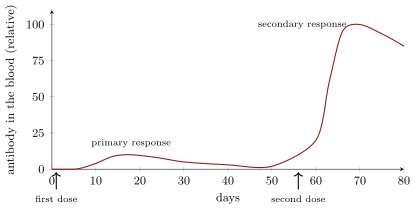
Evidence. Antibodies against a given antigen appear in the blood about a week after a first injection, rise for two weeks and decline; a second injection months later produces, within two or three days, antibodies at ten to a hundred times the first peak, which persist for years. Injecting a second, unrelated antigen at the same time as the second dose gives, for that antigen, a slow first-type response: the memory is specific. Lymphocytes taken from an immunised animal and transferred to a naive one transfer the memory; those from a non-immunised animal do not. ∎
34.3 Two arms: antibodies and killer cells
Proposition 34.4 (B lymphocytes and antibodies)
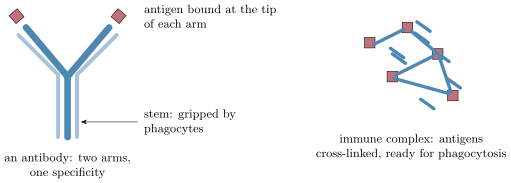
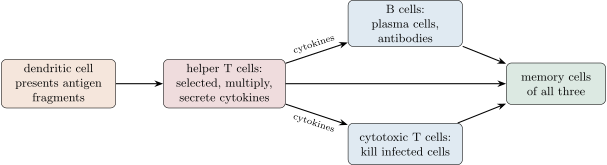
A selected B clone differentiates into plasma cells, factories that secrete thousands of antibodies per second: soluble copies of the clone’s receptor, Y-shaped proteins whose two arms each bind the antigen. Antibodies do not kill; they mark. Bound to a virus or a toxin they block it from entering cells or acting; bound to a bacterium they coat it, and the coat is what the phagocytes of Chapter 33 grip best. Antigens cross-linked by many antibodies clump into immune complexes, which are cleared by phagocytosis. This is the arm against intruders in the blood and fluids.
Proof. Admitted at this level. ∎
Proposition 34.5 (T lymphocytes)
T lymphocytes recognise antigen only as fragments displayed on the surface of another cell (Chapter 33). Two kinds:
- Helper T cells are activated by the dendritic cells that bring the antigen to the lymph node; once selected and multiplied, they secrete cytokines that authorise and amplify the response of the B cells and of the other T cells. They are the coordinators; without them, almost no adaptive response occurs.
- Cytotoxic T cells recognise fragments of a virus (or of a tumour protein) displayed by an infected cell, and kill that cell by contact, before the virus inside it can multiply. This is the arm against intruders hidden inside cells, where antibodies cannot reach.
Proof. Admitted at this level. ∎
Example 34.6 (A virus, met twice)
First influenza: the virus multiplies for three days before the adaptive response is ready; by day 7 cytotoxic T cells are killing infected cells in the airways and antibodies are neutralising free virus; by day 10 the person is recovering, with memory cells of both kinds. The same strain a year later: antibodies already in the blood block most of the virus at entry, memory cells expand within two days, and the infection is over before it is noticed. A different strain whose surface proteins have mutated escapes the antibodies — which is why the vaccine is remade every year.
34.4 Vaccination
Definition 34.7 (Vaccine)
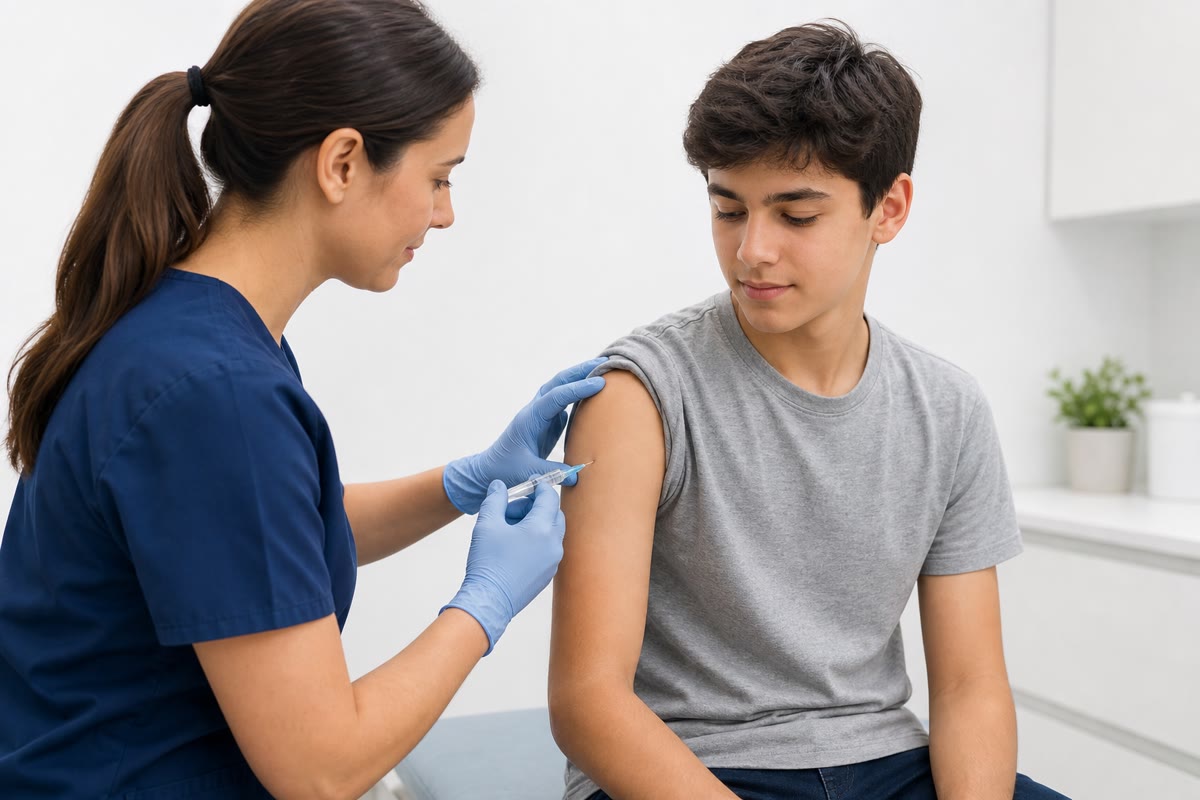
A vaccine is a preparation that provokes a primary adaptive response, and hence memory, against a pathogen without causing its disease: the pathogen weakened (measles, tuberculosis), killed (polio by injection), reduced to one of its proteins or an inactivated toxin (tetanus, hepatitis B), or, most recently, to the instructions for the cell to make that protein. An adjuvant added to the preparation provokes the small inflammation without which the dendritic cells would not carry the antigen to the lymph node. Booster doses turn the primary response into a secondary one and extend the memory for decades.
Proposition 34.8 (Protecting the group)
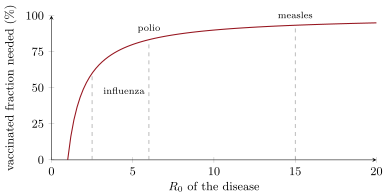
A vaccinated person is protected; a vaccinated population protects its unvaccinated members too. An infected person passes a disease, on average, to others in a population with no immunity (about 15 for measles, 2 to 3 for influenza); if a fraction is immune, only of those contacts can be infected, and the disease recedes when that number falls below 1 — that is, when
For measles, 93% of the population must be immune to protect the infants too young for the vaccine and the people who cannot receive it; for influenza, about 60%. This herd immunity is why vaccination is a collective act.
Proof. Admitted at this level. ∎
34.5 When the coordinator is destroyed
Proposition 34.9 (HIV and AIDS)
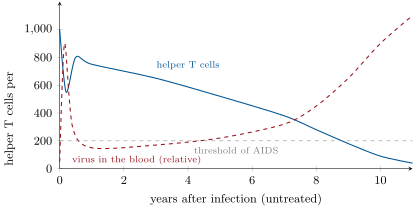
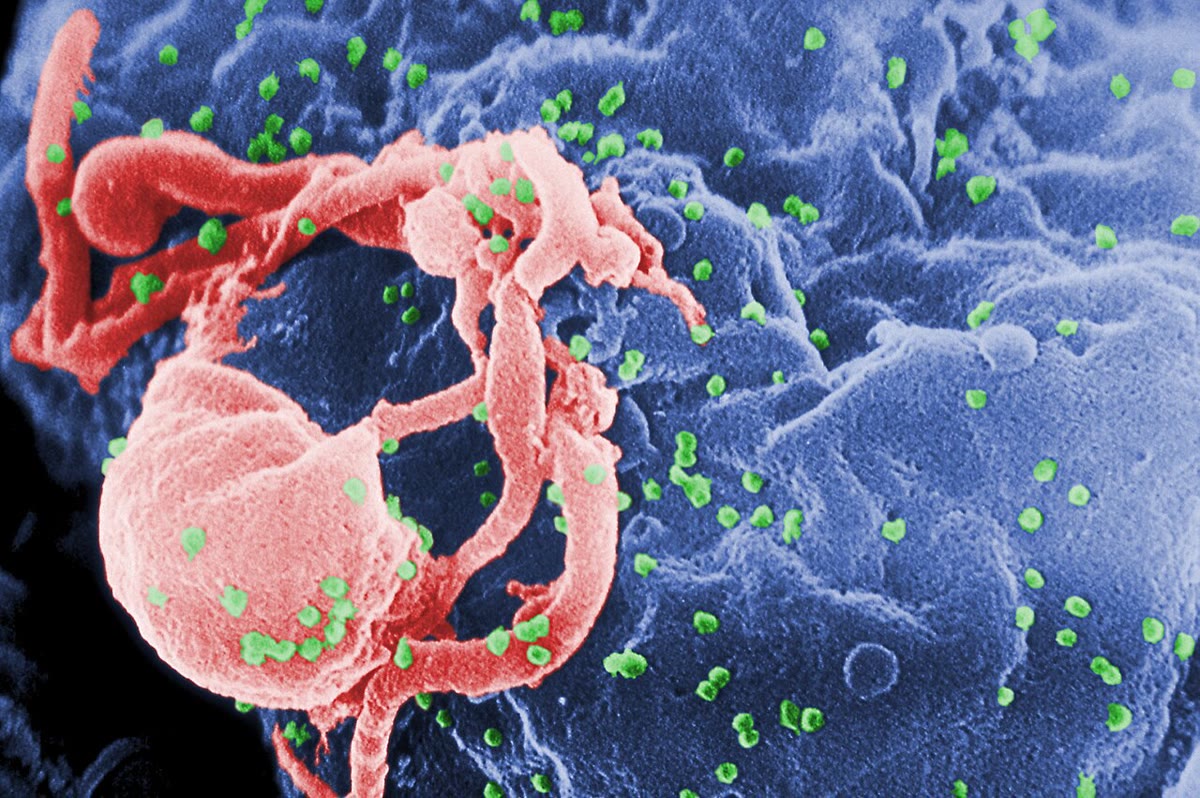
The human immunodeficiency virus, HIV, infects the helper T cells, entering through the very receptor that marks them, and multiplies in them. For years the immune system kills infected cells and makes antibodies — the person is seropositive, and infectious — while the virus, mutating constantly, escapes each response and slowly depletes the helper cells. When their count falls below about a fifth of normal, the adaptive response can no longer be coordinated: AIDS, in which infections that a healthy body clears without noticing — a fungus of the mouth, a mild parasite of the lungs — become fatal, and rare cancers appear. Antiviral drugs block the virus’s enzymes, restore the helper cells and, taken for life, hold the disease off and stop transmission; there is no vaccine yet, and no cure.
Proof. Admitted at this level. ∎
Method 34.10 (Reading an immune response)
- Identify the antigen and where it is: free in the fluids (antibodies act) or inside cells (cytotoxic T cells act).
- Read the timing: a week to a peak means a primary response, a few days means memory.
- Read the specificity: a response to one antigen leaves the response to another untouched.
- Locate the helper T cells: without them nothing happens, which is what AIDS demonstrates.
- For a vaccine, name the form of the antigen, the adjuvant, the number of doses, and the fraction of the population needed.
Remark 34.11 (Selection, once more)
The adaptive immune system is Darwinian: a population of cells with random receptors, of which the environment — the antigen — selects a few to multiply, and whose descendants inherit the winning receptor. It runs the process of Chapter 25 inside one body in a week, and, through memory, keeps its results for a lifetime. It is also the reason the immune system can be taught, which is what a vaccine does, and why a virus that mutates faster than the system can select — HIV, influenza — is so hard to beat.
34.6 Exercises
Exercise 34.1 ★
Define antigen and lymphocyte, and say what makes each lymphocyte specific.
Solution
Solution of Exercise 34.1.
An antigen is any molecule the adaptive system can recognise; a lymphocyte is a white cell carrying receptors for one antigen. Its specificity comes from its receptor, assembled at random during maturation and identical on all its copies.
Exercise 34.2 ★
Describe clonal selection in four steps.
Solution
Solution of Exercise 34.2.
The antigen binds the few lymphocytes whose receptor fits; those cells multiply into a clone over days; the clone differentiates into effector cells that fight; a minority become memory cells that persist.
Exercise 34.3 ★
What is an antibody, what does it bind, and what does it do to a bacterium?
Solution
Solution of Exercise 34.3.
A Y-shaped protein secreted by plasma cells, a soluble copy of the B cell’s receptor; each arm binds the antigen. On a bacterium it forms a coat that phagocytes grip, and cross-links bacteria into complexes that are engulfed.
Exercise 34.4 ★
Give the roles of helper and cytotoxic T cells.
Solution
Solution of Exercise 34.4.
Helper T cells, activated by dendritic cells, secrete the cytokines that authorise and amplify the B cells and the other T cells. Cytotoxic T cells kill cells displaying fragments of a virus or a tumour protein.
Exercise 34.5 ★
What is in a vaccine, and why does it work?
Solution
Solution of Exercise 34.5.
A harmless form of the pathogen’s antigen (weakened, killed, a protein, a toxin inactivated, or its instructions) with an adjuvant. It provokes a primary response and leaves memory cells, so that the real pathogen meets a secondary response.
Exercise 34.6 ★★
From the antibody figure, compare the delay, the peak and the duration of the primary and secondary responses.
Solution
Solution of Exercise 34.6.
Primary: a week’s delay, a low peak (about a tenth of the secondary’s) at two to three weeks, a decline within a month. Secondary: two or three days’ delay, a peak ten times higher within ten days, persisting for months.
Exercise 34.7 ★★
A second injection of antigen A together with a first injection of antigen B gives a strong fast response to A and a slow weak one to B. What does this show?
Solution
Solution of Exercise 34.7.
Memory is specific: the memory cells left by the first dose of A respond to A only; B, met for the first time, gets a primary response.
Exercise 34.8 ★★
Why can antibodies not clear a virus once it is inside a cell, and which cells can?
Exercise 34.9 ★★
Compute the vaccination coverage needed for a disease with , and with .
Solution
Solution of Exercise 34.9.
; .
Exercise 34.10 ★★
Why does a measles vaccination campaign protect infants who are too young to be vaccinated?
Solution
Solution of Exercise 34.10.
Above the threshold each case infects fewer than one other, so the virus cannot circulate and rarely reaches an infant; the immune adults are the wall around them.
Exercise 34.11 ★★
From the HIV figure, read the helper T cell count at 1, 5 and 9 years, and say when AIDS begins.
Solution
Solution of Exercise 34.11.
About 750, 520 and 180 per microlitre; AIDS begins around year 9, when the count crosses 200.
Exercise 34.12 ★★★
Explain why the destruction of helper T cells alone disables both the antibody arm and the killer-cell arm, using the organisation figure.
Solution
Solution of Exercise 34.12.
The helper T cells’ cytokines are what authorise the B cells to become plasma cells and the cytotoxic T cells to multiply; both arms depend on the same coordinator, so removing it silences both.
Exercise 34.13 ★★★
A seropositive person carries antibodies against HIV yet is not protected. Explain why, with the virus’s mutation rate and its target.
Solution
Solution of Exercise 34.13.
The antibodies were selected against the virus as it was; the virus mutates its surface proteins faster than new clones can be selected, so each response is outrun. And the virus hides and multiplies inside the very helper cells that would coordinate the response.
Exercise 34.14 ★★★
The influenza vaccine is remade every year; the measles vaccine of 1970 still works. Explain the difference with the mutation of the viruses’ surface proteins and the specificity of memory.
Solution
Solution of Exercise 34.14.
Memory cells recognise the surface proteins the vaccine presented. Influenza’s mutate every year into forms the old memory does not bind; measles’ surface proteins hardly change, so the memory of 1970 still fits the virus of today.
Exercise 34.15 ★★★
Compare the adaptive immune response to natural selection in a population: what varies, what selects, what is inherited, and what the time scale is. Where does the analogy stop?
Solution
Solution of Exercise 34.15.
What varies: the receptors of the lymphocytes, made at random. What selects: the antigen, which lets only fitting clones multiply. What is inherited: the receptor, by the clone’s descendants, including the memory cells. Time scale: days for a response, a lifetime for memory, against generations for a population. The analogy stops at transmission: the selected clones die with the body and are not passed to the next generation.
34.7 Problem: Ninety-Three Per Cent
Problem 34.1
Weekend problem — a vaccination campaign reckoned: the responses to two doses, the arithmetic of herd immunity, a measles outbreak modelled, and the virus that undoes the system
Measles has . A town of 50 000 people has 90% of its population immune by vaccination or past infection; 1500 are infants under one year, too young for the vaccine.
Part I — One person’s response. A child receives the first dose at 12 months and the second at 18.
- Describe the antibody curve after the first dose: delay, peak, decline.
- Describe it after the second dose and explain the difference with clonal selection.
- The vaccine virus is weakened but alive. Why is a living virus used, and which arm of the response does it train that a killed one would not?
- Ten years later the child meets measles. What happens in the first three days, and why does she not fall ill?
- Her unvaccinated cousin meets the same virus. Describe his first ten days, and what he keeps afterwards.
Part II — The threshold.
- Compute the fraction of the population that must be immune for measles to stop spreading.
- With 90% immune, how many people can one infected person infect on average? Is the town protected?
- How many people in the town are not immune, and how many of them are the infants?
- If coverage rose to 95%, how many susceptible people would remain, and what would one case produce on average?
- Explain in one sentence why the infants’ safety depends on the adults’ decisions.
Part III — An outbreak. A traveller brings measles into the town at 90% immunity.
- Take each case to infect others, in successive generations of 12 days. How many cases in the third generation? In the sixth?
- How many cases in all after six generations?
- Of the 5000 susceptible people, 30% are infants. Estimate the number of infants among the cases after six generations, if cases fall evenly on the susceptible.
- Each generation of cases leaves immune survivors: explain why the outbreak slows on its own, and roughly when.
- Repeat question 11 for a town at 95% immunity. Compare the two towns.
Part IV — The system undone. A patient infected with HIV, untreated, loses helper T cells from 1000 to 200 per microlitre in 8 years.
- Compute the average loss per year, and per month.
- At 200 per microlitre, AIDS begins. Explain, with the organisation figure, why both antibodies and killer cells are affected although only helper cells are infected.
- The patient’s measles memory cells are intact. Would a measles exposure now be dangerous? Explain.
- Antiviral treatment started at year 8 raises the count back to 600 within two years. What does this show about the memory cells and the repertoire, and why must the treatment continue?
- State the result: the coverage that protects the town’s infants, the number of cases one traveller seeds in six generations at 90%, and the one cell whose loss brings the whole adaptive system down.
Solution
Solution of Problem 34.1.
1. Nothing for about a week, a modest peak at two to three weeks, a decline over the following weeks.
2. Antibodies within two or three days, a peak ten times higher, lasting months: the memory cells left by the first dose are already a large clone, so multiplication starts from thousands of cells instead of a few.
3. A living virus multiplies briefly inside cells, so infected cells display its fragments and cytotoxic T cells are selected as well as antibodies; a killed virus trains mainly the antibody arm.
4. Antibodies already present block much of the virus; memory B and T cells multiply within two days; infected cells are killed before the virus spreads. The infection is stopped before symptoms.
5. Three days of silent multiplication, then fever, rash and illness while the primary response builds over a week; recovery around day ten, with memory cells and lifelong immunity — if he survives the complications.
6. .
7. : each case infects more than one other, so the disease can spread. Not protected.
8. not immune, of whom 1500 are the infants.
9. 2500 susceptible; : fewer than one, the disease dies out.
10. Infants cannot be vaccinated, so their only protection is that the adults around them, by being immune, leave the virus no path to reach them.
11. Generation 3: cases; generation 6: .
12. cases.
13. About 30% of 32: some 10 infants.
14. Each case removes a susceptible person and adds an immune one, so the susceptible fraction falls and with it the number each case infects; with 5000 susceptible the outbreak would slow only after hundreds of cases, over months — unless vaccination intervenes.
15. At 95%: and cases; total about cases. Ten times fewer cases, and the outbreak extinguishes itself.
16. 800 in 8 years: 100 per microlitre per year, about 8 per month.
17. B cells need the helper cells’ cytokines to become plasma cells, and cytotoxic T cells need them to multiply: with too few helpers, neither arm is authorised, though their cells exist.
18. Yes: memory cells still need helper cytokines to expand into a secondary response; without coordination the memory cannot be used, and measles, harmless to a healthy adult, can be fatal.
19. The helper population regrows from surviving cells and the marrow, and the memory cells of the other arms were never destroyed — the repertoire is intact once coordination returns. The virus persists in hidden cells, so stopping the drugs lets it resume.
20. 93% coverage; about 32 cases from one traveller at 90%; the helper T cell.