University Chemistry — Year 2 · Bachelor Year 2
24Carboxylic Acid Derivatives
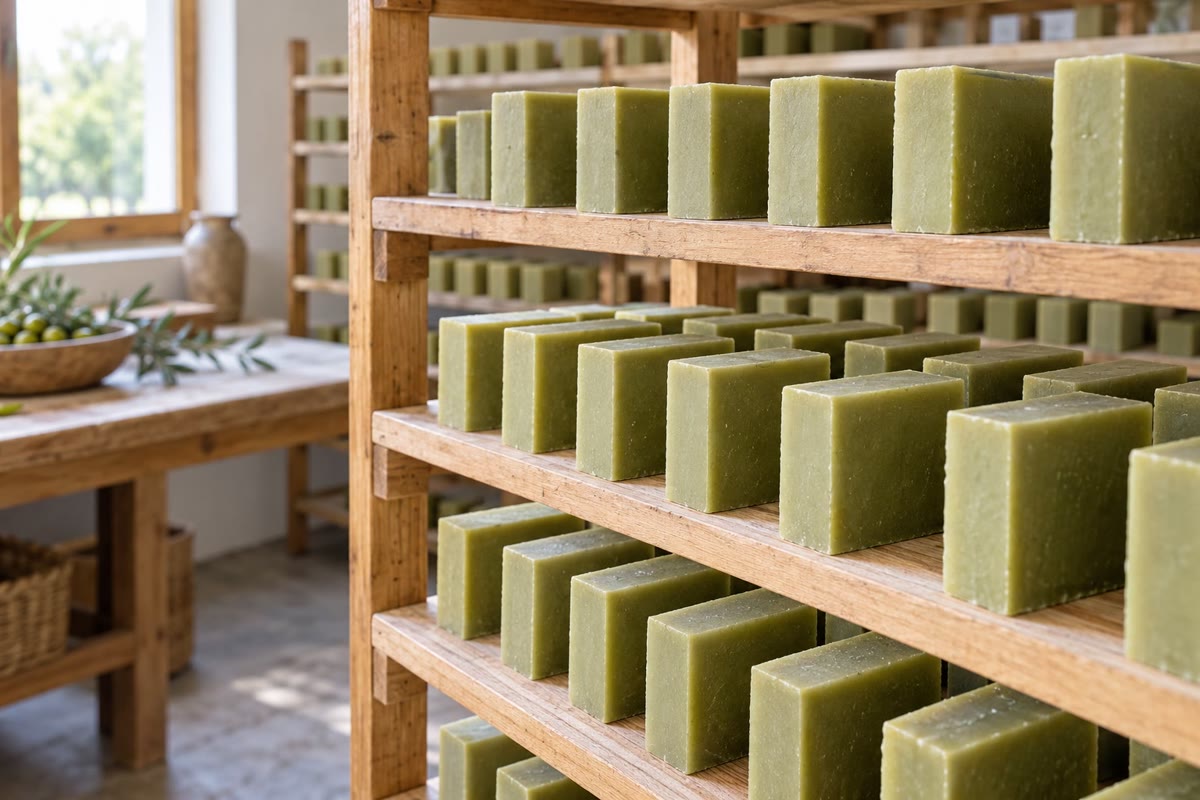
Boil olive oil with sodium hydroxide and you get soap and glycerol: the oldest organic reaction run on purpose. The oil is an ester of glycerol and long-chain acids, and the hydroxide cuts each ester at one bond, always the same one, between the carbonyl carbon and the oxygen of the alcohol. Esters, acids, amides, anhydrides and acyl chlorides all react in this way: a nucleophile adds to the carbonyl carbon, and a group leaves. Ranking these compounds by how well their group leaves tells which can be turned into which, and in which direction a chemist must go uphill.
You already know
The Year 1 volume: electrophilic activation of a carbonyl group, the mechanisms of hemiacetal and acetal formation, organomagnesium additions, hydride donors and their scope, leaving groups, , and . Chapter 23: nucleophilic addition, amines. Chapter 4: shifting an equilibrium. The school volume: esters, carboxylic acids and amides.
24.1 The family and its reactivity
Definition 24.1 (Carboxylic acid derivatives)
A carboxylic acid derivative is a compound in which the of a carboxylic acid is replaced by another group Z. The acyl group is common to all of them. In an acyl chloride, Z is Cl; in an acid anhydride, Z is , two acyl groups sharing one oxygen; in an ester Z is , in an amide .
Proposition 24.2 (Reactivity scale)
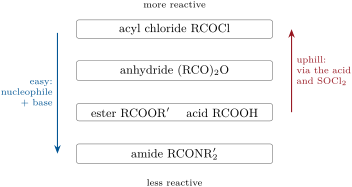
Towards nucleophiles, the derivatives react in the order acyl chloride anhydride ester acid amide.
Argument. Two effects add up. The leaving group leaves the more easily the weaker a base it is: (conjugate acid , about ) much better than a carboxylate ( about 5), an alkoxide (about 16) or an amide ion (about 35). And the group Z gives electron density to the carbonyl by mesomeric donation of its lone pair, which makes the carbonyl carbon less electrophilic: weak for Cl, strongest for nitrogen. The amide is both the poorest electrophile and the poorest leaving group. ∎
24.2 Nucleophilic acyl substitution
Definition 24.3 (Nucleophilic acyl substitution)
A nucleophilic acyl substitution replaces the group Z of an acyl compound by a nucleophile. It proceeds by addition of the nucleophile to the carbonyl carbon, giving a tetrahedral intermediate, followed by elimination of the leaving group, which restores the bond.
Proposition 24.4 (Addition–elimination)
Acyl substitution goes through a tetrahedral intermediate; it is accelerated in base by a stronger nucleophile and in acid by activation of the carbonyl.
Argument. The carbonyl carbon, planar and electrophilic, accepts the nucleophile from above or below its plane, as in the additions of Chapter 23; with a group Z able to leave, the intermediate expels it instead of being protonated. In base the nucleophile is an anion (, ); in acid the carbonyl oxygen is protonated and a neutral nucleophile (water, an alcohol) suffices. Esters labelled with in the alcohol part give, on hydrolysis, labelled alcohol and unlabelled acid: the bond broken is the acyl–oxygen bond, as the mechanism requires. ∎


Method 24.5 (Drawing an acyl substitution)
- In base: the anionic nucleophile adds to the carbonyl carbon; the negative charge goes to oxygen; the bond reforms and Z leaves; finish with any acid–base step.
- In acid: protonate the carbonyl oxygen; the neutral nucleophile adds; transfer a proton to the leaving group; it leaves as a neutral molecule; deprotonate the carbonyl.
- Count the steps: every intermediate is either tetrahedral or a carbonyl compound.
24.3 Esters
Definition 24.6 (Esterification)
An esterification forms an ester from a carboxylic acid (or a more reactive derivative) and an alcohol. The direct reaction of an acid with an alcohol, catalysed by a strong acid, is the Fischer esterification.
Proposition 24.7 (Fischer esterification)
The Fischer esterification is a slow equilibrium, with a constant near 4 for primary alcohols; it is driven forward by an excess of one reagent or by removing water as it forms.
Argument. Equimolar ethanol and ethanoic acid stop when two thirds of the acid is esterified: . With maintained by an excess of alcohol, or by distilling water off (the Dean–Stark trap of the Year 1 volume), the reaction proceeds further (Chapter 4). The six steps of the mechanism are those of Method 24.5 in acid, all reversible. ∎
Definition 24.8 (Saponification)
A saponification is the hydrolysis of an ester by a hydroxide, giving the carboxylate salt and the alcohol.
Proposition 24.9 (Saponification is complete)
Saponification goes to completion: its last step, the proton transfer from the carboxylic acid to the alkoxide, has an equilibrium constant of order .
Proof. For ,
with ethanoic acid (4.76) and ethanol (15.93), . The carboxylate, a poor electrophile, is not attacked by the alcohol: the overall reaction does not go back. ∎

Definition 24.10 (Transesterification)
A transesterification exchanges the alcohol part of an ester, , under acid or base catalysis.
Definition 24.11 (Lactones and lactams)
A lactone is a cyclic ester, formed by internal esterification of a hydroxy acid; a lactam is a cyclic amide.
24.4 Activated derivatives
Going down the reactivity scale is easy: an acyl chloride gives an anhydride, an ester or an amide with the right nucleophile, often at room temperature. Going up needs activation: a carboxylic acid is turned into its chloride by thionyl chloride,
whose by-products are gases. The acyl chloride then reacts with an alcohol or an amine; a base (pyridine, triethylamine, or a second equivalent of the amine) traps the formed, which would otherwise protonate the amine.
Method 24.12 (Moving along the derivatives)
- Down the scale (chloride anhydride ester, acid amide): treat with the nucleophile, with a base to take up the acid released.
- Up the scale: convert the acid into the chloride first (); an ester or amide is first hydrolysed to the acid.
- Between an acid and an ester: Fischer esterification (equilibrium) or saponification (complete) followed by acidification.
24.5 Organometallics and hydrides
Proposition 24.13 (Two Grignard additions)
An ester treated with excess organomagnesium reagent gives a tertiary alcohol bearing two identical groups from the reagent.
Argument. The first addition gives a tetrahedral intermediate that expels the alkoxide: a ketone. A ketone is more electrophilic than an ester (no mesomeric donation from an group) and reacts with the reagent faster than the remaining ester; the second addition, to the ketone, gives the alkoxide of a tertiary alcohol, which acid work-up protonates. The reaction cannot be stopped at the ketone. ∎
Proposition 24.14 (Hydride reductions)
Lithium aluminium hydride reduces esters and acids to primary alcohols, and amides to amines; sodium borohydride reduces aldehydes and ketones but not esters, acids or amides. A bulky aluminium hydride (DIBAL-H) at reduces an ester to the aldehyde.
Argument. is a strong hydride donor: like the Grignard reagent it adds twice to an ester (through the aldehyde). Borohydride is too weak for the less electrophilic ester carbonyl. With DIBAL-H at low temperature the tetrahedral intermediate, held by aluminium, does not expel the alkoxide until the aqueous work-up, when no hydride is left: the aldehyde survives. In an amide, the oxygen, bound to aluminium, is eliminated instead of the nitrogen, leaving an iminium ion that the hydride reduces to the amine. ∎
History — Chevreul and the fats
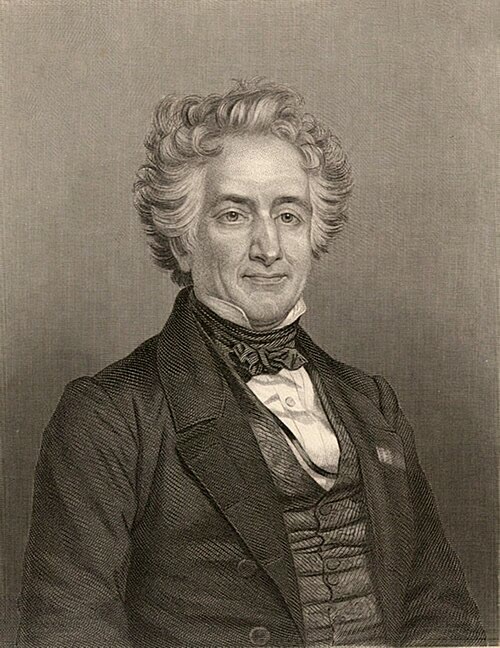
Michel Eugène Chevreul showed, in a study published in 1823, that fats are compounds of glycerol with fatty acids, which he isolated and named (stearic, oleic, butyric acids), and that saponification splits them into these two parts. His work turned soap- and candle-making into chemistry; he lived to be 102. (Portrait by Nicolas Eustache Maurin, public domain, Wikimedia Commons.)
Safety


Thionyl chloride and acyl chlorides react violently with water and release corrosive gases; they are handled dry, in a fume hood. Lithium aluminium hydride ignites in contact with water; its excess is destroyed carefully at the end. Concentrated sodium hydroxide is corrosive to skin and eyes. Methanol is toxic and flammable.
24.6 Exercises
Exercise 24.1 ★
Rank by reactivity towards water: ethyl ethanoate, ethanoyl chloride, ethanamide, ethanoic anhydride.
Solution
Solution of Exercise 24.1.
Ethanamide ethyl ethanoate ethanoic anhydride ethanoyl chloride.
Exercise 24.2 ★
Give the products of ethanoyl chloride with: water; ethanol; ammonia (2 equivalents); sodium ethanoate; dimethylamine with triethylamine.
Solution
Solution of Exercise 24.2.
Ethanoic acid (+ ); ethyl ethanoate; ethanamide (+ ammonium chloride, the second equivalent of ammonia trapping ); ethanoic anhydride (+ ); N,N-dimethylethanamide (+ triethylammonium chloride).
Exercise 24.3 ★
Write the saponification of methyl benzoate by sodium hydroxide and compute the mass of sodium hydroxide needed for of the ester.
Solution
Solution of Exercise 24.3.
. , as much : .
Exercise 24.4 ★
Draw the lactone formed by 4-hydroxybutanoic acid and give the size of its ring.
Solution
Solution of Exercise 24.4.
-Butyrolactone (oxolan-2-one): a five-membered ring of four carbons and one oxygen.
Exercise 24.5 ★★
Write the mechanism of the reaction of ethyl ethanoate with ammonia.
Solution
Solution of Exercise 24.5.
Ammonia adds to the carbonyl carbon; a proton moves from the nitrogen to the oxygen (or to the leaving group); ethoxide (as ethanol, after proton transfer) leaves and the reforms: ethanamide and ethanol.
Exercise 24.6 ★★
Aspirin is made from salicylic acid (2-hydroxybenzoic acid) and ethanoic anhydride. Which group of salicylic acid reacts, and what is the by-product?
Solution
Solution of Exercise 24.6.
The phenolic is acylated (acid catalysis): 2-acetoxybenzoic acid; by-product ethanoic acid.
Exercise 24.7 ★★
Ethyl ethanoate is treated with excess methylmagnesium bromide, then with dilute acid. Give the product and explain why the ketone cannot be isolated.
Solution
Solution of Exercise 24.7.
2-Methylpropan-2-ol. The first addition gives propanone, more electrophilic than the ester, which takes the second methyl at once.
Exercise 24.8 ★★
Give the product of the reduction of the lactone of exercise 4 by .
Solution
Solution of Exercise 24.8.
Butane-1,4-diol: the ester is reduced to two primary alcohols, the ring being opened.
Exercise 24.9 ★★
With , compute the fraction of ethanoic acid esterified with one, then with three equivalents of ethanol. Which other method drives the reaction?
Solution
Solution of Exercise 24.9.
One equivalent: , . Three equivalents: , , . Removing the water as it forms (Dean–Stark) drives it further.
Exercise 24.10 ★★★
Prepare N,N-diethylbenzamide from benzoic acid, and explain why mixing the acid with diethylamine and heating mildly gives a salt instead.
Solution
Solution of Exercise 24.10.
gives benzoyl chloride; with two equivalents of diethylamine (or one plus triethylamine) it gives the amide. Acid and amine mixed directly undergo an acid–base reaction: diethylammonium benzoate, which gives the amide only on strong heating.
Exercise 24.11 ★★★
The saponification value of a fat is the mass of potassium hydroxide, in mg, needed to saponify of it. Compute it for triolein (; KOH ).
Solution
Solution of Exercise 24.11.
Three KOH per triolein: per gram, a saponification value of 190.
Exercise 24.12 ★★★
A molecule carries an ester, an amide and a ketone. Which group(s) does reduce, and which ? What do you obtain in each case?
Solution
Solution of Exercise 24.12.
: only the ketone, to a secondary alcohol. : the ketone to the secondary alcohol, the ester to a primary alcohol (and releases the alcohol part), the amide to an amine.
24.7 Problem: Biodiesel from Frying Oil
Problem 24.1
Weekend problem — triolein and its molar mass, its transesterification with methanol and the role of the base, the side reaction with free acids and water, and the yields per tonne of oil
Model the oil as pure triolein, the triglyceride of oleic acid (). Molar masses (): C 12.011, H 1.008, O 15.999, Na 22.990. Glycerol is propane-1,2,3-triol.
Part I — Triolein.
- Give the formula of oleic acid and of glycerol.
- Write the formula of triolein and compute its molar mass.
- How many ester groups does it contain?
- Oleic acid has one cis double bond. Why are oils rich in it liquid at room temperature?
- What would saponification of triolein give?
- What is biodiesel, chemically?
Part II — Transesterification.
- Write the transesterification of triolein with methanol.
- Why is a base (sodium methoxide or hydroxide) used as catalyst?
- Draw the tetrahedral intermediate of the first exchange.
- Why is methanol used in excess (six equivalents rather than three)?
- Glycerol is not miscible with the methyl esters. How does this help?
- Is the catalyst consumed in the ideal reaction?
Part III — Free acids and water.
- Used frying oil contains free oleic acid. What does it do to the base?
- What does water do to the methyl esters in the presence of the base?
- Why is the soap formed a nuisance?
- How can the free acids be removed first, without base?
- Why must the oil be dried before the reaction?
Part IV — Per tonne of oil.
- Compute the amount of triolein in one tonne.
- Compute the mass of methanol consumed.
- Compute the mass of methyl oleate formed.
- Check the conservation of mass.
- An oil with 2 % free oleic acid by mass is treated with sodium hydroxide: compute the mass of sodium hydroxide consumed by the acid per tonne.
- Compute the mass of glycerol co-produced per tonne of triolein.
Solution
Solution of Problem 24.1.
1. Oleic acid ; glycerol . 2. : . 3. Three. 4. The cis double bond kinks the chains, which pack poorly: weak intermolecular forces, a low melting point. 5. Glycerol and three sodium oleate, a soap. 6. A mixture of methyl esters of fatty acids. 7. . 8. The methoxide ion, formed from methanol and the base, is a far stronger nucleophile than methanol; it attacks the ester carbonyls. 9. The carbonyl carbon of one ester group bearing , the of methoxide and the glyceryl oxygen: tetrahedral. 10. Transesterification is an equilibrium with a constant near 1; excess methanol shifts it towards the methyl esters. 11. Glycerol separates as a lower layer: removing a product drives the equilibrium. 12. No: methoxide is regenerated in each exchange. 13. It neutralises the base, giving sodium oleate (soap): the catalyst is consumed. 14. It saponifies them: hydroxide (from water and methoxide) cuts the esters to soap and methanol, irreversibly. 15. It consumes base, emulsifies the mixture and prevents the glycerol layer from separating. 16. By an acid-catalysed esterification with methanol first, which turns the free acids into methyl esters. 17. Water hydrolyses esters and converts the catalyst into hydroxide, which saponifies. 18. . 19. . 20. . 21. in; out. 22. of oleic acid, , as much : . 23. of glycerol per tonne.