University Chemistry — Year 2 · Bachelor Year 2
23Amines and Nitrogen Compounds
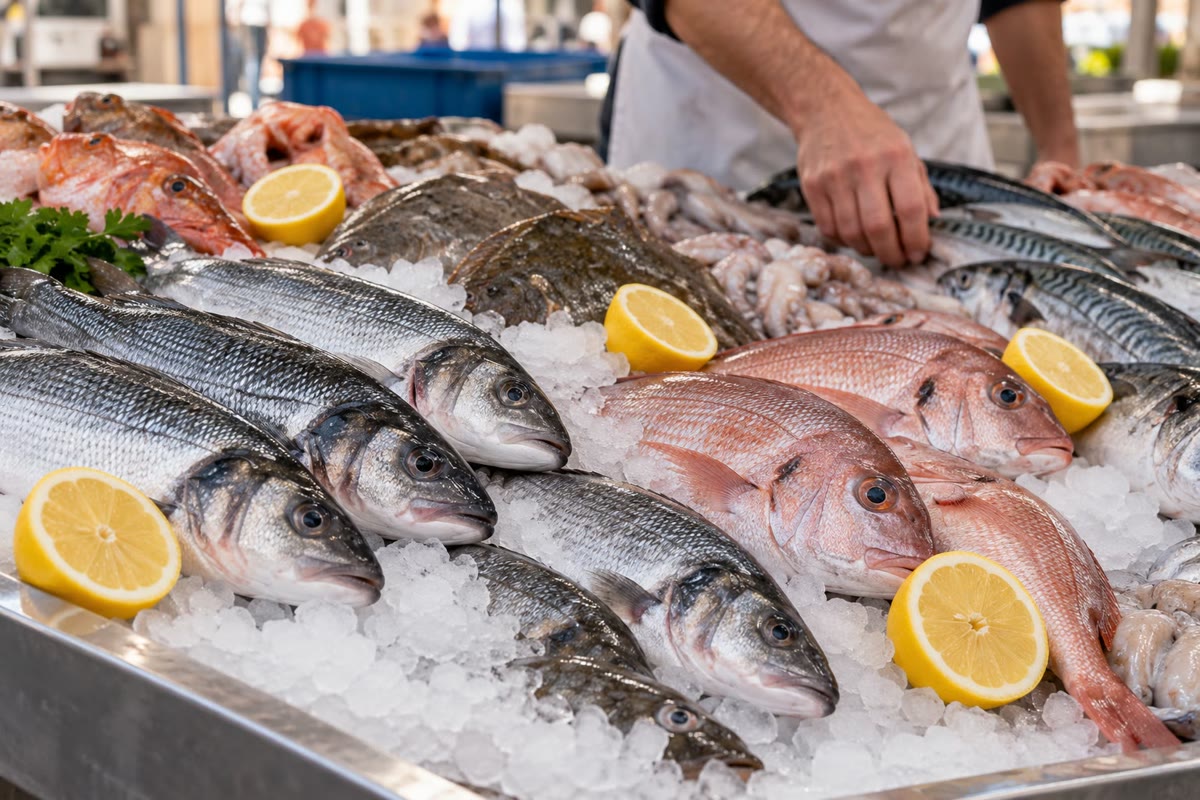
Fish that is no longer fresh smells of trimethylamine, a small volatile amine. A squeeze of lemon takes the smell away: the acid protonates the amine, and the ammonium ion formed, being an ion, cannot evaporate. Nitrogen’s lone pair makes amines bases and nucleophiles; bound to a carbonyl it gives imines, through which proteins carry their chemistry and chemists make amines; and on an aromatic ring it opens, through diazonium salts, the way to the azo dyes that coloured the nineteenth century.
You already know
The Year 1 volume: Brønsted acids and bases, and predominance diagrams, nucleophiles and the bimolecular substitution, hemiacetals and acetals, hydride donors, organomagnesium reagents, the class of a carbon. Chapter 22: nitration, the reduction of nitroarenes. The school volume: amines and amides.
23.1 Structure and basicity
Definition 23.1 (Classes of amines)
An amine is a primary amine , a secondary amine or a tertiary amine according to the number of carbon groups bound to nitrogen. A quaternary ammonium ion has four, and no lone pair.
The nitrogen of an amine is roughly tetrahedral, the lone pair occupying the fourth position. A tertiary amine with three different groups is chiral in principle but cannot be resolved: the molecule inverts through a planar arrangement, like an umbrella in the wind, thousands of millions of times per second at room temperature.
Proposition 23.2 (Basicity)
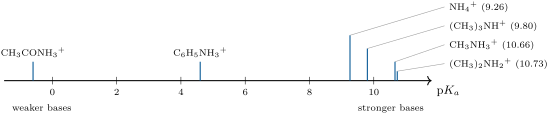
In water, alkylamines are stronger bases than ammonia ( of their ammonium ions near 10 to 11, against 9.26), arylamines much weaker (anilinium 4.60), and amides hardly basic at all (protonated ethanamide about ).
Argument. Alkyl groups push electron density onto nitrogen (inductive effect) and stabilise the positive charge of the ammonium ion. In water, solvation by hydrogen bonds also matters: an ion with more bonds is better solvated, which is why trimethylammonium (9.80) is a weaker acid than ammonium but a stronger one than dimethylammonium (10.73). In aniline the lone pair is delocalised into the ring and is lost on protonation; in an amide it is delocalised onto the carbonyl oxygen, and protonation occurs, weakly, on oxygen. ∎
23.2 Amines as nucleophiles
Amines attack halogenoalkanes by bimolecular substitution. The product, a more substituted amine, is at least as nucleophilic as the starting one and competes for the halogenoalkane: alkylation of ammonia gives a mixture of primary, secondary and tertiary amines and the quaternary salt.
Proposition 23.3 (Polyalkylation)
Direct alkylation of ammonia or of a primary amine gives mixtures; only exhaustive alkylation to the quaternary ammonium salt is clean.
Argument. Each alkylation leaves a lone pair on a nitrogen made more electron-rich by the new alkyl group; the product reacts with the remaining halogenoalkane at a comparable rate. Only when nitrogen has no lone pair left, in , does the sequence stop. ∎
Primary amines free of their over-alkylated relatives are made indirectly: by the Gabriel route (alkylation of the nitrogen of phthalimide, which carries a single acidic hydrogen, then release of the amine), by reduction of a nitrile, of an amide or of a nitro compound, or by reductive amination (below).
23.3 Imines and enamines
Definition 23.4 (Nucleophilic addition)
A nucleophilic addition to a carbonyl group is the attack of a nucleophile on the carbonyl carbon, which becomes tetrahedral, the bond becoming a lone pair on oxygen.
Definition 23.5 (Hemiaminals, imines and enamines)
A primary amine adds to an aldehyde or a ketone to give a hemiaminal (a carbon bearing and ); its dehydration gives an imine . A secondary amine, which cannot form a neutral imine, gives after dehydration an enamine , the double bond moving to the adjacent carbon.

Proposition 23.6 (pH optimum)
Imines form fastest in mildly acidic solution, near pH 4 to 5.
Argument. The first step needs the free amine (its lone pair); too acidic a medium protonates the amine ( about 10) and removes the nucleophile. The dehydration needs acid to protonate the hydroxyl group; at high pH it is slow. The rate, the product of the two needs, is largest in between. ∎
Definition 23.7 (Reductive amination)
A reductive amination converts a carbonyl compound and an amine into a more substituted amine by forming the imine (or iminium ion) and reducing it in the same pot, usually with sodium cyanoborohydride .
Proposition 23.8 (Selectivity of reductive amination)
At pH near 6, reduces the iminium ion much faster than the carbonyl compound, so that the amine is formed without reducing the aldehyde or ketone to an alcohol.
Argument. The cyano group makes a weak hydride donor, too weak for a neutral carbonyl but sufficient for a protonated, positively charged iminium ion, a much better electrophile. ∎
23.4 Diazonium salts
Definition 23.9 (Diazonium chemistry)
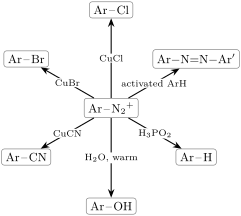
A diazonium ion is a cation . Diazotisation converts a primary aromatic amine into an aryl diazonium salt with sodium nitrite and a strong acid at 0–. In a Sandmeyer reaction, a copper(I) salt (, , ) replaces the diazonium group by Cl, Br or CN with loss of dinitrogen. In an azo coupling, the diazonium ion, a weak electrophile, attacks an activated aromatic ring to give an azo compound .
Proposition 23.10 (Stability of diazonium ions)
Aryl diazonium salts can be kept in cold aqueous solution and used; alkyl diazonium ions lose dinitrogen at once.
Argument. Dinitrogen is an excellent leaving group (a very stable molecule, a large entropy gain). For an alkyl group, loss of leaves a carbocation, or is attacked directly by water: the ion does not survive. An aryl cation is very unstable (an empty orbital in the plane of the ring, not stabilised by the system), and the bond of the aryl diazonium ion is strengthened by conjugation with the ring: at low temperature it persists; warmed, it decomposes, water replacing the diazonium group by . ∎
Method 23.11 (Routes through a diazonium salt)
- Use the amino group (a strong ortho/para director) to place other groups, then convert it through the diazonium salt.
- Replace it by H to obtain patterns that direct substitution cannot give (1,3,5-tribromobenzene from aniline).
- Replace it by CN, then hydrolyse to a carboxylic acid: a way to on a ring.
Method 23.12 (Making an amine)
- Primary amine on an alkyl chain: Gabriel route, or reduction of a nitrile (one carbon more than the halogenoalkane used to make it) or of an amide.
- Secondary or tertiary amine: reductive amination of the right carbonyl compound with the right amine.
- Aromatic amine: nitration, then reduction (iron or tin with acid, or catalytic hydrogenation).
23.5 Nitriles
Definition 23.13 (Nitrile)
A nitrile is a compound , made by substitution of a halogenoalkane by cyanide or by a Sandmeyer reaction.
Proposition 23.14 (Reactions of nitriles)
A nitrile is hydrolysed, in acid or in base, to the amide and then to the carboxylic acid; it is reduced by lithium aluminium hydride to the primary amine ; an organomagnesium reagent adds once to it, and hydrolysis of the imine formed gives a ketone.
Argument. The nitrile carbon is electrophilic, like a carbonyl carbon: water (activated by acid, or as hydroxide) adds to it, giving after tautomerism an amide, whose hydrolysis is treated in Chapter 24. Hydride adds twice. An organomagnesium reagent adds once, giving an imine anion that does not react further; water then hydrolyses the imine to the ketone. ∎
Safety


Aniline and N,N-dimethylaniline are toxic by skin contact; sodium nitrite is toxic and oxidising; sodium cyanoborohydride releases hydrogen cyanide in acid and must be used in a fume hood. Dry diazonium salts can explode: they are always kept cold, in solution, and used at once.
23.6 Exercises
Exercise 23.1 ★
Give the class of: propan-1-amine, N-methylethanamine, triethylamine, tetramethylammonium chloride, aniline.
Solution
Solution of Exercise 23.1.
Primary; secondary; tertiary; quaternary ammonium salt; primary (aromatic).
Exercise 23.2 ★
Rank by increasing basicity: ammonia, methylamine, aniline, ethanamide.
Solution
Solution of Exercise 23.2.
Ethanamide aniline ammonia methylamine ( of the conjugate acids , 4.60, 9.26, 10.66).
Exercise 23.3 ★
Give the imine formed from cyclohexanone and methylamine, and the conditions.
Solution
Solution of Exercise 23.3.
N-Methylcyclohexanimine, : amine and ketone in a weakly acidic medium (pH 4–5), with removal of the water formed (drying agent or azeotropic distillation).
Exercise 23.4 ★
Starting from benzenediazonium chloride, give the products with , , warm water, and phenol in base.
Solution
Solution of Exercise 23.4.
Bromobenzene; benzonitrile; phenol; 4-hydroxyazobenzene (coupling para to the group of the phenoxide).
Exercise 23.5 ★★
Which form of trimethylamine dominates at pH 7, and in what ratio? Explain the lemon, and how an amine can be extracted from an organic solvent into water.
Solution
Solution of Exercise 23.5.
: at pH 7 the ratio : the protonated form dominates; lemon juice (pH near 2) protonates practically all of it. Shaking an organic solution of an amine with dilute aqueous acid transfers the amine, as its ammonium ion, into the water; base frees it again.
Exercise 23.6 ★★
Give the enamine formed from cyclohexanone and pyrrolidine, and explain why a secondary amine cannot give an imine.
Solution
Solution of Exercise 23.6.
1-(Cyclohex-1-en-1-yl)pyrrolidine. After addition and loss of water the nitrogen carries a positive charge (an iminium ion) and no hydrogen to lose; a proton is lost from the adjacent carbon instead, forming the bond.
Exercise 23.7 ★★
Prepare N-benzylpropan-2-amine by reductive amination: give two possible pairs of reagents.
Solution
Solution of Exercise 23.7.
Benzaldehyde with propan-2-amine, or propanone with benzylamine, each with at pH about 6.
Exercise 23.8 ★★
Benzonitrile reacts with ethylmagnesium bromide, then with aqueous acid. Give the product.
Solution
Solution of Exercise 23.8.
Propiophenone (1-phenylpropan-1-one), : one addition gives the imine anion, hydrolysed to the ketone.
Exercise 23.9 ★★
Write the Gabriel synthesis of hexan-1-amine and explain why it gives no secondary amine.
Solution
Solution of Exercise 23.9.
Potassium phthalimide + 1-bromohexane: N-hexylphthalimide; then hydrazine (or hydrolysis) frees hexan-1-amine. The alkylated phthalimide nitrogen has no lone pair available (it is delocalised on two carbonyls) and no left: it cannot be alkylated a second time.
Exercise 23.10 ★★★
Prepare 1,3,5-tribromobenzene from aniline.
Solution
Solution of Exercise 23.10.
Bromine water brominates aniline at the three positions ortho and para to the amino group: 2,4,6-tribromoaniline. Diazotisation, then , replaces the amino group by H: the three bromines are now 1,3,5 to each other.
Exercise 23.11 ★★★
Design an azo dye from 4-nitroaniline and phenol: write the diazotisation, the coupling (position and pH), and the product.
Solution
Solution of Exercise 23.11.
4-Nitroaniline + + at 0–: 4-nitrobenzenediazonium chloride. Coupling with phenol in weakly basic solution (phenoxide, strongly activated) at the position para to : 4-[(4-nitrophenyl)diazenyl]phenol, , an orange dye.
Exercise 23.12 ★★★
The quaternary ammonium hydroxide of N,N-dimethylbutan-2-amine, heated, gives mostly but-1-ene. Explain this Hofmann orientation, opposite to the Zaitsev rule of the Year 1 volume.
Solution
Solution of Exercise 23.12.
The trimethylammonium group is a poor, bulky leaving group and makes the hydrogens on the side more acidic and more accessible; the base removes a hydrogen from the less substituted carbon: but-1-ene, the less substituted alkene (Hofmann product).
23.7 Problem: Making Methyl Orange
Problem 23.1
Weekend problem — sulfanilic acid and its diazotisation, the azo coupling with N,N-dimethylaniline, methyl orange as an indicator, and the yield
Data: sulfanilic acid (4-aminobenzenesulfonic acid) ; methyl orange, the sodium salt ; of the acid form of methyl orange 3.47. Molar masses (): C 12.011, H 1.008, N 14.007, O 15.999, Na 22.990, S 32.06. Run (exercise data): of sulfanilic acid, yield 80 %.
Part I — Sulfanilic acid and diazotisation.
- Sulfanilic acid exists as a zwitterion. Draw it.
- Why is it dissolved in sodium carbonate solution first?
- Write the formation of nitrous acid from sodium nitrite and hydrochloric acid.
- Write the diazotisation of the 4-sulfonatoanilinium ion.
- Why is the reaction run at 0–?
- What amount of sodium nitrite is needed for of sulfanilic acid?
- Why is a slight excess of nitrite tested for, and destroyed?
Part II — The coupling.
- Why is N,N-dimethylaniline a good partner?
- At which position of its ring does the diazonium ion attack, and why?
- Write the product (as the sulfonate).
- Why is the coupling run in weakly acidic, not strongly acidic, solution?
- Why must the solution then be made basic to precipitate the sodium salt?
- Why is the diazonium ion a weak electrophile, reacting only with activated rings?
Part III — An indicator.
- What colour is methyl orange in base, and in acid?
- Where does it take a proton?
- Over what pH range does its colour change?
- Why does the extended conjugated system give a visible colour?
- Why does protonation shift the absorption?
Part IV — Yield.
- Compute the molar mass of sulfanilic acid.
- Compute that of methyl orange (sodium salt).
- Compute the amount of sulfanilic acid used.
- Compute the theoretical mass of methyl orange.
- What losses explain a yield below 100 %?
- State the mass of methyl orange obtained from of sulfanilic acid at 80 % yield.
Solution
Solution of Problem 23.1.
1. : the acidic sulfonic group has protonated the amine. 2. The zwitterion is poorly soluble in water; carbonate deprotonates the ammonium group, giving the soluble sodium sulfanilate. 3. . 4.
5. The diazonium salt decomposes (to the phenol and ) when warm; nitrous acid decomposes too. 6. : of , . 7. Excess nitrous acid would react with the coupling partner; it is detected with starch–iodide paper and destroyed with urea or sulfamic acid. 8. Its ring is strongly activated by the dimethylamino group, a powerful donor. 9. Para to : ortho/para direction, and the ortho positions are hindered by the methyl groups. 10. . 11. In strong acid the dimethylamino group is protonated: deactivates the ring and the coupling stops. 12. The product forms as its protonated, partly soluble acid form; in base the sodium sulfonate, less soluble in the salty solution, precipitates. 13. Its positive charge is delocalised onto the ring and the terminal nitrogen is a poor electrophilic centre; only rings activated by , or react. 14. Yellow-orange in base, red in acid. 15. On a nitrogen of the azo group (the protonated form is stabilised by conjugation with the dimethylamino group). 16. About : from 3.1 to 4.4 roughly, around . 17. Two rings and the azo group form a long conjugated system: the gap between the highest occupied and the lowest empty levels is small (Proposition 16.15) and the absorption lies in the visible. 18. Protonation changes the distribution of charge in the system and narrows the gap further: the absorption moves to longer wavelengths, the colour from yellow to red. 19. . 20. . 21. . 22. . 23. Decomposition of the diazonium salt, incomplete coupling, solubility of the product in the mother liquor and the washings. 24. of methyl orange.