University Chemistry — Year 2 · Bachelor Year 2
25Enols, Enolates and the Aldol Reaction
Every time a cell breaks down glucose, an enzyme cuts a six-carbon sugar phosphate into two three-carbon pieces: an aldol reaction run backwards. Run forwards, the same reaction joins two carbonyl compounds into one, and it is the chemist’s most used way of making carbon–carbon bonds. It rests on a property that the previous chapters only touched: the hydrogen atoms next to a carbonyl group are acidic, and removing one turns the carbon beside the carbonyl into a nucleophile.
You already know
The Year 1 volume: and the predominant reaction, carbanions, kinetic and thermodynamic control, nucleophilic additions to carbonyls, E1 and E2 eliminations, the hydration of alkynes (an enol rearranging). Chapter 17: ambident nucleophiles. Chapter 24: esters and acyl substitution.
25.1 Keto–enol tautomerism
Definition 25.1 (Tautomerism)
Tautomers are isomers that interconvert by moving a hydrogen and a double bond. In keto–enol tautomerism, a carbonyl compound with a hydrogen on the carbon next to the carbonyl (the keto form) is in equilibrium with its enol, an alcohol carried by a double bond.

Proposition 25.2 (Enol content)
Simple aldehydes and ketones contain only traces of enol; 1,3-dicarbonyl compounds such as pentane-2,4-dione contain a large proportion of it.
Argument. A bond is stronger than a bond by more than an bond is weaker than a bond: the keto form is favoured. In a 1,3-dicarbonyl compound, the enol double bond is conjugated with the second carbonyl group, and the enol forms an internal hydrogen bond with its oxygen in a six-membered ring: both stabilise the enol enough to make it a major form. ∎
Because the enol is planar at its , a stereocentre at the carbon is lost each time the enol forms: an optically active ketone with a stereocentre next to its carbonyl racemises in acid or base.
25.2 Enolates
Definition 25.3 (Enolates)
The carbon of a carbonyl compound is the carbon bound to the carbonyl carbon; its hydrogens are hydrogens. Removing one gives an enolate ion, whose negative charge is shared between the carbon and the oxygen.
Proposition 25.4 (Acidity of hydrogens)
hydrogens are far more acidic than ordinary bonds because the enolate is stabilised by resonance; a hydrogen between two carbonyl groups is acidic enough to be removed by an alkoxide or even hydroxide.
Argument. In the enolate the negative charge sits partly on the electronegative oxygen; a second carbonyl on the other side delocalises it over two oxygens. Measured in water, pentane-2,4-dione has and ethyl 3-oxobutanoate 10.7, comparable with nitromethane (10.2), whose anion is stabilised by the nitro group in the same way; a simple ketone, with only one carbonyl, is far weaker — too weak for its acidity to be measured directly in water. ∎

Definition 25.5 (Kinetic and thermodynamic enolates)
For a ketone with two different carbons, the kinetic enolate is the one formed faster, by removal of a hydrogen from the less hindered, less substituted side; the thermodynamic enolate is the more stable one, with the more substituted double bond.
Proposition 25.6 (Choosing the enolate)
A strong, bulky base used in full at low temperature (lithium diisopropylamide, LDA, at ) forms the kinetic enolate completely and irreversibly; a weaker base at room temperature (an alkoxide in its alcohol) lets the enolates interconvert and gives mostly the thermodynamic one.
Argument. LDA ( of diisopropylamine near 36, far above that of the ketone) deprotonates completely and fast; at low temperature the enolate is not reprotonated, and the faster deprotonation, at the accessible or , decides: kinetic control. An alkoxide removes the proton only partly, the enolates and the ketone exchange protons continually, and the equilibrium mixture favours the more substituted, more stable enolate: thermodynamic control (as in the Year 1 volume). ∎
25.3 Alkylating enolates
Enolates attack primary halogenoalkanes by bimolecular substitution, forming a new bond at the carbon. With the very acidic hydrogens of a 1,3-dicarbonyl compound, an alkoxide suffices, and the extra carbonyl can be removed afterwards.
Definition 25.7 (Decarboxylation)
A decarboxylation removes a carboxyl group as . In the malonic ester synthesis, diethyl propanedioate is deprotonated, alkylated, hydrolysed to the substituted propanedioic acid and decarboxylated by heating, giving a carboxylic acid .
Proposition 25.8 (Easy decarboxylations)
-keto acids and propanedioic acids lose on gentle heating; ordinary carboxylic acids do not.
Argument. The carbonyl two bonds away from the carboxyl group accepts the hydrogen of in a cyclic, six-membered transition state while leaves: an enol forms directly, then tautomerises. Without that carbonyl, the carbanion that loss of would leave behind has no stabilisation. ∎
Definition 25.9 (Haloform reaction)
The haloform reaction converts a methyl ketone , with a halogen and excess hydroxide, into a carboxylate and a haloform .
Each halogen introduced makes the remaining hydrogens more acidic, so the methyl group is trihalogenated; the group is then a good enough leaving group to be expelled by hydroxide in an acyl substitution. With iodine, the yellow precipitate of iodoform is a test for methyl ketones.
25.4 The aldol reaction
Definition 25.10 (Aldol reactions)
In an aldol addition the enolate (or enol) of one carbonyl compound adds to the carbonyl group of another, giving a -hydroxy carbonyl compound, an aldol. In an aldol condensation the aldol loses water, giving an -unsaturated carbonyl compound (an enone or enal).


Proposition 25.11 (Driving the aldol)
The aldol addition is reversible; the dehydration, which forms a conjugated system, pulls the reaction towards the condensation product.
Argument. Two molecules give one, so the entropy of reaction is negative, and the new bond hardly outweighs the lost bond: for many ketones is small. Removing the aldol by dehydration keeps for the addition; the conjugated enone formed is stabilised and, at high temperature, the entropy gain of releasing water favours it further. The reverse reaction, the retro-aldol, is the step by which the cell splits a six-carbon sugar. ∎
Method 25.12 (Controlling a crossed aldol)
- Use one partner without hydrogens (benzaldehyde, methanal): it can only be the electrophile.
- Or form the enolate of one partner completely first (LDA, ), then add the other.
- Or use a 1,3-dicarbonyl partner, far more acidic than the other.
- Prefer an aldehyde as electrophile: it is more reactive than a ketone.
Method 25.13 (Recognising an aldol product)
25.5 The Claisen condensation
Definition 25.14 (Claisen condensation)
In a Claisen condensation, the enolate of an ester attacks the carbonyl of another ester molecule in an acyl substitution, giving a -keto ester and releasing an alkoxide. Its intramolecular version, the Dieckmann cyclisation, gives a cyclic -keto ester.
Proposition 25.15 (What drives the Claisen)
The Claisen condensation of ethyl ethanoate needs a full equivalent of sodium ethoxide: its equilibrium is unfavourable, and it is driven by the deprotonation of the -keto ester formed.
Proof. The condensation proper, , has a small equilibrium constant . The -keto ester () is then deprotonated by ethoxide (ethanol, 15.9): . The overall reaction, condensation plus deprotonation, has , large enough even for small ; the base is consumed and an acid work-up gives the neutral -keto ester. An ester with only one hydrogen, whose product cannot be deprotonated, gives little product. ∎
History — The aldol, 1872
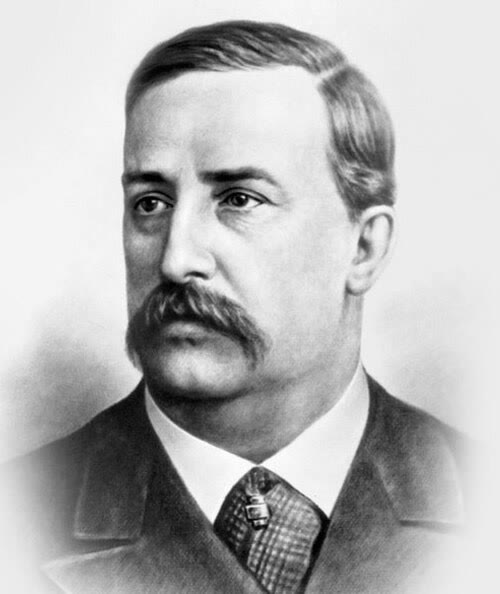
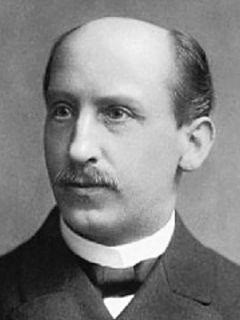
The aldol reaction was described in 1872 by Charles-Adolphe Wurtz and, independently, by Alexander Borodin, a chemist in Saint Petersburg better known today as the composer of Prince Igor. Ludwig Claisen extended the condensations of carbonyl compounds to esters in 1887. (Portraits: Borodin, unknown author, public domain; Claisen, by Veronica.villagrasa, CC BY-SA 4.0; Wikimedia Commons.)
Safety


Sodium ethoxide and lithium diisopropylamide are corrosive and react with water; LDA solutions are flammable and handled under inert gas. Benzaldehyde and propanone are harmful and flammable.
25.6 Exercises
Exercise 25.1 ★
Draw the enol tautomers of butanone and of cyclohexanone.
Solution
Solution of Exercise 25.1.
Butanone: but-1-en-2-ol and but-2-en-2-ol ((E) and (Z)). Cyclohexanone: cyclohex-1-en-1-ol.
Exercise 25.2 ★
Rank by acidity of their most acidic : propanone, pentane-2,4-dione, ethyl 3-oxobutanoate, ethane.
Solution
Solution of Exercise 25.2.
Ethane propanone ethyl 3-oxobutanoate (10.7) pentane-2,4-dione (9.0).
Exercise 25.3 ★
Give the aldol and the condensation product of ethanal with sodium hydroxide.
Solution
Solution of Exercise 25.3.
3-Hydroxybutanal, then but-2-enal on heating.
Exercise 25.4 ★
Write the malonic ester synthesis of hexanoic acid: which halogenoalkane is needed?
Solution
Solution of Exercise 25.4.
Diethyl propanedioate, sodium ethoxide, 1-bromobutane; hydrolysis to butylpropanedioic acid; heating removes : , hexanoic acid.
Exercise 25.5 ★★
Draw the kinetic and the thermodynamic enolates of 2-methylcyclohexanone and the conditions that give each.
Solution
Solution of Exercise 25.5.
Kinetic: deprotonation at C6 (the side), with LDA at . Thermodynamic: the more substituted double bond C1=C2, towards the methyl-bearing carbon, with an alkoxide in its alcohol at room temperature.
Exercise 25.6 ★★
Give the product of the crossed aldol condensation of benzaldehyde with propanone (one equivalent each) and explain why benzaldehyde does not condense with itself.
Solution
Solution of Exercise 25.6.
4-Phenylbut-3-en-2-one (benzalacetone), . Benzaldehyde has no hydrogen: it cannot form an enolate and is only the electrophile.
Exercise 25.7 ★★
Hexane-2,5-dione in base undergoes an intramolecular aldol condensation. Which ring forms? Explain the choice between the possible rings.
Exercise 25.8 ★★
Write the Claisen condensation of ethyl ethanoate and its product after acid work-up.
Solution
Solution of Exercise 25.8.
with sodium ethoxide; the product, deprotonated, is recovered as ethyl 3-oxobutanoate on acidification.
Exercise 25.9 ★★
Which of these give a positive iodoform test: propanone, pentan-3-one, ethanal, acetophenone?
Solution
Solution of Exercise 25.9.
Propanone, ethanal and acetophenone (they have a group; ethanal is ). Pentan-3-one does not.
Exercise 25.10 ★★★
Write the Dieckmann cyclisation of diethyl hexanedioate and the ring size of the product.
Solution
Solution of Exercise 25.10.
The enolate at one end attacks the ester at the other: ethyl 2-oxocyclopentane-1-carboxylate, a five-membered ring.
Exercise 25.11 ★★★
(R)-3-Methylpentan-2-one loses its optical activity in dilute sodium hydroxide, but (R)-4-methylhexan-2-one does not. Explain.
Solution
Solution of Exercise 25.11.
In 3-methylpentan-2-one the stereocentre (C3) is the carbon: enolisation makes it planar, and reprotonation from either face racemises it. In 4-methylhexan-2-one the stereocentre is at C4, to the carbonyl, untouched by enolisation.
Exercise 25.12 ★★★
Propose a route to 1,5-diphenylpenta-1,4-dien-3-one, then to a dienone with two different aryl groups, and say why the second is harder.
Solution
Solution of Exercise 25.12.
Propanone with two equivalents of benzaldehyde in base. With two different aldehydes, condense propanone with one aldehyde first (one equivalent, isolating benzalacetone), then condense its remaining methyl group with the second. In one pot the two aldehydes compete and give a mixture of three dienones.
25.7 Problem: Dibenzalacetone
Problem 25.1
Weekend problem — the enolate of propanone and the role of benzaldehyde, the two aldol condensations, the conjugated product, and the stoichiometry and yield of a preparation
Preparation (exercise data): of benzaldehyde and of propanone are stirred in ethanol with aqueous sodium hydroxide; yellow crystals of 1,5-diphenylpenta-1,4-dien-3-one (dibenzalacetone) separate; yield 75 %. Densities (): benzaldehyde 1.045, propanone 0.7845. Molar masses (): C 12.011, H 1.008, O 15.999.
Part I — The partners.
- Which partner has hydrogens? How many?
- Draw the enolate of propanone.
- Why can benzaldehyde not form an enolate?
- Why does propanone react with benzaldehyde rather than with itself?
- Why is an aldehyde a better electrophile than a ketone?
- Why does hydroxide suffice as a base here?
Part II — The mechanism.
- Write the addition of the enolate to benzaldehyde.
- Write the dehydration of the aldol formed.
- Why is the dehydration easy here?
- Why can the reaction happen a second time?
- Write the overall equation.
- What drives the reaction to completion in this preparation?
Part III — The product.
- How many double bonds does dibenzalacetone have, and of which configuration (mainly)?
- Why is the (E,E) isomer favoured?
- Count the conjugated bonds.
- Why is the compound yellow while its partners are colourless?
- Is dibenzalacetone chiral?
Part IV — Stoichiometry and yield.
- Compute the molar masses of benzaldehyde, propanone and dibenzalacetone.
- Compute the amounts of the two reagents.
- Which reagent is limiting?
- Compute the theoretical mass of product.
- Why is a slight excess of benzaldehyde preferable to an excess of propanone?
- What would an excess of propanone give?
- State the mass of dibenzalacetone obtained at 75 % yield.
Solution
Solution of Problem 25.1.
1. Propanone, six hydrogens (three on each methyl). 2. . 3. It has no hydrogen on the carbon next to its carbonyl (that carbon belongs to the ring and carries no H). 4. Benzaldehyde, an aldehyde in excess, is the better electrophile; propanone’s enolate meets it more often than a propanone carbonyl. 5. A ketone has two carbon groups pushing electron density onto its carbonyl carbon and hindering approach; an aldehyde has one. 6. Only a small fraction of enolate is needed: it is regenerated as it reacts. 7. The enolate carbon bonds to the carbonyl carbon of benzaldehyde: the alkoxide of 4-hydroxy-4-phenylbutan-2-one. 8. Removal of an hydrogen and loss of hydroxide from the carbon: 4-phenylbut-3-en-2-one. 9. The double bond formed is conjugated with both the ring and the carbonyl. 10. The other methyl group still has three hydrogens. 11. . 12. The dehydrations, and the precipitation of the product, which leaves the solution. 13. Two, both (E). 14. The (Z) isomers put the phenyl group next to the carbonyl group: steric strain. 15. Two , one and the two rings: a conjugated system across the molecule. 16. Its extended conjugation narrows the gap (Proposition 16.15): it absorbs at the blue end of the visible and looks yellow. 17. No: it is planar (or nearly) with a mirror plane. 18. 106.12, 58.08 and . 19. Benzaldehyde ; propanone . 20. Propanone needs of benzaldehyde, and is available: propanone is limiting, barely. 21. . 22. Leftover benzaldehyde stays in the ethanol and is washed away. 23. The mono-condensation product, benzalacetone. 24. of dibenzalacetone.