School Chemistry — Grades 1 to 12 · Grades 1–12
2Mixing and Dissolving
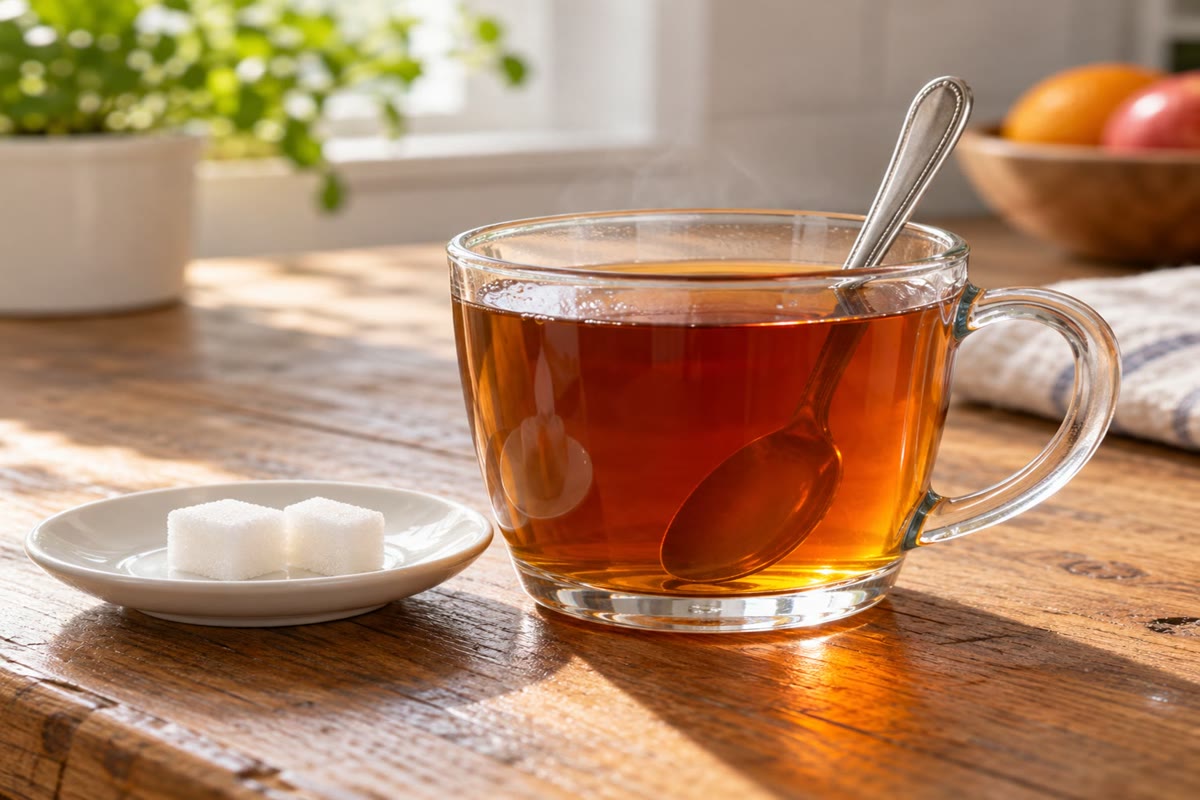
A sugar cube drops into a cup of hot tea. A spoon stirs, the cube crumbles, and after a moment there is nothing left to see: the tea looks exactly as it did before. Yet the tea now tastes sweet. The sugar has not gone away — it is hiding in the tea. This chapter is about putting things together, and about the things that seem to vanish when we do.
2.1 Mixing things together
Definition 2.1 (Mixing)
To mix is to put different things together, and often to stir them. What we get is a mix of those things.
Example 2.2 (A bowl of muesli)
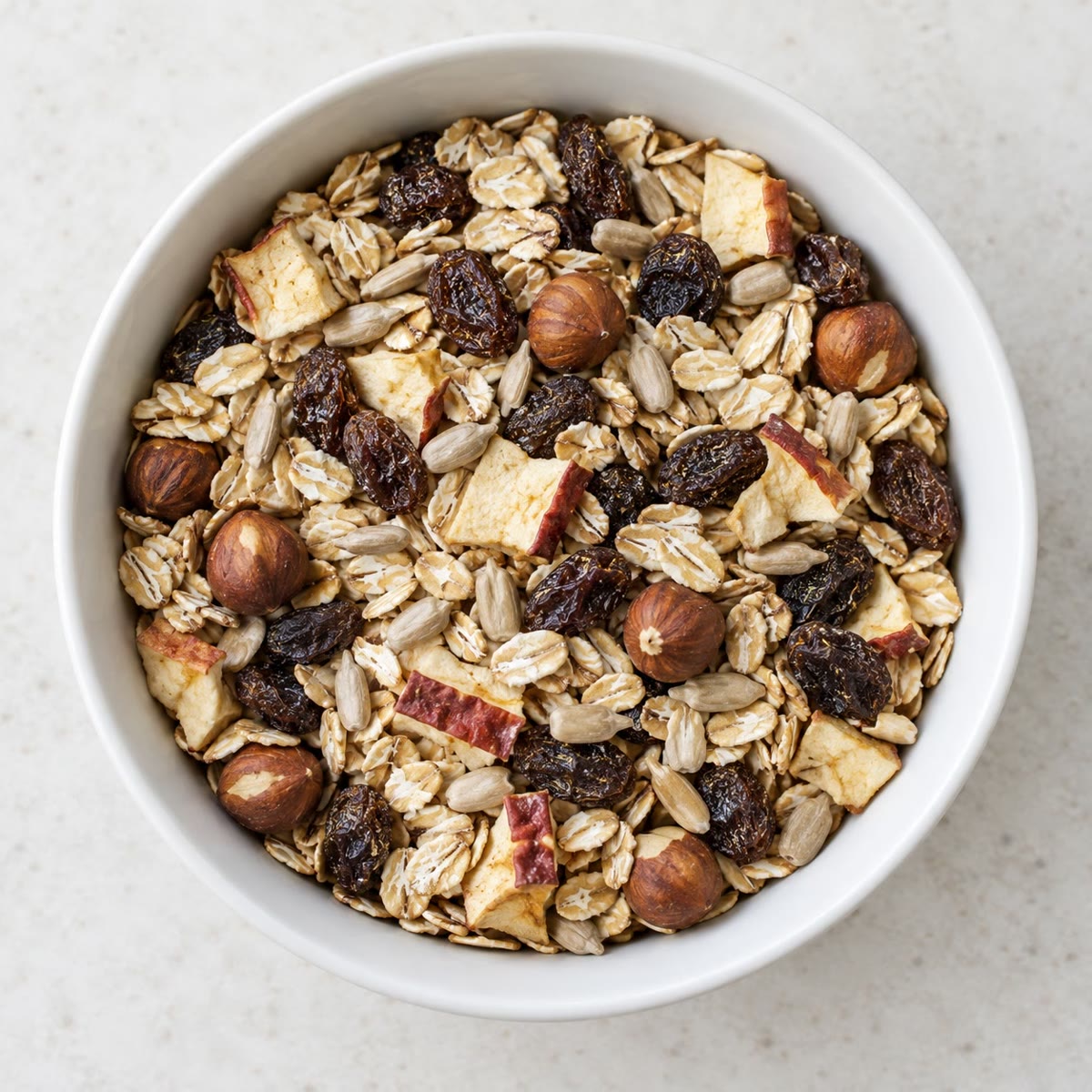
Oats, raisins, nuts and seeds are poured into one bowl: that is a mix. Look closely and every ingredient can still be seen and picked out again with the fingers — a raisin stays a raisin, a nut stays a nut.
Example 2.3 (Syrup in water)
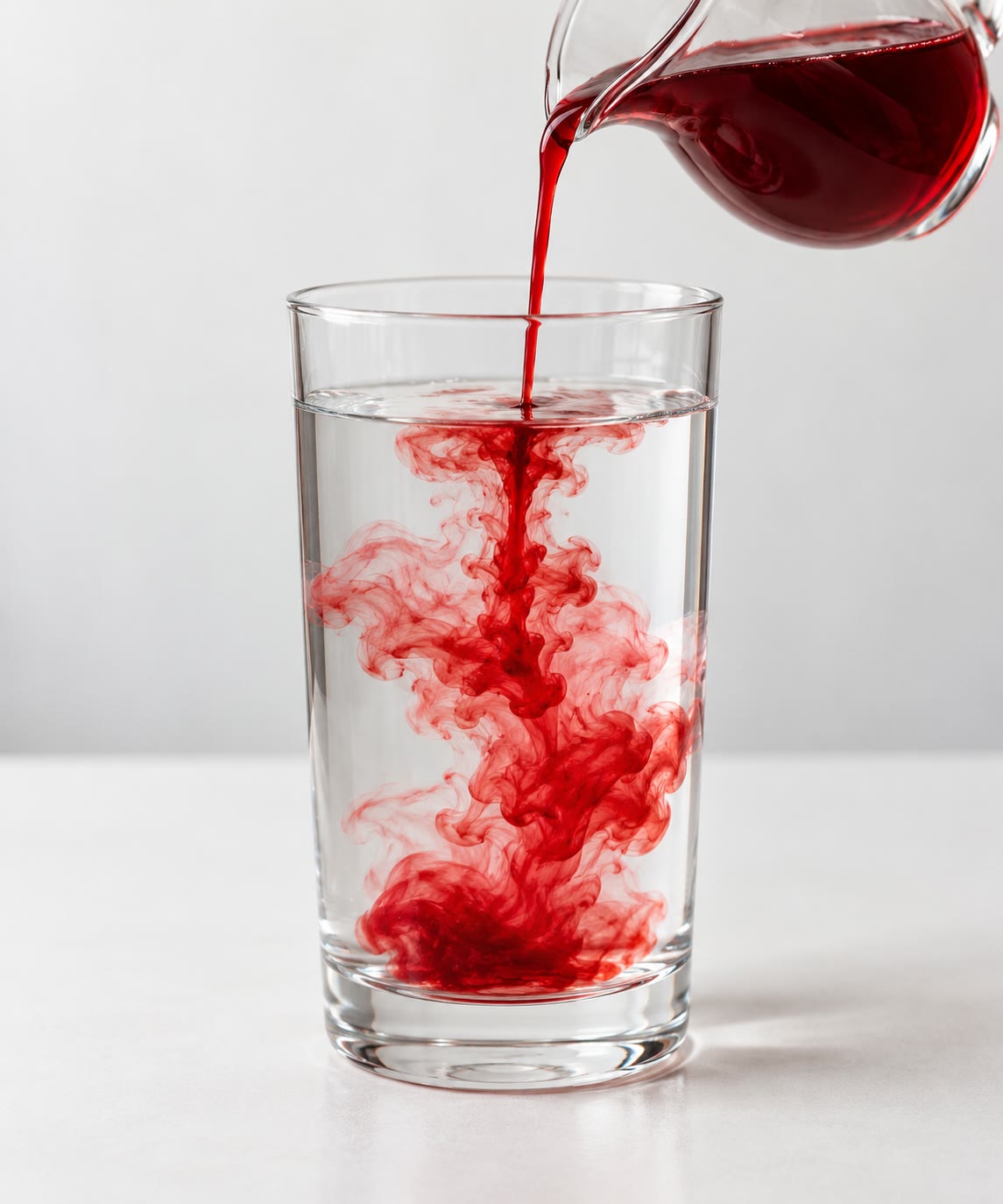
Two liquids can be mixed too. Red syrup poured into a glass of water sinks in curls of colour; after a stir, the whole glass is evenly pink. The syrup and the water can no longer be told apart by eye.
Remark 2.4 (Mixing destroys nothing)
When things are mixed, nothing is lost and nothing new is made. The oats, the raisins and the nuts are all still in the bowl. A later chapter shows how to take a mix apart again.
2.2 Things that dissolve
Definition 2.5 (Dissolving and solution)
A solid dissolves in water when, mixed into the water and stirred, it disappears from sight and leaves the liquid clear, that is, see-through. Sugar and salt dissolve in water. The clear liquid we obtain is called a solution: sugar water is a solution of sugar, salty water a solution of salt.
Example 2.6 (A sugar cube in a glass of water)
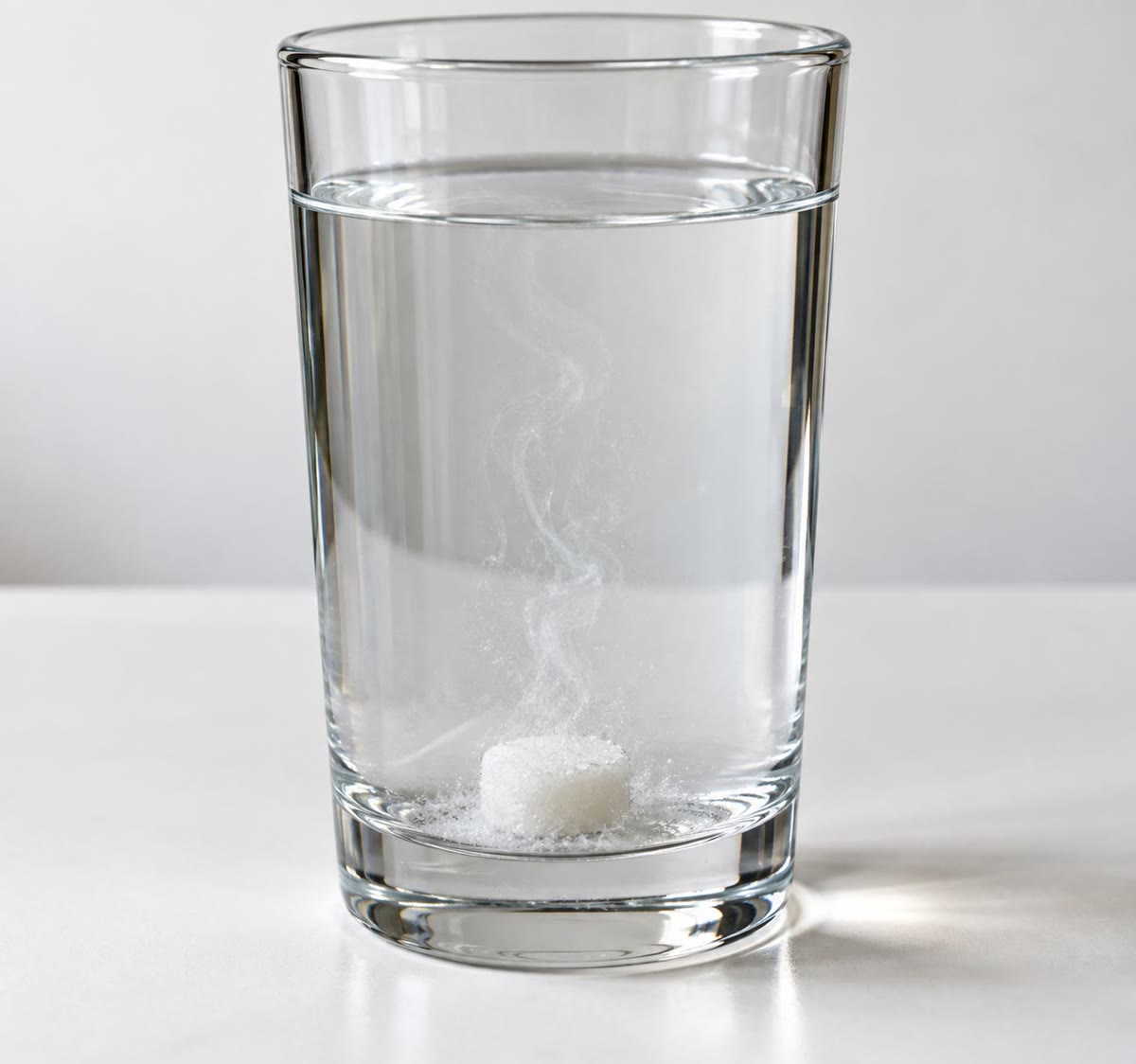
A sugar cube is placed at the bottom of a glass of still water. Its corners soften, it grows smaller, and wavy streaks rise from it through the water. If we stir, it is gone within a minute. If we do not stir, it still disappears, only much more slowly.
Remark 2.7 (Clear is not the same as colourless)
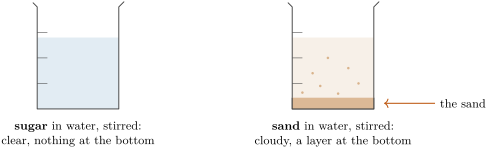
Tea is brown and the syrup water is pink, but we can see through both: they are clear. A solution can have a colour. What a solution never has is bits floating in it or a layer at the bottom.
Method 2.8 (Does it dissolve?)
To find out whether a solid dissolves in water:
- put a little of the solid into a glass of water;
- stir, then wait a few minutes;
look through the glass:
- clear, and nothing at the bottom: the solid has dissolved;
- cloudy, or a layer at the bottom: the solid has not dissolved.
2.3 Things that do not dissolve
Proposition 2.9 (Sand and chalk do not dissolve)
Many solids do not dissolve in water: sand, chalk, soil, pebbles, flour. Stirred into water, they make it cloudy; left to rest, they sink and settle at the bottom, and the water above becomes clearer again. However long we stir, they never disappear.
Example 2.10 (A jar of muddy water)
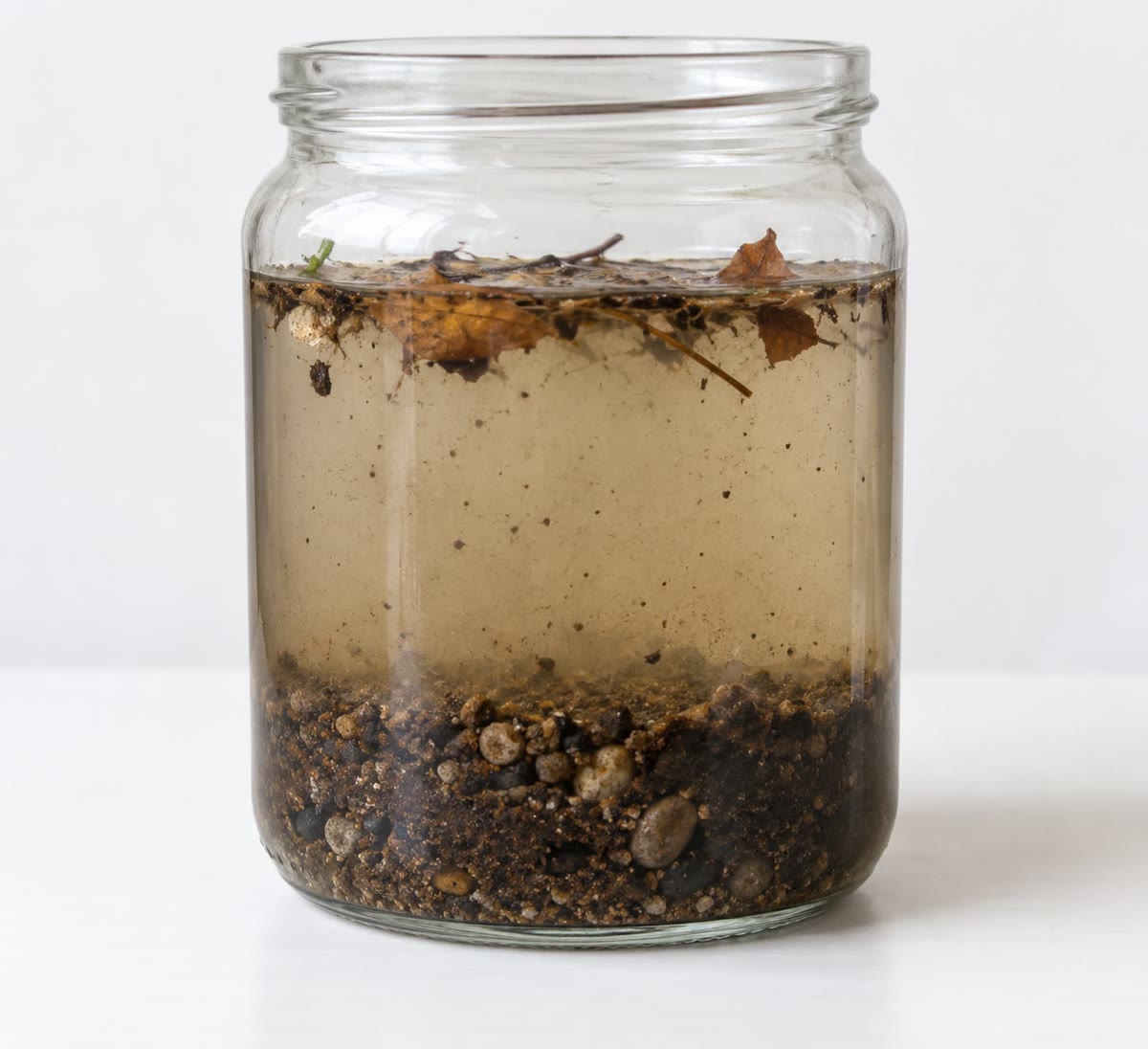
Garden soil shaken in a jar of water turns it brown and cloudy. After an hour the soil and the small pebbles lie in a dark layer at the bottom, a few dead leaves float on top, and the water in between is only a little cloudy. The soil has not dissolved.
2.4 What dissolves is still there
Proposition 2.11 (A dissolved solid is still in the water)
When a solid dissolves, it does not vanish: it is spread all through the water, in pieces far too small to be seen. Two clues show it is still there:
- sweet tea tastes sweet, and sea water tastes salty;
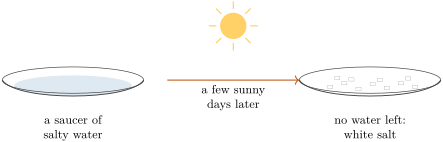
- when the water dries away, the solid is left behind.
Remark 2.12 (No tasting in a laboratory)
We know that tea is sweet because tea is food. In a laboratory, nobody ever tastes anything, not even a liquid that looks like water: the second clue, letting the water dry away, is the one chemists use.
Example 2.13 (Salt from the sea)
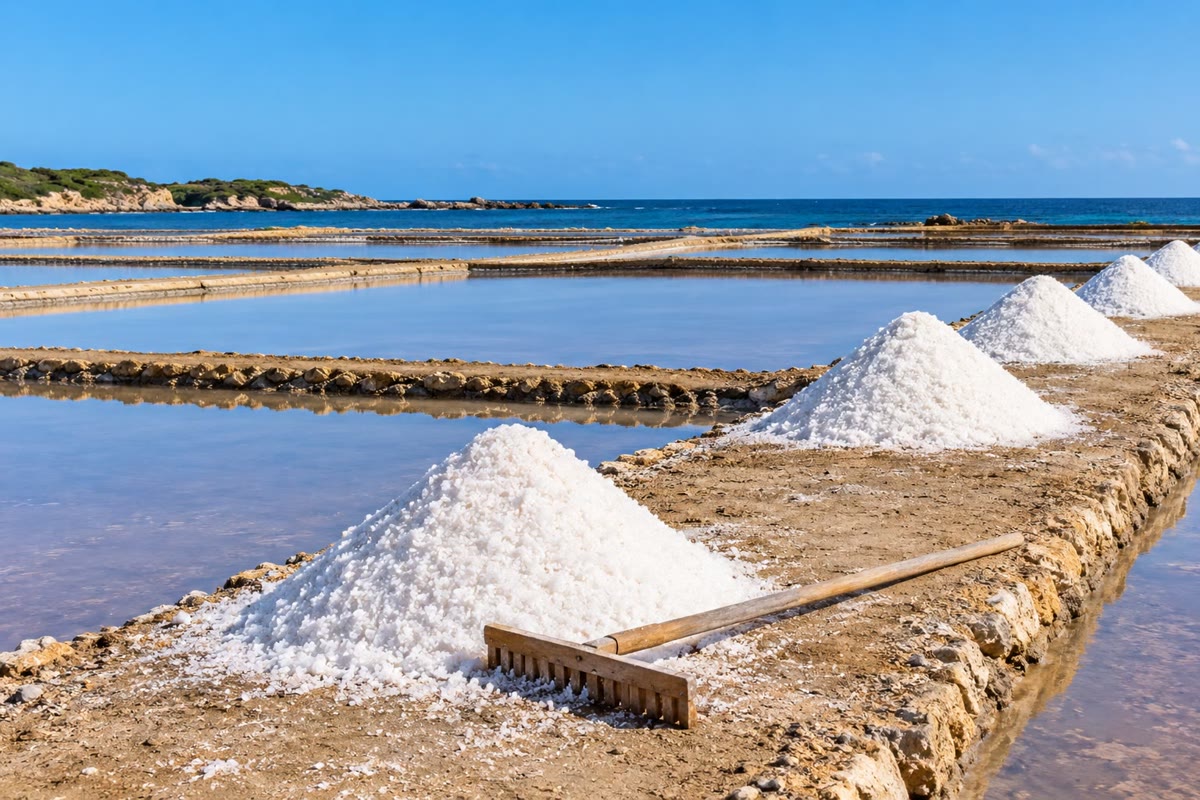
On some sunny coasts, sea water is let into wide, shallow ponds. Day after day the sun dries the water away. What remains on the bottom is white salt, which is raked into heaps: the salt that was dissolved in the sea. The salt on a dinner table often comes from such ponds.
Remark 2.14 (Dissolving is not melting)
People often say that sugar “melts” in tea. It does not: melting is what an ice cube does in the sun, turning into a liquid all by itself, with no water needed. Sugar in tea needs the water, and the sugar is still in it, spread out. The right word is dissolves.
2.5 Exercises
Exercise 2.1 ★
Which of these solids dissolve in water, and which do not? Sugar, sand, salt, chalk, pebbles.
Exercise 2.2 ★
What is a solution? Give two examples from this chapter.
Exercise 2.3 ★
Is a bowl of muesli a mix? Can you still see each of its parts?
Solution
Solution of Exercise 2.3.
Yes: oats, raisins, nuts and seeds have been put together. Every part can still be seen and picked out.
Exercise 2.4 ★
A white powder is stirred into a glass of water. After a few minutes, the water is cloudy and a white layer has formed at the bottom. Has the powder dissolved? Explain with Method 2.8.
Solution
Solution of Exercise 2.4.
No. A dissolved solid leaves the water clear with nothing at the bottom; here the water is cloudy and a layer has settled.
Exercise 2.5 ★
A glass of syrup water is pink. Is it clear? Is it colourless? Is it a solution?
Exercise 2.6 ★
After stirring, no sugar can be seen in a cup of tea. Give the clue that shows the sugar is still there.
Solution
Solution of Exercise 2.6.
The tea tastes sweet: the sugar is still in it, spread through the water in pieces too small to see.
Exercise 2.7 ★
In the salt ponds, what does the sun take away, and what is left behind?
Solution
Solution of Exercise 2.7.
The sun dries the water away; the salt that was dissolved in the sea water is left behind.
Exercise 2.8 ★
Tom says: “The sugar melted in my tea.” Which word should he use instead, and why?
Solution
Solution of Exercise 2.8.
“Dissolved.” Melting is what an ice cube does by itself, without water; the sugar needs the water, and it is still in the tea.
Exercise 2.9 ★★
Look at the figure with the two beakers. Without reading the words under them, how can you tell which beaker holds the sand?
Solution
Solution of Exercise 2.9.
The beaker with the sand is cloudy and has a layer at the bottom; the sugar water is clear with nothing at the bottom.
Exercise 2.10 ★★
A drop of tap water dries on a black plate and leaves a small white ring. What does this tell us about tap water?
Solution
Solution of Exercise 2.10.
Tap water is not only water: something is dissolved in it. When the water dries away, that solid is left behind as the white ring.
Exercise 2.11 ★★
In the laboratory, a teacher has two glasses of clear, colourless liquid: one holds pure water, the other salty water. Nobody may taste them. How can she find out which is which?
Solution
Solution of Exercise 2.11.
She lets a few drops of each dry on a clean dark dish. The pure water leaves nothing; the salty water leaves white salt.