School Chemistry — Grades 1 to 12 · Grades 1–12
5Burning: What a Fire Needs
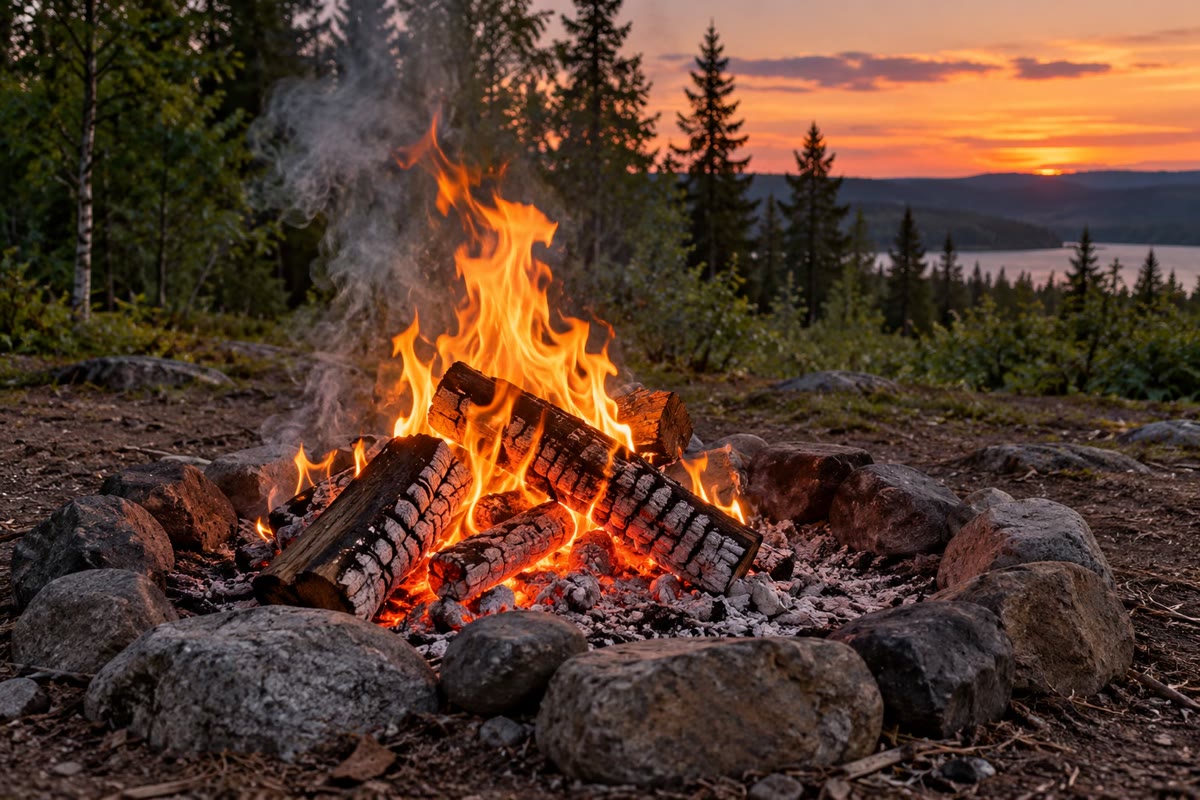
A campfire at dusk. It needed dry wood, a match to start it, and the wind that blows through it keeps it bright. After an hour, the logs have shrunk to glowing embers and white ash, and grey smoke has drifted away into the sky. Where has the wood gone? What does a fire need, and what does it leave behind?
You already know
Air is a mixture of gases: about four fifths nitrogen and one fifth oxygen, with a little argon and carbon dioxide. A flame takes oxygen from the air around it; a candle under a jar goes out when too little oxygen is left (Chapter 4).
5.1 Fuels
Definition 5.1 (Fuel)
A fuel is a material that can burn and give out heat and light: wood, paper, coal, candle wax, the gas of a cooker, petrol, heating oil.
Example 5.2 (Solid, liquid and gas fuels)
Wood, paper, coal and candle wax are solid fuels. Petrol and heating oil are liquid fuels. The gas of a kitchen cooker and the gas in a lighter are gas fuels.
Remark 5.3 (Not everything burns)
Stone, sand, glass and water do not burn: they are not fuels. That is why a fireplace is built of stone or brick, and why sand and water are used to put fires out.
5.2 The fire triangle
Definition 5.4 (Fire triangle)
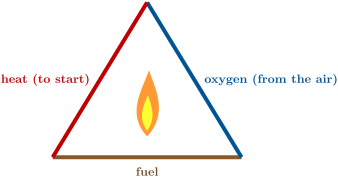
A fire needs three things at the same time: a fuel, oxygen from the air, and heat to start it. These three things are drawn as the three sides of a triangle, the fire triangle. If one side is missing, there is no fire.
Example 5.5 (Lighting a match)
A match head is rubbed on the side of its box. The rubbing heats it enough to start it burning: the heat side of the triangle. The wood of the match is the fuel, and the air brings the oxygen.
Example 5.6 (Blowing on embers)
Glowing embers that seem almost dead burst into flame again when someone blows on them: the blowing brings more air, and so more oxygen, to the fuel that is still hot.
5.3 Burning makes new substances
Definition 5.7 (Burning and combustion)
Burning is what happens when a fuel takes oxygen from the air and gives out heat and light. Chemists call a burning a combustion. During a combustion the fuel and the oxygen are used up, and new substances appear: smoke, ash, carbon dioxide and water vapour.
Proposition 5.8 (A burning cannot be undone)
The ash and smoke of a fire do not turn back into wood, however long we wait. Burning makes new substances that were not there before; the fuel is gone for good.
In the lab — A cold glass over a candle
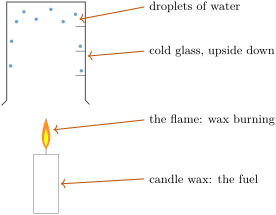
The teacher holds a cold, dry glass beaker upside down for a moment above a candle flame. The inside of the glass mists up with tiny droplets of water: water vapour made by the burning candle has turned back into liquid on the cold glass. A burning candle makes water, and carbon dioxide too, which can be detected with a test met in a later chapter.
Example 5.9 (What a log becomes)
A log of a few kilograms burns down to a small heap of ash. Most of the wood has not vanished: together with oxygen from the air, it has become smoke, carbon dioxide and water vapour, which are gases and drift away into the sky.
5.4 Putting a fire out
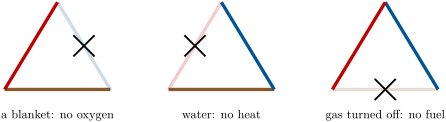
Method 5.10 (Putting out a fire: take away one side)
To put out a fire, take away one side of the fire triangle:
5.5 Fire safety
Remark 5.11 (Never water on a pan of burning oil)
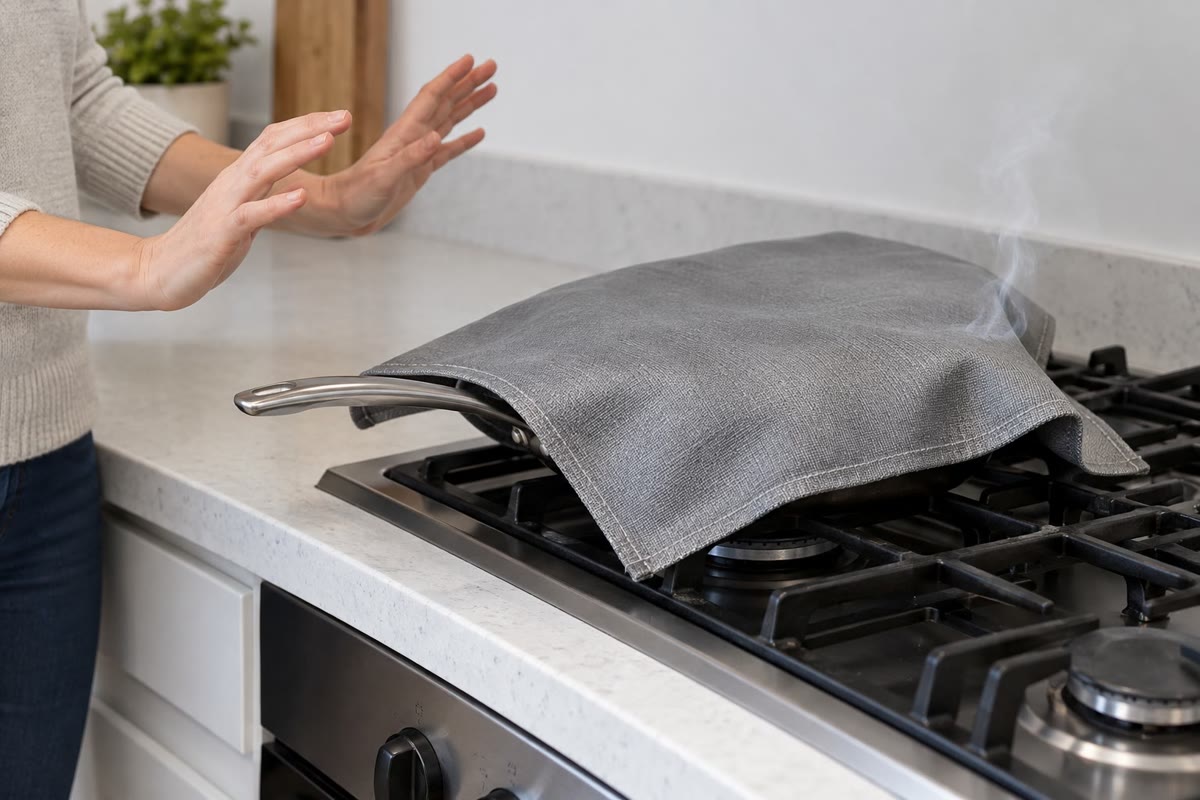
If the oil in a frying pan catches fire, nobody should throw water on it: the water boils at once under the oil and throws burning oil out of the pan. The gas or the hotplate is turned off and the pan is covered with a lid or a fire blanket, by an adult.
Safety


The gas in a lighter or a camping cartridge is butane. Its flame pictogram (GHS02) means: extremely flammable, keep away from flames and sparks. The gas bottle pictogram (GHS04) means: a gas kept under pressure.
Proposition 5.12 (What to do if there is a fire)
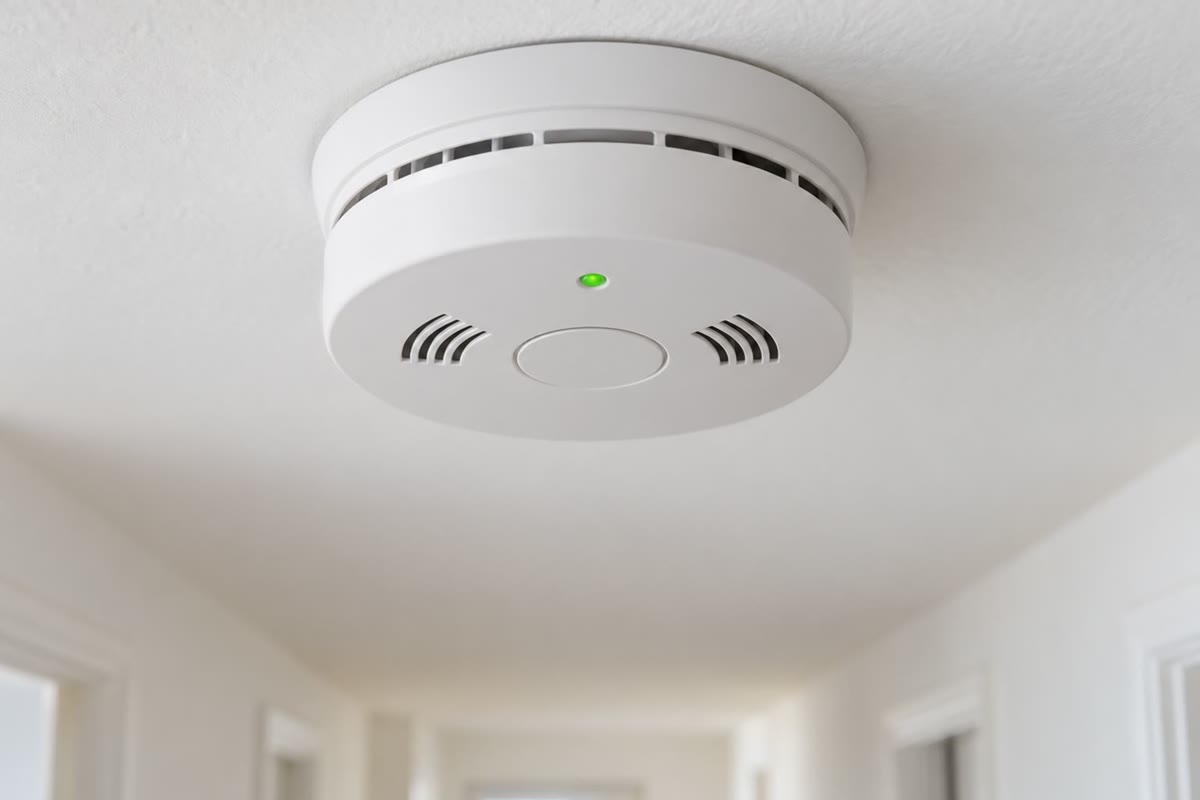
Smoke is the first danger of a fire: it is hot, it hides the way out and it is poisonous to breathe. A smoke alarm on the ceiling beeps loudly as soon as smoke reaches it. If there is a fire: get out, keep low under the smoke, close the doors behind you, and call the fire brigade from outside. Never go back in.
5.6 Exercises
Exercise 5.1 ★
Name the three sides of the fire triangle.
Exercise 5.2 ★
Which of these are fuels: wood, sand, candle wax, glass, petrol, water, paper?
Solution
Solution of Exercise 5.2.
Wood, candle wax, petrol and paper are fuels. Sand, glass and water do not burn.
Exercise 5.3 ★
A fire blanket is thrown over a small fire. Which side of the fire triangle does it take away?
Exercise 5.4 ★
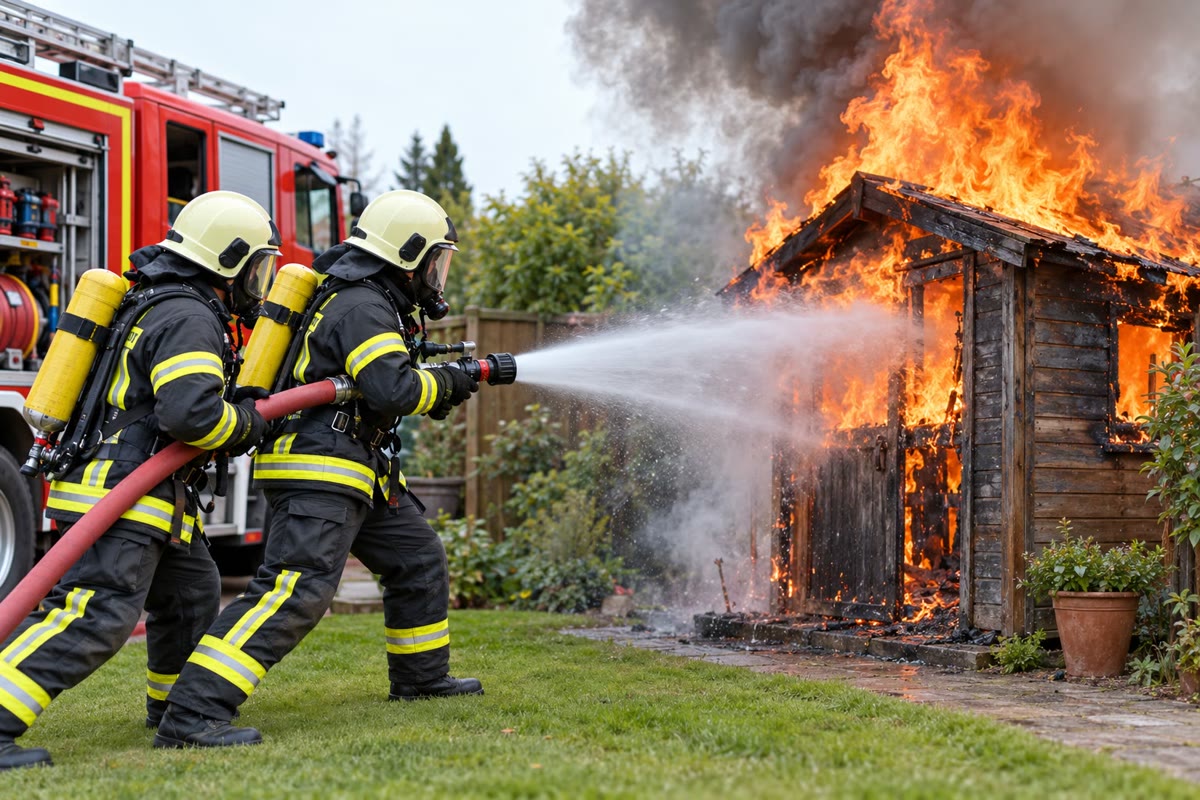
Firefighters spray water on a burning shed. Which side of the fire triangle does the water take away?
Solution
Solution of Exercise 5.4.
The heat: the water cools the burning wood so much that it can no longer burn.
Exercise 5.5 ★
Name three new substances made when wood burns.
Solution
Solution of Exercise 5.5.
Any three of: ash, smoke, carbon dioxide, water vapour.
Exercise 5.6 ★
Why does blowing on glowing embers make them flare up again?
Exercise 5.7 ★
A cold glass held above a candle mists up. Which new substance has the candle made?
Solution
Solution of Exercise 5.7.
Water: the burning wax makes water vapour, which turns into droplets on the cold glass.
Exercise 5.8 ★
What should you do first if a smoke alarm goes off and you see smoke?
Solution
Solution of Exercise 5.8.
Get out, keeping low under the smoke and closing the doors behind you, then call the fire brigade from outside.
Exercise 5.9 ★
Look at the figure with the three small triangles. Which side is crossed out when the gas is turned off?
Solution
Solution of Exercise 5.9.
The fuel side: with the gas turned off, the fire has nothing left to burn.
Exercise 5.10 ★★
To stop a forest fire, firefighters sometimes cut down a wide strip of trees in front of it. Which side of the fire triangle are they taking away?
Exercise 5.11 ★★
A log weighs much more than its ash. Has part of the log disappeared? Explain where it has gone.