School Chemistry — Grades 1 to 12 · Grades 1–12
22Chemical Species, Natural and Synthetic
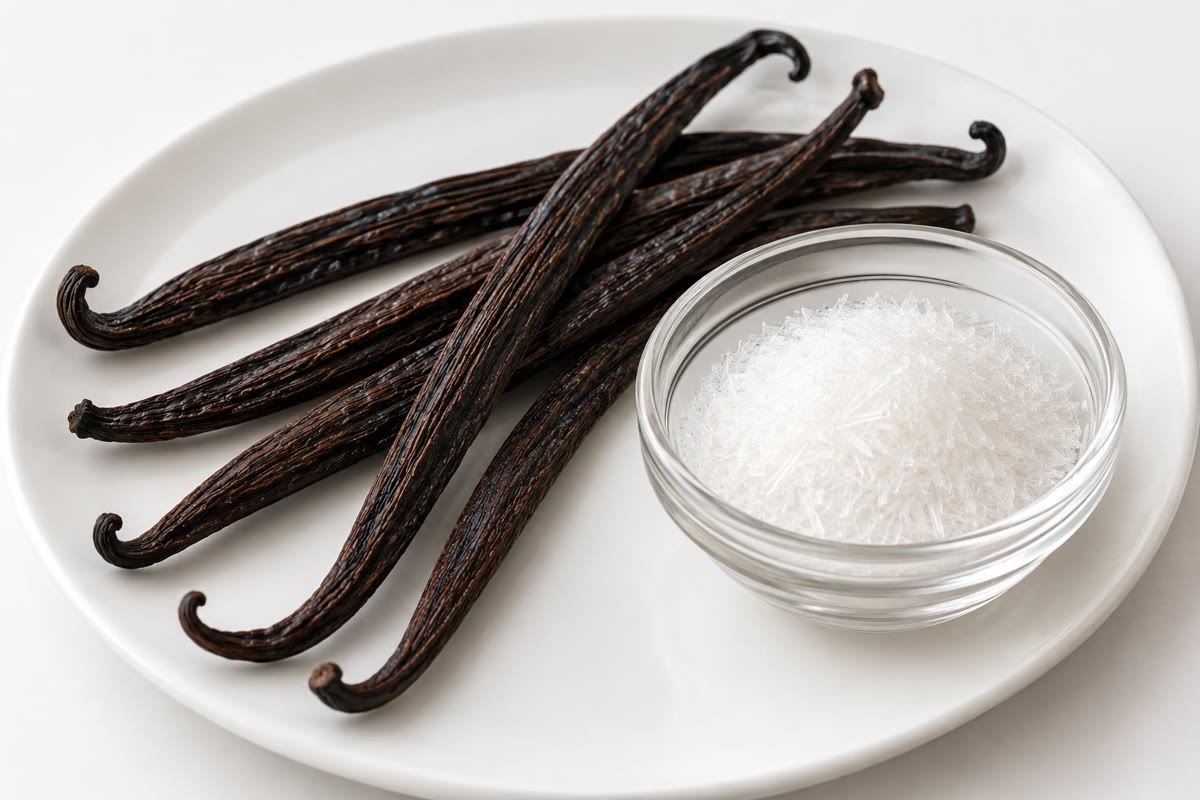
A spoonful of vanilla ice cream. Its flavour may come from the black pods of a tropical orchid, picked, cured and soaked in alcohol for months; or it may come from a factory that makes the flavour from wood pulp or from oil. Taste the two side by side and the main flavour is the same — for a good reason: the molecule that tastes of vanilla, vanillin, is exactly the same molecule, whichever way it was obtained. This chapter shows how chemists take a species out of a plant, how they make it, and how they check that what they have is what they think.
You already know
A chemical species is one particular kind of substance; a pure substance holds one species and has fixed constants, such as its melting and boiling temperatures (Chapter 8). Liquids are miscible or immiscible, and each solute has its own solubility in each solvent (Chapter 9). Paper chromatography separates the dyes of a mixture (Chapter 10).
22.1 Natural and synthetic species
Definition 22.1 (Natural and synthetic species)
A natural species is a chemical species made by a living being or found as such in nature. A synthetic species is made by chemists from other species by chemical reactions. A synthetic species may be identical to a natural one (synthetic vanillin), or have no counterpart in nature (most medicines and plastics).
Proposition 22.2 (Same species, same properties)
A chemical species has the same properties whatever its origin: vanillin made in a factory and vanillin extracted from a pod have the same formula, the same melting point, the same smell. What can differ is what comes with it: a natural extract is a mixture, with many other species that change its taste.
History — From willow bark to aspirin, 1828–1899
For centuries, willow bark was chewed against fever and pain. In 1828 a chemist extracted from it the active species, salicin; chemists then turned it into salicylic acid, which works but irritates the stomach. In 1897, at a dye and drug company, Felix Hoffmann made a gentler synthetic species from salicylic acid: acetylsalicylic acid, sold from 1899 as aspirin. Aspirin has no natural source: it is a purely synthetic species.
22.2 Extracting a species
Definition 22.3 (Extraction and liquid–liquid extraction)
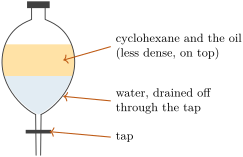
An extraction takes a chemical species out of the material that contains it, usually by dissolving it in a well-chosen solvent. In a liquid–liquid extraction, a species dissolved in one liquid is transferred into a second liquid, immiscible with the first, in which it dissolves better; the two liquids are then separated in a separating funnel.
Example 22.4 (Everyday extractions)
Making tea is an extraction with hot water (infusion); soaking vanilla pods in alcohol is an extraction with ethanol (maceration); boiling vegetables to make a stock is another (decoction).
Definition 22.5 (Distillation and hydrodistillation)
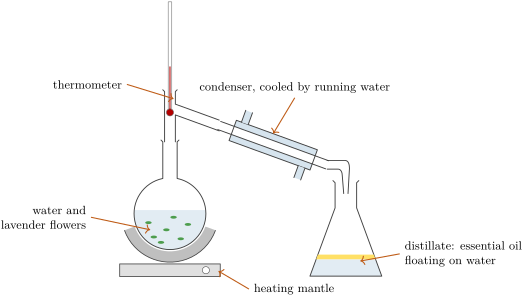
A distillation heats a liquid mixture to boiling, turns the vapour back into liquid in a condenser cooled by running water, and collects this liquid, the distillate. A hydrodistillation boils a plant material in water: the steam carries away the fragrant species of the plant, which separate from the water in the distillate as an oily layer, the essential oil.
Method 22.6 (Choosing an extraction solvent)
For a liquid–liquid extraction of a species from water, the solvent must:
- dissolve the species much better than water does;
- be immiscible with water, so that two layers form;
- be as little hazardous as possible, and easy to remove afterwards (a low boiling temperature lets it evaporate).
Which layer is on top is decided by the densities: the less dense liquid floats.
Example 22.7 (Solvents for lavender oil)
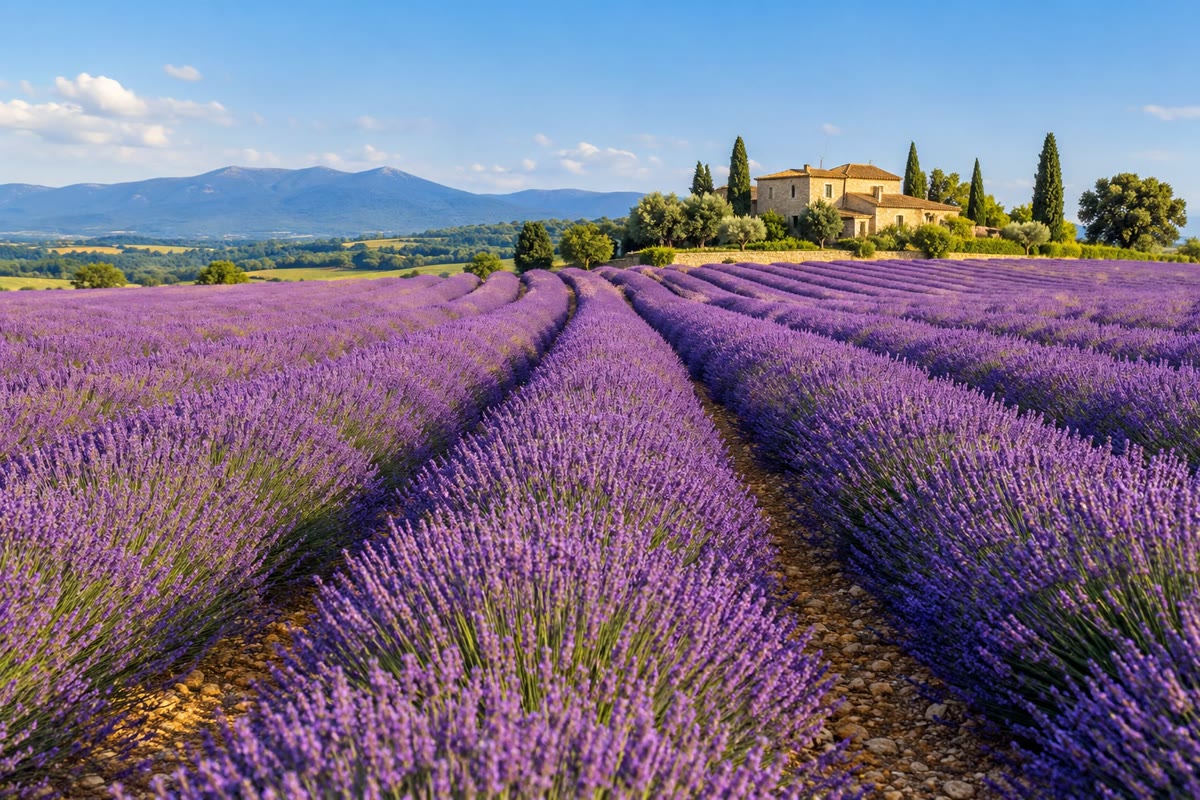
Linalool, the main species of lavender oil, dissolves only to in water, but very well in the solvents below:
| solvent | mass of | boils at | with water | main hazards |
|---|---|---|---|---|
| cyclohexane | immiscible | flammable, harmful | ||
| ethyl ethanoate | immiscible | flammable, irritant | ||
| dichloromethane | immiscible | suspected carcinogen | ||
| ethanol | miscible | flammable |
Ethanol cannot be used: it mixes with water and no layers form. With cyclohexane or ethyl ethanoate, the solvent layer is on top; with dichloromethane, below.
Safety


Cyclohexane: highly flammable (GHS02); may be fatal if swallowed and enters the airways, causes skin irritation, drowsiness (GHS07, GHS08); very toxic to aquatic life (GHS09). Used under a fume hood, far from flames.
22.3 Thin-layer chromatography
Definition 22.8 (Thin-layer chromatography)
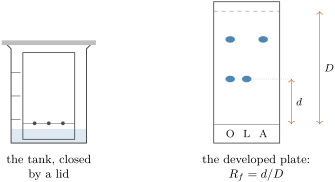
Thin-layer chromatography (TLC) separates the species of a mixture on a plate coated with a thin layer of a fine white powder, the stationary phase. Small spots of the samples are put on a pencil line near the bottom; the plate stands in a closed tank in a little solvent, the eluent, which climbs the plate and carries each species to a height that depends on the species. Colourless spots are then revealed, under ultraviolet light or with iodine vapour.
Definition 22.9 (Retention factor)
The retention factor of a spot is
a number between 0 and 1. For a given plate, eluent and temperature, each species has its own .
Method 22.10 (Running and reading a TLC)
- Draw the starting line in pencil, from the bottom; put a small spot of each sample and of each reference species on it.
- Stand the plate in the tank, the eluent below the line; close the tank.
- Take the plate out when the front is about from the top; mark the front at once; dry and reveal.
- Measure the distances and compute the of each spot. A sample giving one spot is probably a pure species; a spot at the same height as a reference spot on the same plate is probably that species.
22.4 Identifying a species by its physical constants
Proposition 22.11 (A melting point checks identity and purity)
A pure solid melts sharply at its own temperature: vanillin at about , aspirin at , salicylic acid at . An impure sample melts lower, and over a range of several degrees. Measuring a melting point, on a heated metal bench or in a melting-point apparatus, therefore both identifies a solid and tells whether it is pure.
In the lab — A TLC plate
The students spot lavender oil, linalool and linalyl ethanoate on a plate, develop it in a closed jar with a mixture of solvents chosen by the teacher, and reveal it under an ultraviolet lamp, wearing glasses that block the ultraviolet. The eluent is used and handled under the fume hood.
22.5 Exercises
Exercise 22.1 ★
Natural or synthetic species? Vanillin from a vanilla pod; aspirin; caffeine from coffee beans; vanillin made in a factory.
Solution
Solution of Exercise 22.1.
Natural: vanillin from a pod, caffeine from coffee beans. Synthetic: aspirin, factory vanillin.
Exercise 22.2 ★
Why do synthetic vanillin and natural vanillin have the same melting point?
Solution
Solution of Exercise 22.2.
They are the same chemical species, and a species has the same properties whatever its origin.
Exercise 22.3 ★
On a TLC plate, the solvent front is above the starting line and a spot is above it. Compute its .
Solution
Solution of Exercise 22.3.
.
Exercise 22.4 ★
Give the role of the condenser in a distillation, and say why the cold water enters at its lower end.
Solution
Solution of Exercise 22.4.
It cools the vapour and turns it back into liquid. Entering at the lower end, the water fills the whole jacket (and meets the hottest vapour last, cooling best).
Exercise 22.5 ★
Name the three conditions an extraction solvent must meet.
Solution
Solution of Exercise 22.5.
Dissolve the species much better than water; be immiscible with water; be as little hazardous as possible and easy to remove.
Exercise 22.6 ★★
Using the table of solvents, explain why ethanol cannot be used to extract linalool from the distillate, while cyclohexane can.
Solution
Solution of Exercise 22.6.
Ethanol is miscible with water: no layers form, nothing can be separated. Cyclohexane is immiscible with water and dissolves linalool well.
Exercise 22.7 ★★
In a separating funnel, dichloromethane is shaken with water. Which layer is on top? Justify with the table.
Solution
Solution of Exercise 22.7.
Water is on top: of dichloromethane weighs , more than of water, so it sinks.
Exercise 22.8 ★★
A white powder sold as aspirin starts to melt at and is fully melted at . What can you conclude?
Solution
Solution of Exercise 22.8.
It melts too low (aspirin: ) and over a range: the sample is impure, or not aspirin.
Exercise 22.9 ★★
Look at the TLC figure of this chapter. What does the lavender oil contain? Which species climbed higher?
Solution
Solution of Exercise 22.9.
Linalool and linalyl ethanoate (its two spots are at the heights of the two references). Linalyl ethanoate climbed higher.
Exercise 22.10 ★★
Put in order the steps of obtaining lavender oil in the laboratory: separating the layers; hydrodistillation; adding cyclohexane to the distillate and shaking; evaporating the cyclohexane.
Solution
Solution of Exercise 22.10.
Hydrodistillation; adding cyclohexane to the distillate and shaking; separating the layers; evaporating the cyclohexane.
Exercise 22.11 ★★
Why is the starting line of a TLC plate drawn in pencil and placed above the eluent?
Exercise 22.12 ★★★
After extraction, the cyclohexane is removed by gentle heating, leaving the oil. Using the boiling points of cyclohexane and of linalool (), explain why this works.
Solution
Solution of Exercise 22.12.
Cyclohexane boils at , linalool at : gentle heating drives off the cyclohexane while the linalool stays.
Exercise 22.13 ★★★
A synthetic sample of a flavour gives one spot on a TLC plate, at the height of the natural species, and melts sharply at the right temperature. What two conclusions can you draw?
Solution
Solution of Exercise 22.13.
The sample is probably that species (same as the natural one on the same plate) and probably pure (one spot, sharp melting point).
Exercise 22.14 ★★★
In the same TLC, spot A has and the front is above the line. At what height is spot A? Another species has : how far above spot A is it?
Solution
Solution of Exercise 22.14.
. The other at (to the nearest mm), so about above A.
Exercise 22.15 ★★★
of linalool can dissolve in of water. A distillate of of water holds of dissolved linalool. Is it saturated? How much more could it dissolve? Why is it worth extracting this water with cyclohexane rather than throwing it away?
22.6 Problem: The Scent of Lavender
Problem 22.1
Weekend problem — from a basket of lavender flowers to a few drops of essential oil, checked by chromatography
In a school laboratory, of fresh lavender flowers are hydrodistilled with water. The distillate, cloudy, is shaken with of cyclohexane in a separating funnel; the cyclohexane layer is kept, dried, and the cyclohexane is evaporated by gentle heating. What remains is lavender essential oil. Use the table of solvents of this chapter.
Part I — The hydrodistillation.
- What is the role of the boiling water in a hydrodistillation?
- What is the role of the condenser? Where does the cold water enter it?
- The distillate shows a thin oily layer floating on water. Is the oil miscible with water? Is it more or less dense than water?
- Why is the distillate not simply poured off to recover the oil?
Part II — The extraction.
- Why is cyclohexane a suitable solvent for this extraction?
- Could ethanol be used instead? Explain.
- After shaking and settling, is the cyclohexane layer on top or at the bottom? What would it be with dichloromethane?
- Give two precautions required by the pictograms of cyclohexane.
- Why can the cyclohexane be evaporated without losing the linalool, which boils at ?
Part III — The chromatography. The oil, pure linalool (L) and pure linalyl ethanoate (A) are spotted on a TLC plate. After development the front is above the starting line. The oil gives two spots, at and ; spot L is at , spot A at .
- Compute the of linalool and of linalyl ethanoate.
- What does the oil contain, as far as this plate shows?
- Is lavender oil a pure substance?
- Why were the references spotted on the same plate as the oil?
- A synthetic linalool is spotted on another plate run in the same conditions: its spot has . What can be concluded?
Part IV — How much oil? The oil obtained fills ; of this oil weighs .
- What mass of oil was obtained?
- What percentage of the mass of the flowers is that?
- What mass of flowers would be needed for of oil?
- The oil is said to be “natural”. In what sense is this true? Is its linalool different from synthetic linalool?
- State the mass of essential oil obtained from of flowers.
Solution
Solution of Problem 22.1.
1. Its steam carries the fragrant species out of the flowers and into the condenser.
2. It cools the vapour back into a liquid; the cold water enters at the lower end.
3. Immiscible; less dense than water (it floats).
4. The layer is very thin and part of the oil is dissolved in the water or dispersed in it: an extraction recovers it.
5. It dissolves linalool well, is immiscible with water, and boils at a low temperature (), so it is easy to remove.
6. No: ethanol mixes with water and no layers form.
7. On top ( per mL, less than water). With dichloromethane ( per mL) the solvent layer would be at the bottom.
8. No flame nearby (flammable); work under a fume hood with gloves, and collect the waste instead of pouring it down the sink (toxic to aquatic life).
9. Cyclohexane boils at , linalool at : gentle heating removes the solvent only.
10. ; .
11. Linalool and linalyl ethanoate.
12. No: it contains at least two species; it is a mixture.
13. So that all spots are developed in the same conditions: only then can heights be compared.
14. Its equals that of linalool in the same conditions: it is probably linalool, identical to the natural species.
15. .
16. .
17. g, about of flowers.
18. It is extracted from a plant, without chemical change. But its linalool is the same species as synthetic linalool: same formula, same properties.
19. of essential oil from of flowers.