School Chemistry — Grades 1 to 12 · Grades 1–12
10Identifying Substances
A crumpled note, written in black felt-tip, is found at the scene of a small mystery, and three felt-tip pens are found in three different bags. To the eye the three inks look the same black. A forensic chemist needs only a strip of paper, a little water and half an hour to say which pen wrote the note. Chemists identify substances not by how they look, but by how they behave in a test chosen for them.
You already know
A chemical species is one particular kind of substance; a pure substance holds one single species, a mixture several (Chapter 8). Some substances dissolve well in a solvent, others little or not at all: each has its own solubility (Chapter 9).
10.1 What a characteristic test is
Definition 10.1 (Characteristic test and reagent)
A characteristic test for a chemical species is a simple experiment that gives a visible result with that species, and not with the others met in the same situation. It uses a substance chosen for the purpose, the reagent.
Method 10.2 (Running a characteristic test)
- Take a small sample of the substance to be tested.
- Add the reagent, or bring it into contact with the sample, as the test describes.
- Observe: a colour change, a cloudiness, a flame, a sound.
- Conclude: the test is positive if the expected result appears, negative if it does not.
- Run the same test on a sample known not to contain the species (a blank): it must stay negative, otherwise the result proves nothing.
10.2 Four classic tests
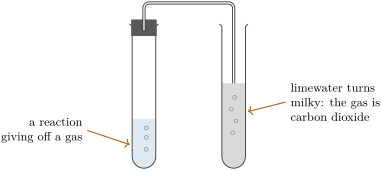
Proposition 10.3 (Carbon dioxide turns limewater milky)
Limewater is a clear, colourless solution. When carbon dioxide is bubbled through it, it turns milky, cloudy white. Air breathed out through a straw turns limewater milky; fresh air pumped through it hardly does.
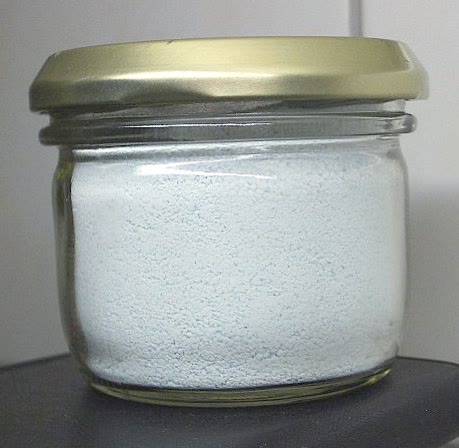
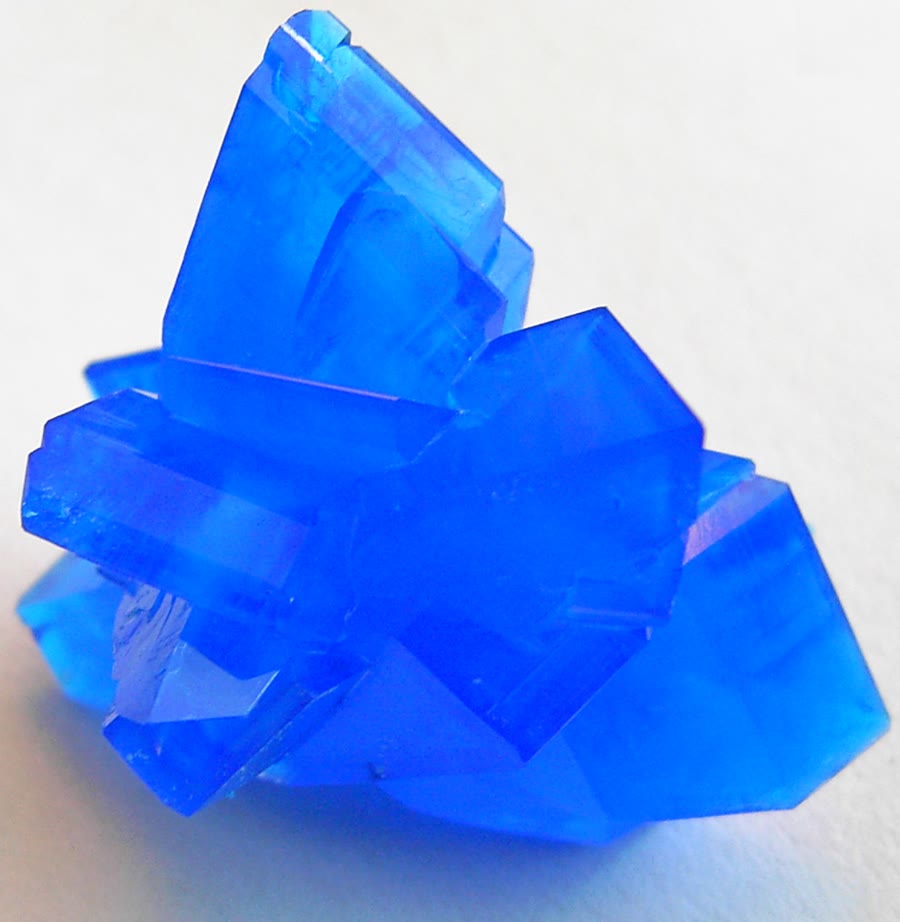
Proposition 10.4 (Water turns anhydrous copper sulfate blue)
Anhydrous copper sulfate is a white powder. A drop of water turns it blue at once. The test shows that water is present, in a liquid or in a damp solid — not that the liquid is pure water.
Safety


Copper sulfate: harmful if swallowed and irritating to the skin (GHS07); it can seriously damage the eyes (GHS05); very toxic to aquatic life, with long-lasting effects (GHS09). Goggles and gloves; the waste is collected, never poured down the sink.
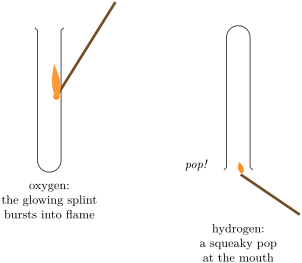
Proposition 10.5 (Oxygen relights a glowing splint)
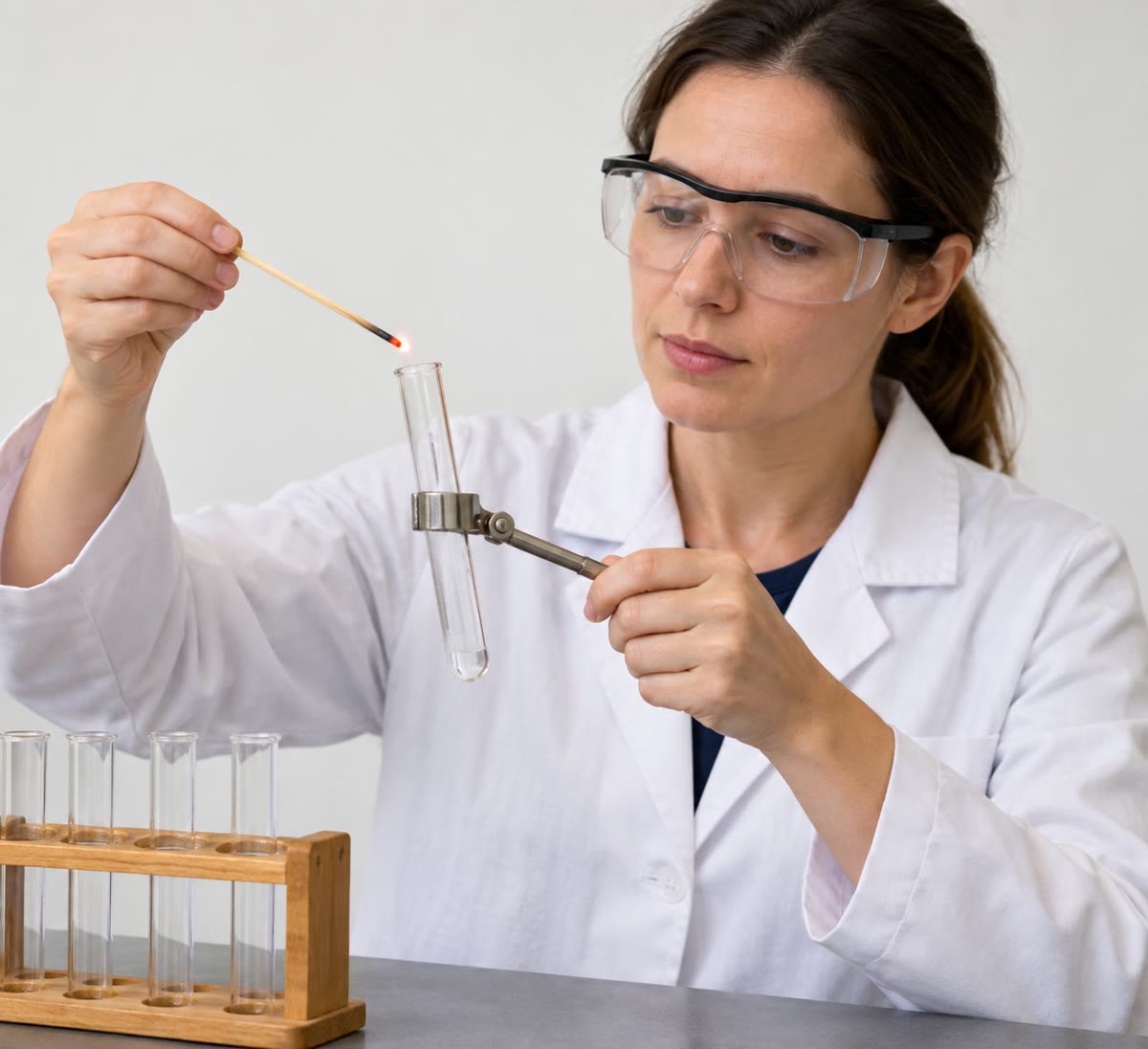
A wooden splint is lit, then blown out so that only a red glow remains. Pushed into a test tube of oxygen, the glowing splint bursts back into flame.
Proposition 10.6 (Hydrogen burns with a squeaky pop)
A lighted splint held at the mouth of a small test tube of hydrogen makes a short, squeaky “pop”: the hydrogen burns at once with the oxygen of the air.
Safety


Hydrogen: extremely flammable gas (GHS02), stored under pressure in cylinders (GHS04). The pop test is made with a few millilitres only, by the teacher.
10.3 Paper chromatography
Definition 10.7 (Paper chromatography and chromatogram)
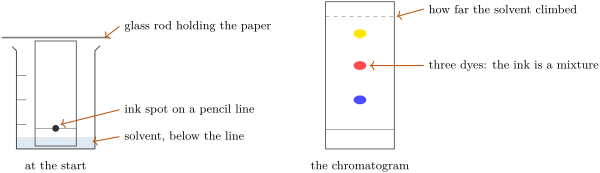
Paper chromatography separates the dyes of a mixture. A small spot of the mixture is put on a line drawn near the bottom of a strip of paper; the bottom of the strip dips into a solvent, which slowly climbs up the paper and carries each dye with it, some faster than others. When the solvent has climbed almost to the top, the strip is taken out and dried: it is the chromatogram.
Method 10.8 (Reading a chromatogram)
- Count the spots above each starting point: one spot, one dye; two spots or more, a mixture of dyes.
- Compare heights: in the same chromatogram, one dye always climbs to the same height. A spot at the same height as a known dye is probably that dye.
- Use a pencil line, never ink: ink would itself be separated by the solvent.
Example 10.9 (The dyes of sweets)
The coloured coatings of sweets are scraped into a little water and spotted on a strip, beside spots of the food dyes allowed in sweets. The chromatogram shows that the green coating holds a yellow dye and a blue dye, both found among the allowed dyes.
10.4 Reading a test bank
Proposition 10.10 (A table of characteristic tests)
Chemists keep the tests they use in a table, a test bank, which reads from left to right:
| species looked for | reagent or test | positive result | |
|---|---|---|---|
| carbon dioxide | limewater | limewater turns milky | |
| water | anhydrous copper sulfate | white turns blue | |
| oxygen | glowing splint | the splint relights | |
| hydrogen | lighted splint | a squeaky pop | |
| dyes of a mixture | paper chromatography | one spot per dye |
Remark 10.11 (What a test does not say)
A positive test proves that the species is present, not that it is alone: a liquid that turns copper sulfate blue contains water, but it may be salty water or orange juice. A negative test only says that the species is absent, or present in too small an amount to show.
10.5 Exercises
Exercise 10.1 ★
Which test identifies carbon dioxide? Describe its positive result.
Solution
Solution of Exercise 10.1.
The limewater test: the gas is bubbled through clear limewater, which turns milky if the gas is carbon dioxide.
Exercise 10.2 ★
A white powder turns blue when a liquid is dropped on it. What does this show about the liquid?
Solution
Solution of Exercise 10.2.
The powder is anhydrous copper sulfate, and the liquid contains water.
Exercise 10.3 ★
A glowing splint is put into a gas jar and bursts into flame. Which gas does the jar hold?
Solution
Solution of Exercise 10.3.
Oxygen.
Exercise 10.4 ★
Why is the starting line of a paper chromatogram drawn in pencil and not in ink?
Solution
Solution of Exercise 10.4.
Pencil does not dissolve in the solvent. An ink line would itself be carried up and separated, and spoil the chromatogram.
Exercise 10.5 ★★
Why must the starting line be above the level of the solvent in the beaker?
Exercise 10.6 ★★
A chromatogram of a green ink shows two spots, one at the height of a yellow reference dye, one at the height of a blue reference dye. Is the green ink a pure substance? What is it made of?
Solution
Solution of Exercise 10.6.
No, it is a mixture of two dyes: probably the yellow dye and the blue dye of the references.
Exercise 10.7 ★★
Using the test bank, which test would you use to show that a gas given off by a reaction is hydrogen? What do you expect to see?
Solution
Solution of Exercise 10.7.
Collect a little of the gas in a test tube and hold a lighted splint at its mouth: a squeaky pop shows hydrogen.
Exercise 10.8 ★★
Air breathed out turns limewater milky much faster than fresh air. What does this tell us about the air we breathe out?
Exercise 10.9 ★★
A clear liquid turns anhydrous copper sulfate blue. Sam concludes: “It is pure water.” Explain why Sam is wrong.
Solution
Solution of Exercise 10.9.
The test shows that water is present, not that it is alone: salty water, juice or any watery mixture would turn the powder blue too.
Exercise 10.10 ★★
Look at the chromatogram of the black ink in this chapter. How many dyes does the ink contain? Which one climbed highest?
Solution
Solution of Exercise 10.10.
Three dyes (three spots). The yellow dye climbed highest.
Exercise 10.11 ★★★
Three jars hold oxygen, hydrogen and carbon dioxide, but their labels are lost. Plan, on paper, the tests that would name each jar, in an order that uses as few tests as possible.
Solution
Solution of Exercise 10.11.
For instance: a glowing splint into each jar — the one that relights it holds oxygen. On the other two, a lighted splint at the mouth — a squeaky pop shows hydrogen. The last jar holds carbon dioxide (it can be confirmed with limewater). Two or three tests are enough.
Exercise 10.12 ★★★
A student tests a gas with limewater and sees nothing happen. Give two possible explanations, and the control test that would help decide.
Solution
Solution of Exercise 10.12.
The gas may contain no carbon dioxide, or too little to show in the time. A control test with air breathed out, which is known to contain carbon dioxide, checks that the limewater is working.
10.6 Problem: The Forged Note
Problem 10.1
Weekend problem — a felt-tip note, three suspect pens, three unlabelled gas cylinders, and a test bank
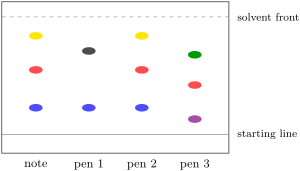
A school laboratory is asked to help with two small mysteries. First, a note written in black felt-tip must be matched to one of three black pens, 1, 2 and 3. A drop of ink is taken from the note and from each pen and spotted on the same strip of paper, which is then developed with water. The chromatogram is shown below.
Part I — The chromatogram.
- Why were all four inks spotted on the same strip and developed together?
- Is the ink of the note a pure substance or a mixture? Explain.
- How many dyes does the ink of pen 1 contain? Can pen 1 have written the note?
- Pen 3 also contains three dyes. Why can it not have written the note?
- Which pen matches the note? Explain using the heights of the spots.
Part II — Three gas cylinders. The second mystery: three small cylinders, X, Y and Z, have lost their labels; they hold oxygen, hydrogen and carbon dioxide. A little gas from each is collected in a test tube. Gas X relights a glowing splint. Gas Y makes a squeaky pop with a lighted splint. Gas Z turns limewater milky.
- Name gas X.
- Name gas Y.
- Name gas Z.
- Before testing gas Z, the student bubbles ordinary air through the same limewater for the same time, and it stays clear. What is this second test called, and what does it add to the conclusion?
Part III — The test bank.
- A colourless liquid found next to the note turns anhydrous copper sulfate blue. Write the line of the test bank used, and what the result shows.
- Does this result prove that the liquid is pure water? Explain.
- Conclude the first mystery: how many dyes does the ink of the note contain, and which pen wrote it?
Solution
Solution of Problem 10.1.
1. So that the conditions (paper, solvent, time) are the same for all four: only then can the heights of the spots be compared.
2. A mixture: its ink gives three separate spots, three dyes.
3. Two dyes. No: the note’s ink has three dyes, and pen 1 has neither the red nor the yellow dye.
4. Its three spots are not at the same heights as those of the note: they are three different dyes.
5. Pen 2: its three spots are exactly at the heights of the three spots of the note.
6. Oxygen.
7. Hydrogen.
8. Carbon dioxide.
9. A blank (a control). It shows that the limewater does not turn milky by itself, nor with ordinary air in that time: so the milkiness with gas Z really comes from carbon dioxide.
10. “Water — anhydrous copper sulfate — white turns blue”: the liquid contains water.
11. No. A positive test shows that water is present, not that nothing else is: the liquid could be a solution or another watery mixture.
12. The ink of the note contains 3 dyes, and pen 2 wrote the note.