School Chemistry — Grades 1 to 12 · Grades 1–12
7From Raw Materials to Recycling
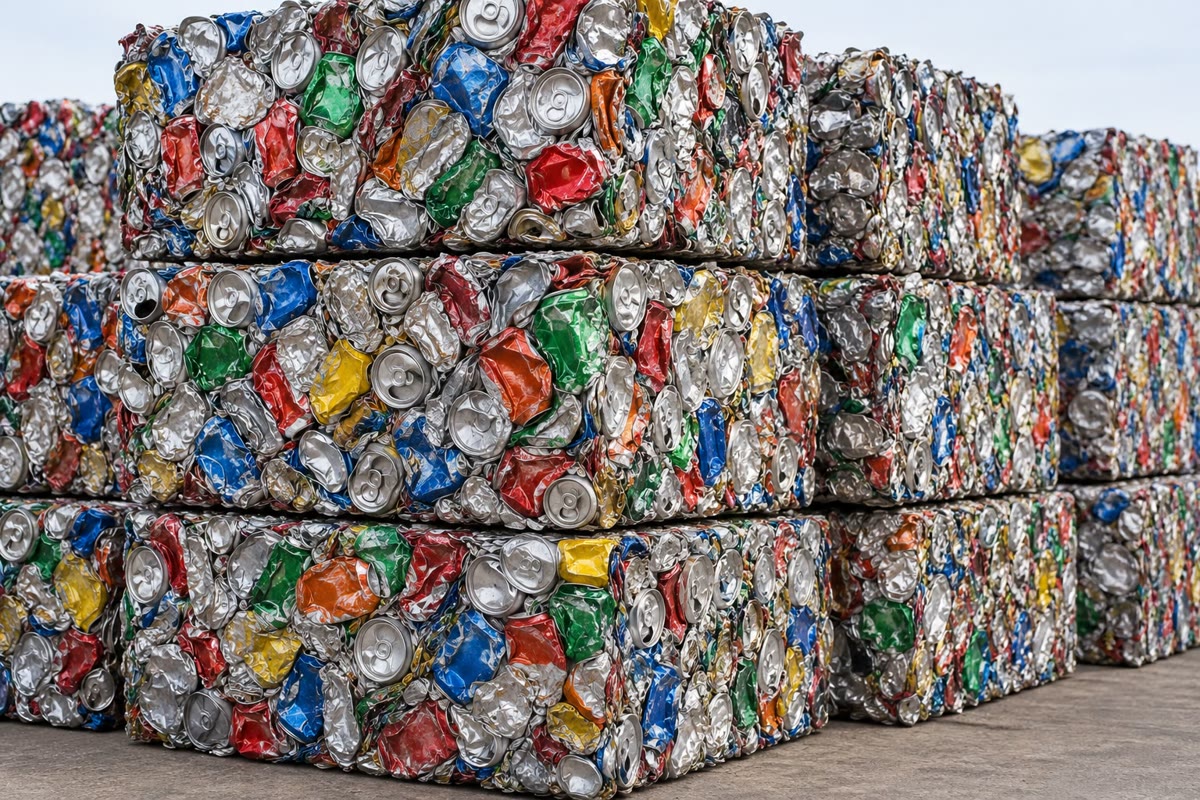
An empty drink can is dropped into a recycling bin. A truck takes it to a sorting centre, a machine squashes it into a block with thousands of others, a furnace melts the blocks, and a few weeks later the metal is back on a shop shelf as a new can. Where did the metal come from in the first place, and why is it worth melting old cans instead of making new metal?
You already know
An object is a thing we can see and touch; its material is what it is made of — wood, metal, glass, plastic, paper, fabric, stone (Chapter 1). In a chemical change new substances appear and there is no simple way back (Chapter 6).
7.1 Natural and manufactured materials
Definition 7.1 (Natural and manufactured materials)
A natural material is used much as it is found in nature, only cut or shaped: wood, stone, cotton, wool, leather. A manufactured material is made by people from substances found in nature, by changing them, often with heat and chemical changes: glass, steel, aluminium, plastic, paper, concrete.
Example 7.2 (Two tables)
A table made of oak planks is made of a natural material: the wood was only sawn, planed and glued. A table with a glass top and steel legs is made of manufactured materials: neither glass nor steel is found as such in nature.
7.2 Raw materials
Definition 7.3 (Raw material and ore)
A raw material is a substance taken from nature to make materials and objects: trees, sand, rocks, crude oil, cotton, wool. A rock from which a metal is extracted is called an ore.
Example 7.4 (Where materials come from)
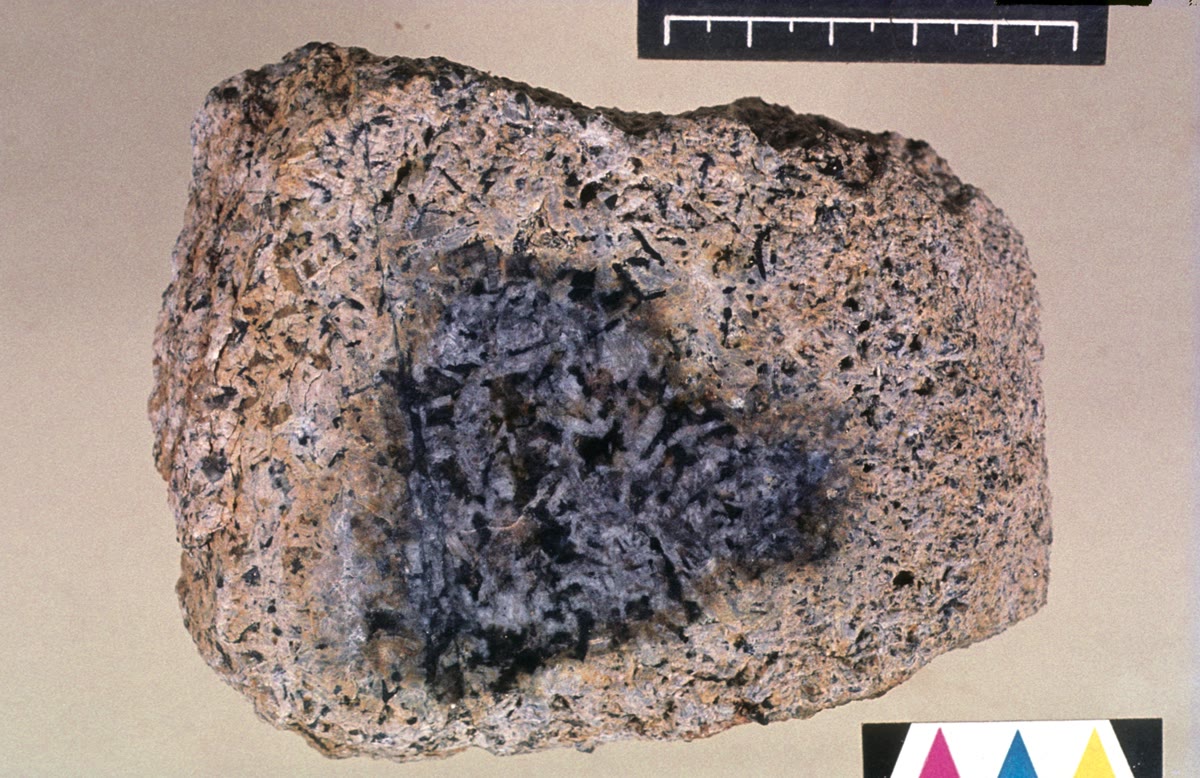
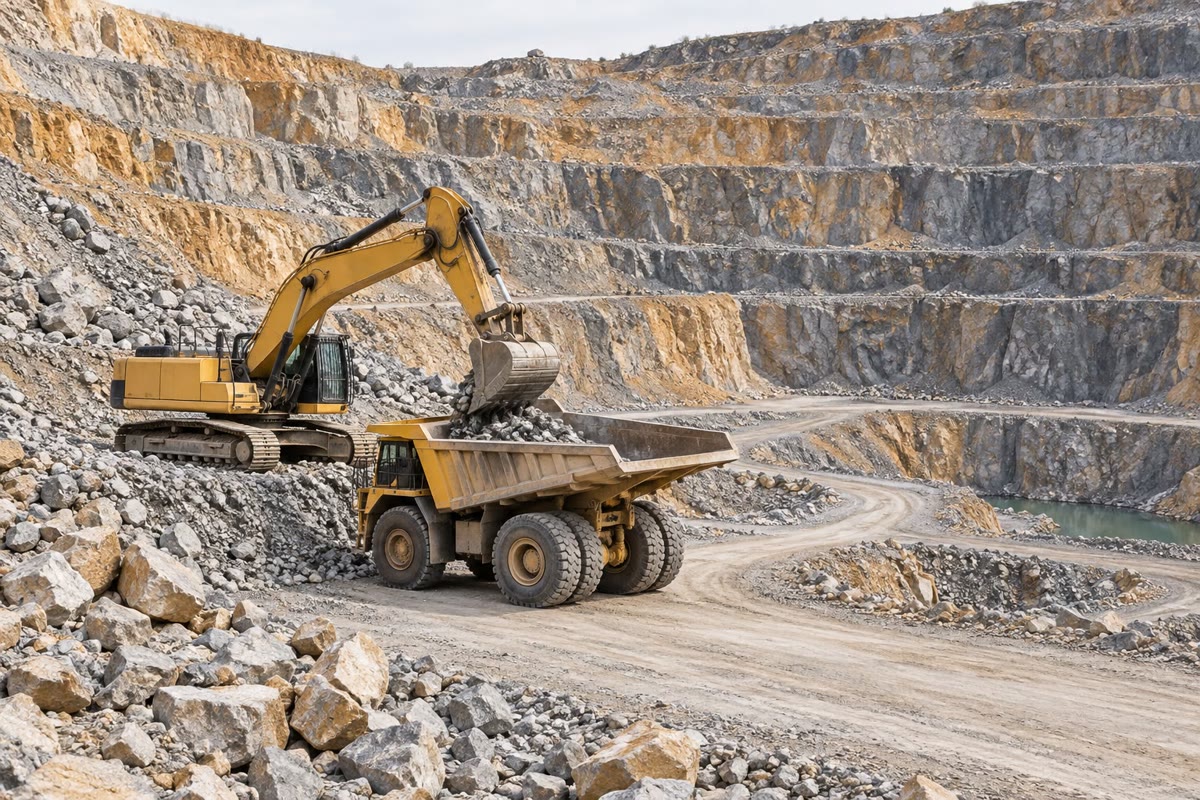
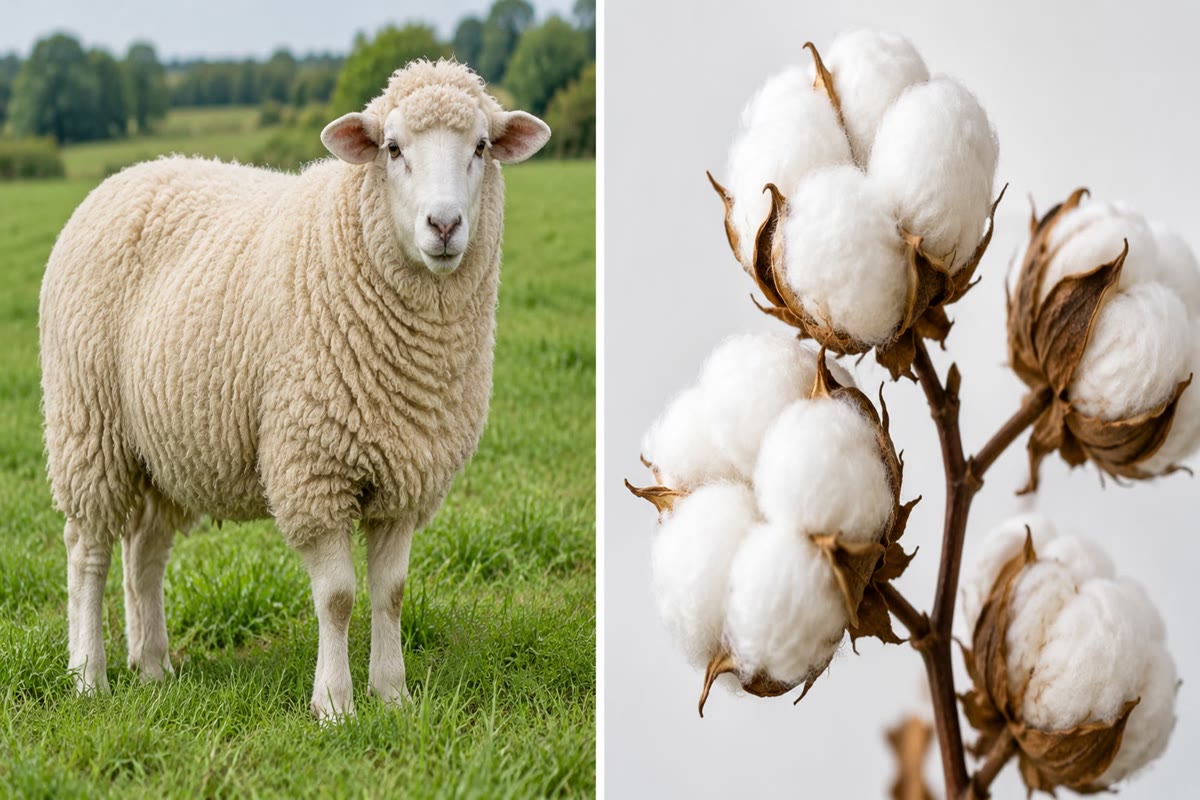
7.3 From raw material to object
Proposition 7.5 (Making a material changes its raw material)
Turning a raw material into a manufactured material takes energy — most often the heat of a furnace — and usually chemical changes: sand becomes glass, ore becomes metal, oil becomes plastic. These changes cannot simply be undone: glass does not turn back into sand.
Example 7.6 (The life of a glass bottle)
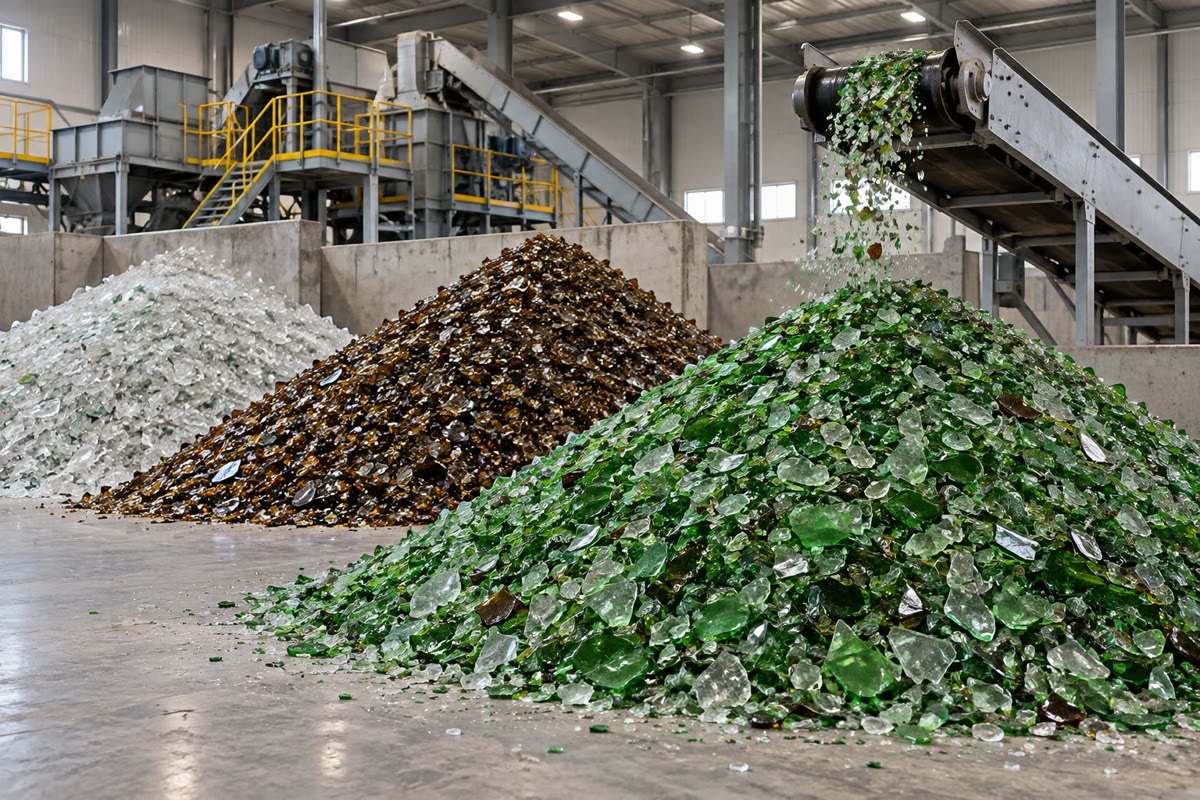
Sand, soda and crushed limestone are heated together in a furnace until they melt into glass. The hot glass is blown into the shape of a bottle. The bottle is filled, sold and emptied. Put in a bottle bank, it is crushed into small pieces, melted again and blown into a new bottle: the glass is used again and again.
7.4 Sorting and recycling
Definition 7.7 (Recycling)
Recycling is collecting used objects and treating their material so that it can be made into new objects, instead of being thrown away.
Proposition 7.8 (Why recycle)
Recycling saves raw materials, which do not have to be dug out of the ground, and it often saves energy. Making aluminium from old cans takes only about one twentieth of the energy needed to make it from bauxite. It also means less waste in landfills.
Method 7.9 (Sorting waste for recycling)
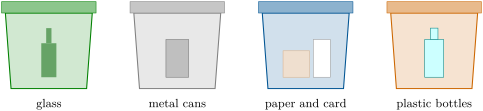
Recycling starts with sorting, wherever waste is thrown away:
- glass bottles and jars in one bin;
- metal cans, paper and card, and plastic bottles in the bins the town provides for them (the colours of the bins differ from place to place);
- what cannot be recycled with the rest of the waste.
Each material is recycled in its own way, so a bin must hold only the materials it is meant for.
7.5 Waste and resources
Definition 7.10 (Resource)
A resource is anything taken from nature that people use: water, wood, ores, oil, sand. A renewable resource grows back or comes back by itself in a human lifetime, like wood from a forest that is replanted or wool from sheep. Ores and crude oil are not renewable: once they are dug out and used, they are gone.
Proposition 7.11 (Reduce, reuse, recycle)
To make resources last, people can, in this order:
- reduce: use fewer objects, for instance fewer wrappings;
- reuse: use the same object again, like a glass jar refilled or a bag carried back to the shop;
- recycle: turn the material into a new object.
Recycling comes last because it still needs energy and machines; the best waste is the waste that is never made.
7.6 Exercises
Exercise 7.1 ★
Natural or manufactured? Wood, glass, wool, steel, plastic, stone.
Solution
Solution of Exercise 7.1.
Natural: wood, wool, stone. Manufactured: glass, steel, plastic.
Exercise 7.2 ★
Give the raw material of: a sheet of paper, a glass jar, a cotton T-shirt, a plastic bottle.
Solution
Solution of Exercise 7.2.
Paper: wood (trees). Glass: sand (with soda and limestone). Cotton: the cotton plant. Plastic: crude oil.
Exercise 7.3 ★
What is an ore? Name the ore of aluminium.
Solution
Solution of Exercise 7.3.
A rock from which a metal is extracted. Aluminium comes from bauxite.
Exercise 7.4 ★
In which bin do you put: an empty jam jar, a newspaper, a drink can, a plastic water bottle?
Solution
Solution of Exercise 7.4.
The jar in the glass bin, the newspaper with paper and card, the can with metal, the bottle with plastic bottles.
Exercise 7.5 ★
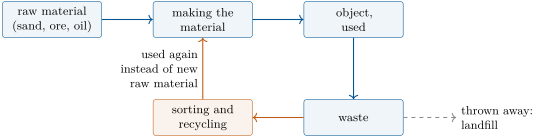
Look at the figure of the life of a material. What does the orange loop replace?
Solution
Solution of Exercise 7.5.
New raw material: the recycled material is used instead of sand, ore or oil taken from nature.
Exercise 7.6 ★
Renewable or not: wood, crude oil, wool, iron ore, cotton?
Solution
Solution of Exercise 7.6.
Renewable: wood (if replanted), wool, cotton. Not renewable: crude oil, iron ore.
Exercise 7.7 ★
Why can glass not be turned back into sand by cooling it?
Solution
Solution of Exercise 7.7.
Making glass from sand is a chemical change: something new is made, and there is no simple way back.
Exercise 7.8 ★
Give one way to reduce, one way to reuse and one way to recycle.
Solution
Solution of Exercise 7.8.
For instance: reduce — buy fruit without a plastic wrapping; reuse — refill a glass jar; recycle — put a drink can in the metal bin.
Exercise 7.9 ★
Why must a glass bin hold only glass?
Solution
Solution of Exercise 7.9.
Each material is recycled in its own way: pieces of another material would spoil the melted glass.
Exercise 7.10 ★★
Making aluminium from old cans needs about one twentieth of the energy needed to make it from bauxite. A factory uses 20 units of energy to make a batch of aluminium from bauxite. About how many units would it use to make the same batch from old cans?
Solution
Solution of Exercise 7.10.
One twentieth of 20 units: unit of energy, about.
Exercise 7.11 ★★
Why is “reduce” put before “recycle”?
Solution
Solution of Exercise 7.11.
Recycling still needs energy, machines and transport; an object that is never made saves its raw material and all that energy.