School Chemistry — Grades 1 to 12 · Grades 1–12
3Separating Mixtures
After a storm, the puddles in the road are brown: rain water mixed with soil, sand and bits of leaves. Yet the water that comes out of a kitchen tap is clear, and it too was rain once, before it ran into a river. How can muddy water be made clean again? Things that have been mixed can be taken apart. This chapter shows how, one method at a time.
You already know
To mix is to put different things together. A solid such as sugar or salt dissolves in water: it disappears from sight, and the clear liquid is a solution. A dissolved solid is still there: when the water dries away, the solid is left behind. Sand and soil do not dissolve (Chapter 2).
3.1 Sorting by hand and sieving
When the pieces of a mix are big enough to see and to pick up, the simplest way to separate them is by hand: raisins can be picked out of muesli one by one. When there are too many pieces, a sieve does the sorting for us.
Definition 3.1 (Sieving)
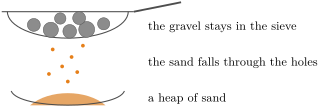
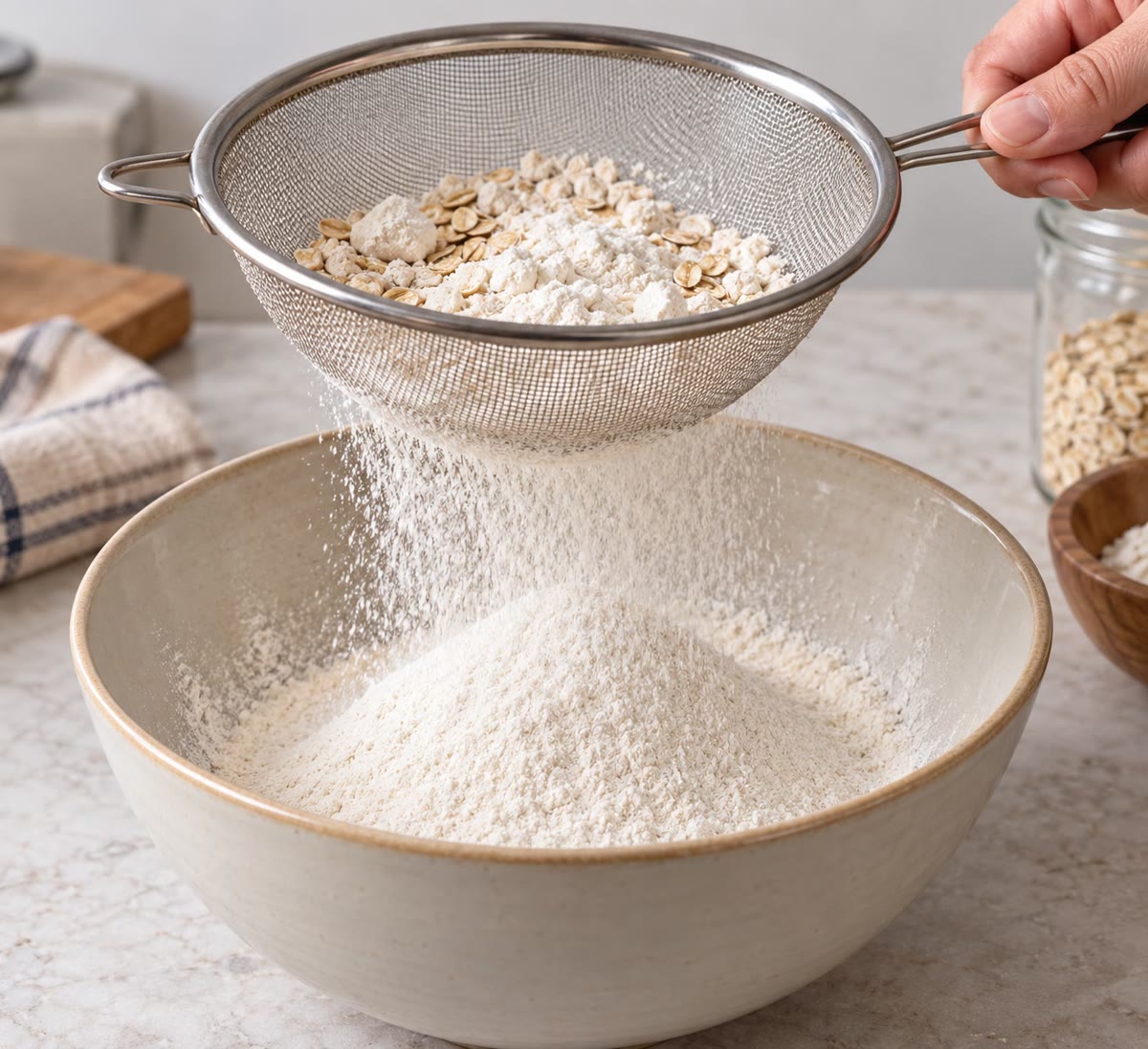
Sieving is separating the pieces of a mix by their size, with a sieve: a net or a plate full of holes. The small pieces fall through the holes; the big pieces stay in the sieve.
Example 3.2 (Gravel and sand)
A builder shakes a mix of gravel and sand over a sieve. The fine sand falls through into a heap below; the gravel stays on the mesh.
3.2 Letting settle and decanting
Definition 3.3 (Settling and decanting)
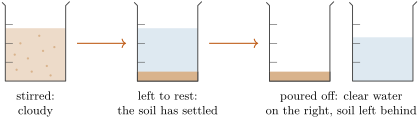
A mix of water and of a solid that does not dissolve can be left to rest: the solid sinks slowly to the bottom. This is called settling. Once it has settled, the clear water above can be poured gently into another container, leaving the solid behind: this is decanting.
Remark 3.4 (Settling takes time)
Big, heavy grains settle in a few minutes; very fine clay can take a day or more, and the water stays a little cloudy meanwhile. Decanting never removes every grain: a little cloudiness is poured off with the water.
3.3 Filtering
Definition 3.5 (Filtering and filtrate)
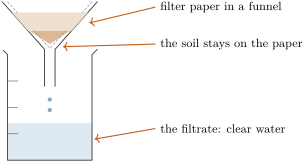
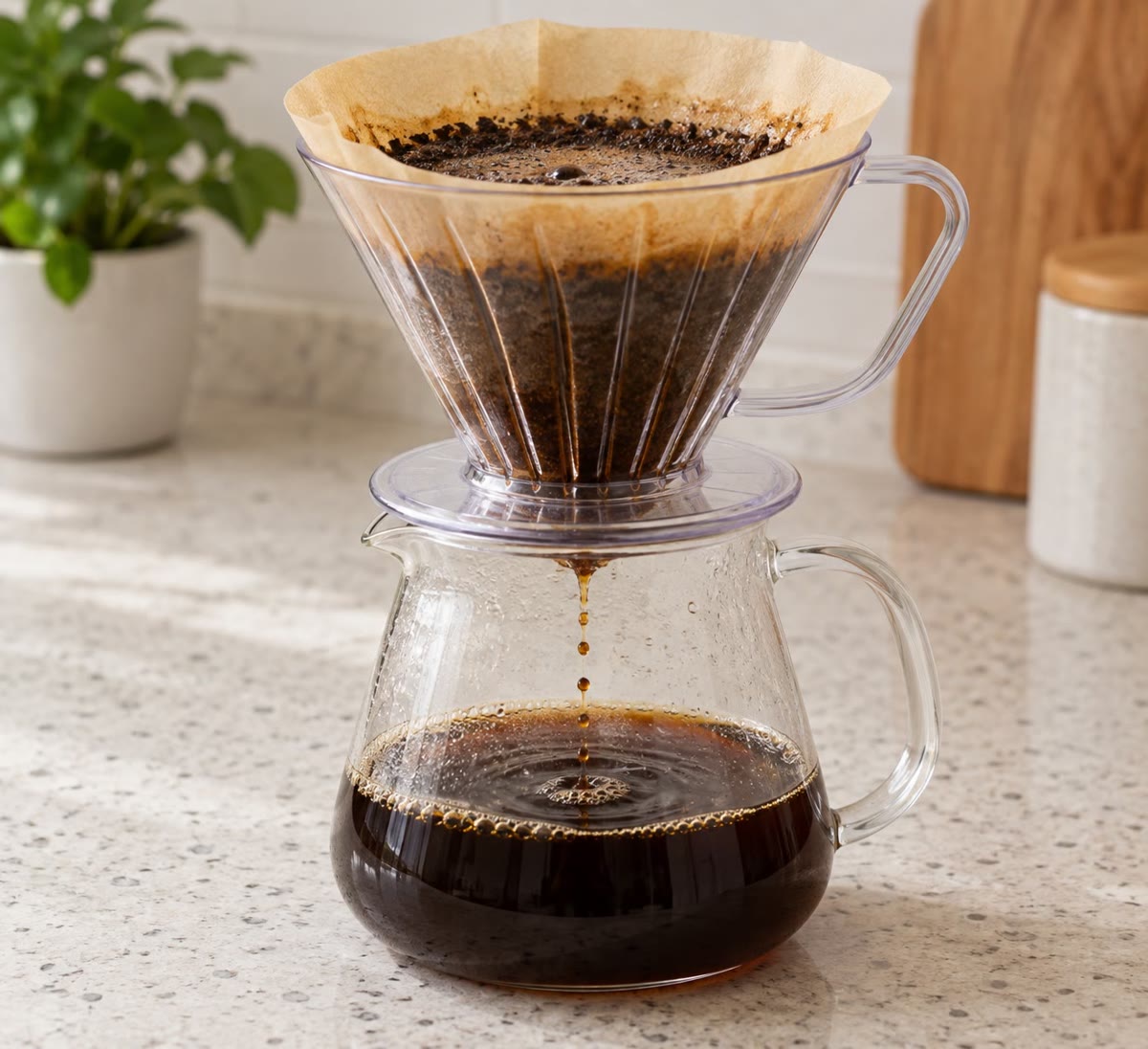
Filtering is pouring a mix through a filter: a sheet of paper, a cloth or a layer of sand with holes too small to let the solid pieces through. The solid stays on the filter; the clear liquid that passes through is called the filtrate.
In the lab — Filtering muddy water
The teacher folds a round sheet of filter paper into a cone and sets it in a glass funnel above a beaker. Muddy water is poured into the cone, a little at a time, never above the edge of the paper. Clear water drips into the beaker; the soil makes a brown layer on the paper. When the filtrate is cloudy, the paper is torn or the water went over its edge.
Proposition 3.6 (A filter does not stop what is dissolved)
A filter holds back the solid pieces that are not dissolved. It does not hold back what is dissolved: salty water poured through a filter comes out just as salty, and sweet tea just as sweet.
3.4 Evaporating the water away
Definition 3.7 (Evaporating)
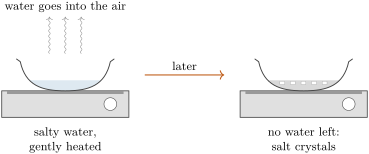
To get back a solid that is dissolved in water, the water is left to dry away, in the sun or on a gentle heat: this is evaporating. The water goes into the air; the solid stays in the dish.
Example 3.8 (Salt from salty water)
A little salty water is poured into a shallow dish and left on a sunny window sill. Days later there is no water left, only a white crust of salt: the salt that was dissolved.
3.5 Which method for which mixture?
Method 3.9 (Choosing a separation)
To take a mix apart, ask:
- Are the pieces big and of different sizes? Sort by hand, or sieve.
- Is there a solid that does not dissolve, in a liquid? Let it settle and decant, or filter for clearer water.
- Is there a solid dissolved in the liquid? Evaporate the liquid: the solid stays.
Several steps are often needed, one after the other.
Example 3.10 (Sand, salt and water)
A jar holds water with sand and salt in it. The salt has dissolved; the sand has not.
- Filter: the sand stays on the paper.
- The filtrate is clear, but it is salty water. Evaporate it: the salt stays in the dish.
Two methods, one after the other, give back the sand and the salt.
Example 3.11 (Clean water from a river)
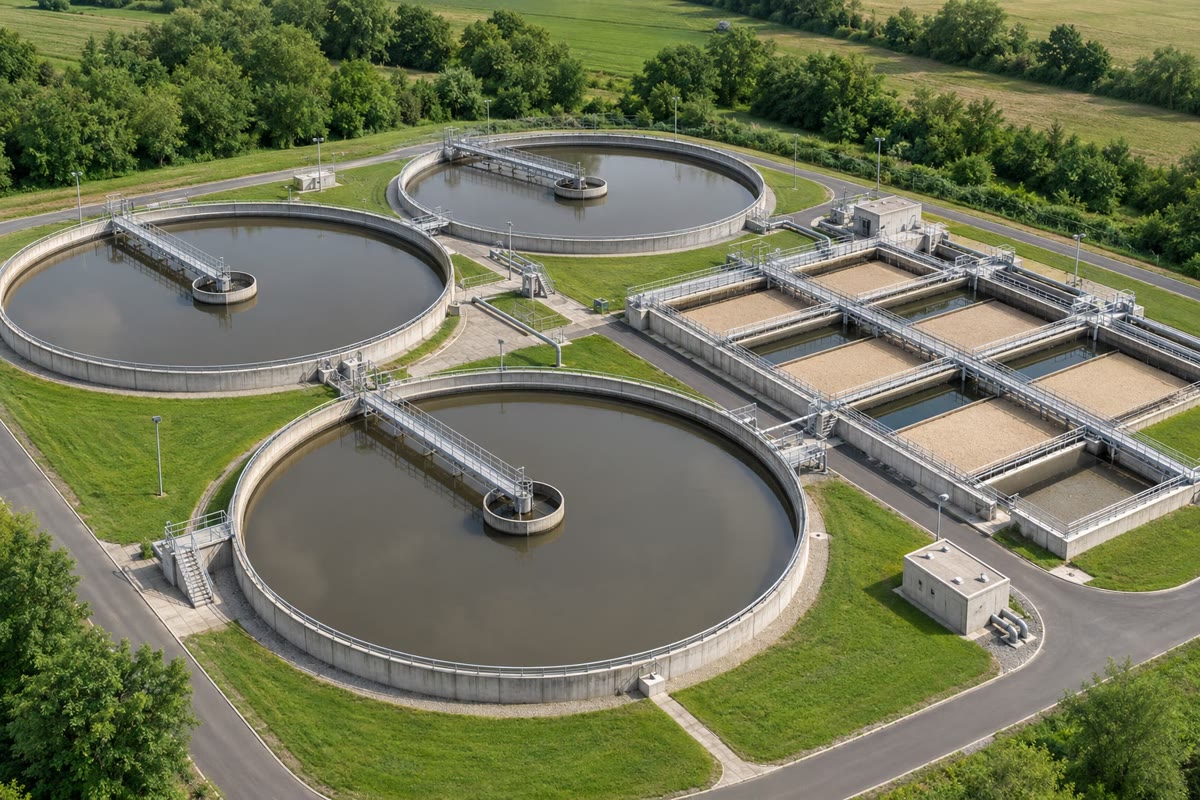
A water-treatment plant makes river water fit to drink in several steps:
- the river water passes through screens, big grids that stop branches, leaves and plastic: a kind of sieving;
- it rests in large tanks where mud settles to the bottom;
- it is filtered through thick beds of sand that hold back the finest grains;
- a very small amount of a product that kills germs is added, so that the water stays safe in the pipes.

Remark 3.12 (Clear is not always clean)
Water that has been filtered can look perfectly clear and still contain dissolved substances, and germs far too small to see. That is why nobody drinks water from a puddle or a stream, even after filtering it.
3.6 Exercises
Exercise 3.1 ★
Which method would you use to separate peas from rice grains?
Solution
Solution of Exercise 3.1.
Sieving: the rice grains are smaller than the peas and fall through a sieve with the right holes. (Sorting by hand also works, slowly.)
Exercise 3.2 ★
A glass of muddy water is left on a table for an hour. What happens to the soil? What is this called?
Solution
Solution of Exercise 3.2.
The soil sinks slowly and forms a layer at the bottom; the water above becomes clearer. This is settling.
Exercise 3.3 ★
Exercise 3.4 ★
Salty water is poured through a filter paper. Is the filtrate salty? Explain.
Solution
Solution of Exercise 3.4.
Yes. The salt is dissolved, and a filter does not hold back what is dissolved: it passes through with the water.
Exercise 3.5 ★
How can the sugar be got back from a glass of sugar water?
Solution
Solution of Exercise 3.5.
By evaporating the water: in the sun, or gently heated, the water goes into the air and the sugar stays in the dish.
Exercise 3.6 ★
Look at the figure of the sieve. Which pieces stay in the sieve? Why do the others fall through?
Solution
Solution of Exercise 3.6.
The gravel stays in the sieve. The grains of sand are smaller than the holes, so they fall through.
Exercise 3.7 ★
Match each mix with a method — sieving, filtering or evaporating: (a) sand and pebbles; (b) chalk powder in water; (c) salt in water.
Solution
Solution of Exercise 3.7.
(a) Sieving. (b) Filtering (or settling and decanting). (c) Evaporating.
Exercise 3.8 ★
Look at the figure of the water-treatment plant. How many steps does the water go through? Which step removes the mud?
Exercise 3.9 ★
Put these steps in order to get back the sand and the salt from a jar of sand, salt and water: evaporate the filtrate; filter; collect the sand from the paper.
Solution
Solution of Exercise 3.9.
Filter; collect the sand from the paper; evaporate the filtrate to get the salt.
Exercise 3.10 ★★
Can a filter make sea water fit to drink? Explain why not.
Solution
Solution of Exercise 3.10.
No. The salt of sea water is dissolved, and a filter does not hold back what is dissolved: the filtrate is still salty water.
Exercise 3.11 ★★
Tea leaves are left in a teapot full of tea. Name two methods, seen in this chapter, that separate the tea from the leaves.