School Chemistry — Grades 1 to 12 · Grades 1–12
25The Mole and Molar Mass
At the end of the day, a bank does not count its coins one by one: it weighs them. If one coin has a mass of , a bag of coins with a mass of holds a thousand coins, and the scale has done the counting. Chemists face the same problem with atoms, only far worse: a spoonful of water holds more molecules than there are grains of sand on all the beaches of a coast. They solve it the same way, by weighing, and the bag they use holds entities. This chapter defines that bag, the mole, and shows how to go from a mass on a balance to a number of atoms or molecules.
You already know
The mass of an atom is concentrated in its nucleus; a proton and a neutron each have a mass of about , so an atom of mass number has a mass of about . Large and small numbers are written in scientific notation (Chapter 16). A chemical formula gives the number of atoms of each element in a molecule (Chapter 11).

25.1 Counting by weighing
Example 25.1 (A bag of coins)
A coin has a mass of . A bag of these coins has a mass of , that is , the mass of the bag itself left aside. It holds
To count, the bank divides the total mass by the mass of one coin.
Example 25.2 (A spoonful of water)
A water molecule, , has nucleons (the oxygen-16 and hydrogen-1 atoms make up nearly all natural water), so its mass is about , or . A spoonful of of water therefore holds
The division works as for the coins, but the answer is a number no one can picture. Chemists need a package of atoms adapted to the samples of the laboratory.
Definition 25.3 (Amount of substance and mole)
The amount of substance of a sample counts the entities it contains (atoms, molecules or ions, stated each time). Its unit is the mole, symbol : one mole contains exactly entities.
Remark 25.4 (A dozen, a ream, a mole)
The mole is a counting unit, like a dozen eggs (12) or a ream of paper (500 sheets), only very much larger. “Two moles of water molecules” means molecules, just as “two dozen eggs” means 24 eggs. Always say which entities are counted: one mole of oxygen molecules holds two moles of oxygen atoms.
History — Avogadro’s hypothesis, 1811
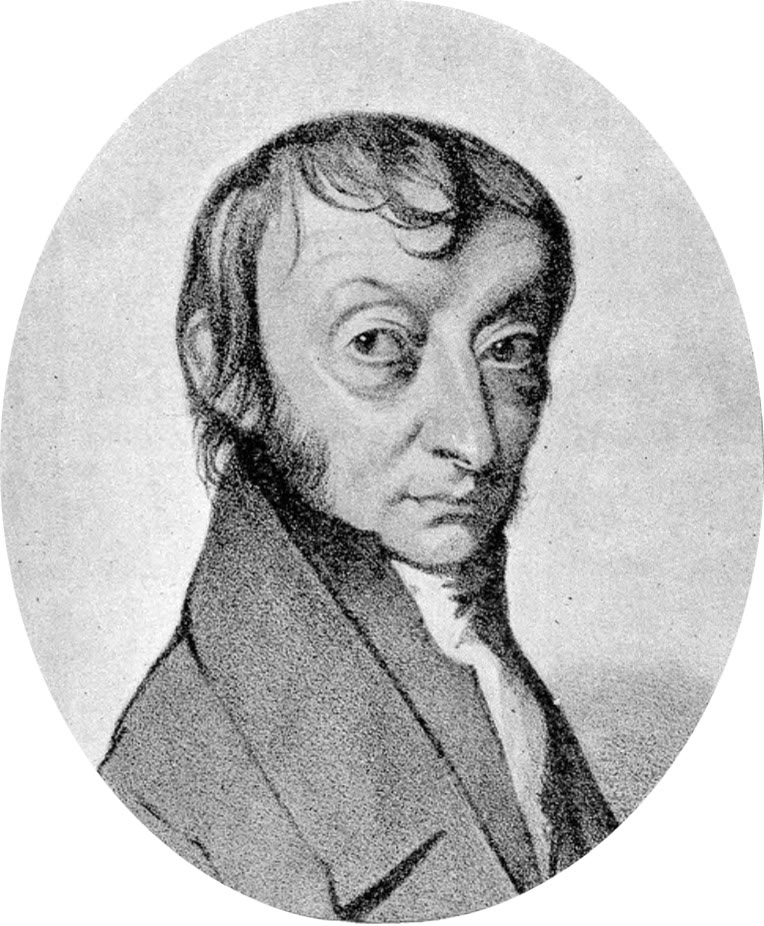
In 1811 the physicist Amedeo Avogadro proposed that equal volumes of different gases, at the same temperature and pressure, contain the same number of particles. He also understood that a gas such as oxygen is made of molecules of two atoms. His idea was neglected for nearly fifty years, until Stanislao Cannizzaro used it in 1860 to obtain a coherent set of atomic weights. The constant that counts the entities of a mole was later named after Avogadro; he never knew its value.
25.2 The Avogadro constant
Definition 25.5 (Avogadro constant)
The Avogadro constant is the number of entities per mole:
Its value is exact, fixed by definition. In calculations it is rounded to .
Proposition 25.6 (Number of entities and amount)
A sample holding entities contains the amount
Example 25.7 (Molecules and moles)
A sample contains molecules of carbon dioxide. Its amount of carbon dioxide is . Conversely, of iron holds atoms of iron.
Remark 25.8 (Where the number comes from)
For more than fifty years the mole was defined as the number of atoms in exactly of carbon-12, and had to be measured. Since 2019 the number itself has been fixed, which makes the mole a pure count. The old and new definitions agree to better than one part in a hundred million, so twelve grams of carbon-12 still contain one mole of atoms, as the next section checks.
25.3 Molar mass
Definition 25.9 (Molar mass)
The molar mass of a chemical species is the mass of one mole of its entities, in grams per mole (). The molar mass of an element, taken over its natural mixture of isotopes, is its atomic molar mass; it is printed in the periodic table.
Example 25.10 (One mole of carbon atoms)
An atom of carbon-12 has a mass of about . One mole of them has a mass of
The mole has been chosen so that the molar mass of an atom, in grams per mole, is close to its mass number: about for hydrogen, for carbon, for oxygen.
| element | symbol | () | element | symbol | () |
|---|---|---|---|---|---|
| hydrogen | 1.0 | silicon | 28.1 | ||
| carbon | 12.0 | sulfur | 32.1 | ||
| nitrogen | 14.0 | chlorine | 35.5 | ||
| oxygen | 16.0 | potassium | 39.1 | ||
| sodium | 23.0 | calcium | 40.1 | ||
| magnesium | 24.3 | iron | 55.8 | ||
| aluminium | 27.0 | copper | 63.5 | ||
| gold | 197.0 |
Remark 25.11 (Why chlorine is 35.5)
Natural chlorine is a mixture of two isotopes: about three quarters of its atoms are chlorine-35, one quarter chlorine-37 (Chapter 16). Its atomic molar mass is the average, weighted by these shares, which lies between 35 and 37: . That is why some atomic molar masses are far from whole numbers.
Proposition 25.12 (Molar mass of a molecule)
The molar mass of a molecule is the sum of the atomic molar masses of all its atoms, each counted as many times as it appears in the formula. The same rule gives the molar mass of an ionic solid from its formula unit.
Proof. One mole of molecules contains moles of atoms and moles of atoms , and nothing else; its mass is the sum of their masses, . ∎
Example 25.13 (Three molar masses)
The last one is sucrose, table sugar.
25.4 From mass to amount and back
Proposition 25.14 (Mass and amount)
A sample of mass of a species of molar mass contains the amount
Proof. Each mole has a mass , so moles have a mass ; this is the coin count of the bank, with the mole as the coin. ∎
Method 25.15 (From a mass to a number of entities)
- Write the formula of the species and compute its molar mass from the table.
- Convert the mass to grams if needed, then .
- If the number of entities is wanted, .
- Check the order of magnitude: a few grams of a small molecule is of the order of a tenth of a mole, some to entities.

Example 25.16 (Nine grams of water)
How many molecules are there in of water? , so
Example 25.17 (A mole on the bench)
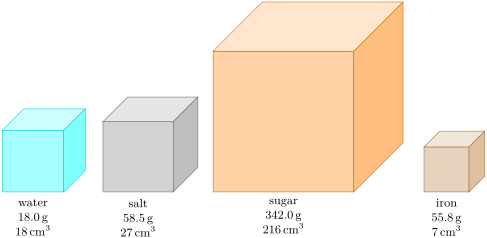
One mole of water is , about a tablespoon. One mole of salt, , is a small heap; one mole of sugar, , fills a mug; one mole of iron, , is a cube a little under across. All four hold the same number of entities: the molecules of sugar are simply much heavier than those of water, and the atoms of iron are packed much more tightly.
25.5 Gases: the molar volume
Definition 25.18 (Molar volume)
The molar volume of a gas is the volume occupied by one mole of that gas, at a given temperature and pressure. It is expressed in litres per mole ().
Proposition 25.19 (All gases have the same molar volume)
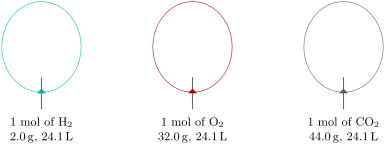
At a given temperature and pressure, one mole of any gas occupies very nearly the same volume, whatever the gas. At and normal atmospheric pressure,
at and the same pressure, . The amount of a gas of volume is then .
Proof. Admitted here: this is Avogadro’s hypothesis of 1811, now a law of physics, and the value of follows from the gas laws studied in the physics book. ∎
Example 25.20 (A balloon of carbon dioxide)
A balloon holds of carbon dioxide at . Its amount is , and its mass . The same balloon filled with hydrogen would hold the same , but only of gas.
Remark 25.21 (Heavy and light gases)
Since a litre of any gas holds the same amount, the mass of a litre of gas is proportional to its molar mass. Air, a mixture of about four fifths nitrogen () and one fifth oxygen (), behaves like a gas of molar mass about . A gas of larger molar mass, such as carbon dioxide (), is denser than air and gathers at the bottom of a closed cellar; a gas of smaller molar mass, such as helium (), rises.
25.6 Exercises
Exercise 25.1 ★
Compute the molar masses of dioxygen , dinitrogen , methane , ammonia and carbon dioxide .
Solution
Solution of Exercise 25.1.
; ; ; ; .
Exercise 25.2 ★
What amount of substance is contained in of water? In of methane?
Solution
Solution of Exercise 25.2.
Water: . Methane: .
Exercise 25.3 ★
What is the mass of of sodium chloride ? Of of carbon dioxide?
Solution
Solution of Exercise 25.3.
, about ; .
Exercise 25.4 ★
How many molecules are there in of dioxygen? What amount of iron contains atoms of iron?
Exercise 25.5 ★
At and normal atmospheric pressure, what volume does of dinitrogen occupy? What amount of dioxygen is there in of that gas?
Solution
Solution of Exercise 25.5.
. .
Exercise 25.6 ★★
A drop of water has a volume of , and of water has a mass of . How many water molecules does the drop contain?
Exercise 25.7 ★★
Which contains more atoms, of aluminium or of iron? Explain without computing first, then check by computing.
Exercise 25.8 ★★
At , compute the mass of one litre of carbon dioxide and of one litre of dinitrogen. Why does carbon dioxide collect at the bottom of a closed cellar where grape juice is fermenting?
Solution
Solution of Exercise 25.8.
One litre is of gas. Carbon dioxide: ; dinitrogen: . Carbon dioxide is about one and a half times denser than air, whose molar mass is close to that of dinitrogen. The fermenting juice gives off carbon dioxide, which sinks and builds up near the floor of a closed cellar, where it can suffocate anyone who goes in.
Exercise 25.9 ★★
Using the figure of the three boxes , , , give the mass of molecules of glucose . Write down the two arrows followed.
Solution
Solution of Exercise 25.9.
. Arrow : ; arrow : .
Exercise 25.10 ★★
A lump of sugar (sucrose, ) has a mass of . Compute the amount of sucrose it contains, then the number of sucrose molecules, then the number of carbon atoms.
Exercise 25.11 ★★
Which contains the larger amount of molecules: of water or of ethanol ? By what factor?
Solution
Solution of Exercise 25.11.
Water: . Ethanol: , so . Water has the larger amount, by a factor , which is simply .
Exercise 25.12 ★★★
A gold ring has a mass of ; three quarters of its mass is gold, the rest copper. How many atoms of gold does it contain? How many atoms of copper? Which metal has more atoms in the ring?
Exercise 25.13 ★★★
A classroom measures by by , and the air in it is at .
Exercise 25.14 ★★★
A sphere of pure silicon has a mass of exactly .
- How many silicon atoms does it contain?
- Deduce the mass of one silicon atom.
- Before 2019 the Avogadro constant was not fixed but measured. Explain how an independent count of the atoms of such a sphere, whose amount is known from its mass, would give a value of it.
Solution
Solution of Exercise 25.14.
- , so atoms.
- .
- The mass of the sphere and the molar mass give its amount, . If the atoms are counted independently (from the volume of the sphere and the spacing of the atoms in the crystal), the ratio is the Avogadro constant.
Exercise 25.15 ★★★
Natural chlorine contains of chlorine-35 atoms, of molar mass very close to , and of chlorine-37 atoms, of molar mass very close to . Compute the atomic molar mass of natural chlorine, and compare it with the value of the table.
Solution
Solution of Exercise 25.15.
: the value of the table.
25.7 Problem: Kelvin’s Glass of Water
Problem 25.1
Weekend problem — pour a glass of water into the sea, wait for it to mix through all the oceans, and fill a glass again: how many of the first molecules come back?
A famous thought experiment, often attributed to the physicist Lord Kelvin, goes like this. Mark every molecule in a glass of water, pour the glass into the sea, and wait until the marked molecules have spread evenly through all the oceans of the world. Then dip the glass into the sea again, anywhere. Will it bring back any marked molecules? The glass holds , and of water has a mass of . The oceans hold about of water. Treat sea water as pure water for the counting.
Part I — Water in a glass.
- Compute the molar mass of water.
- What is the mass of the water in the glass?
- Compute the amount of water molecules in the glass.
- What amount of hydrogen atoms does the glass contain? Of oxygen atoms?
Part II — Molecules in the glass.
- How many water molecules does the glass hold?
- Compute the mass of one water molecule, in grams.
- Check the answers to 5 and 6 by multiplying them: what should the product be?
- Counting one molecule per second, day and night, how many years would it take to count the molecules of the glass? (A year lasts about .)
Part III — The ocean.
- Convert the volume of the oceans to cubic metres (), then to litres.
- Once the marked molecules have spread evenly, how many of them are there in each litre of ocean?
- How many marked molecules does the second glass bring back?
- Second method. Compute the amount of water in the oceans, taking for the mass of one litre.
- What fraction of all the ocean’s water molecules are marked?
- Multiply this fraction by the number of molecules of the second glass, and compare with the answer to question 11.
Part IV — What it means.
- How many glasses of could be filled with the water of the oceans?
- Compare this number with the number of molecules of one glass. Explain in one sentence why the second glass brings back so many marked molecules.
- What volume of sea water must be drawn, on average, to bring back a single marked molecule? Compare with a drop of .
- The answer to question 11 has many digits. Why should it be given only as an order of magnitude? Give two reasons.
- State the final answer: about how many molecules of the first glass come back in the second?
Solution
Solution of Problem 25.1.
1. .
2. .
3. .
4. Each molecule has two hydrogen atoms and one oxygen atom: of hydrogen atoms, of oxygen atoms.
5. molecules.
6. .
7. , the mass of the water in the glass, as it should be.
8. years: a number of years with seventeen zeros, far beyond any possible count.
9. , and with , .
10. marked molecules per litre.
11. marked molecules in the second glass.
12. Mass ; .
13. .
14. : the same answer as question 11, as it must be.
15. glasses.
16. . A glass holds about 1600 times more molecules than the oceans hold glasses of water; spread evenly, the molecules of one glass leave about 1600 in every glassful of ocean.
17. , about three drops.
18. The ocean volume is an estimate known to three or four figures at best, and it was rounded; sea water is not pure water (it holds salts); the glass is not exactly ; and the mixing through all the oceans would never be perfectly even. Only the order of magnitude can be trusted.
19. About 1600 molecules of the first glass come back in the second.