School Chemistry — Grades 1 to 12 · Grades 1–12
6Changes That Cannot Be Undone
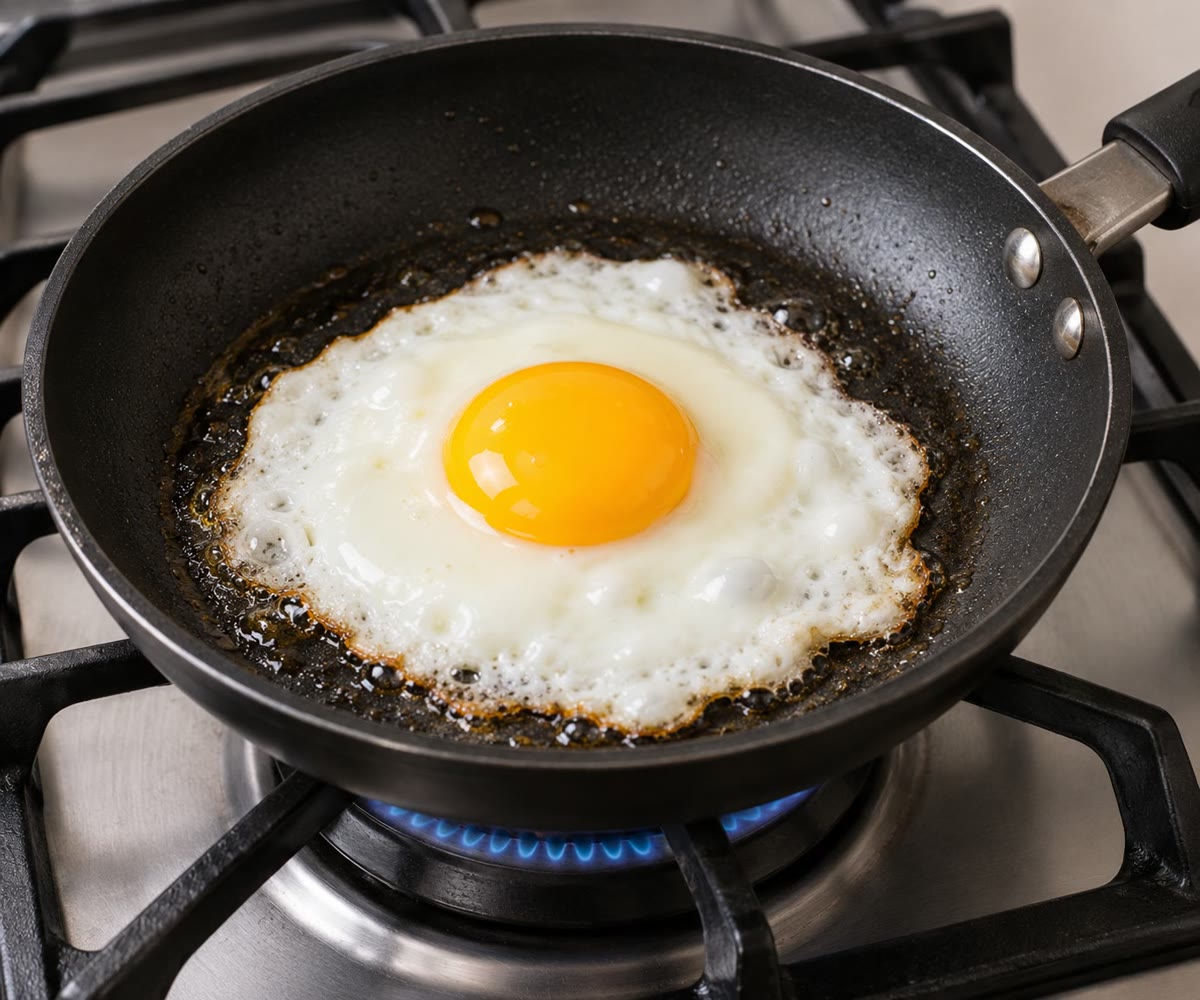
An egg is cracked into a hot pan. In a few seconds the clear, runny white turns firm and white, and the yolk thickens. Take the pan off the cooker, let the egg cool, put it in the fridge: it will never be a raw egg again. Some changes can be undone and some cannot. Telling them apart is the first step of chemistry.
You already know
A solid that dissolves in water is still there: when the water dries away, the solid is left behind (Chapter 2). A burning makes new substances — ash, smoke, carbon dioxide, water vapour — and the fuel is gone for good (Chapter 5).
6.1 Changes that can be undone
Definition 6.1 (Reversible change)
A reversible change is a change that can be undone, so that we get back exactly what we started with.
Example 6.2 (Dissolving and drying)
Sugar stirred into water dissolves. Let the water evaporate, and the sugar comes back: the same sugar, as sweet as before. Dissolving is a reversible change.
Example 6.3 (Ice and water)
An ice cube melts into water on a warm plate; put the water in the freezer and it becomes ice again. Melting and freezing are reversible changes. (Why water melts and freezes is told in the physics book.)
Example 6.4 (Mixing)
Sand mixed with gravel can be sieved apart again; muddy water can be filtered. Mixing is a reversible change: nothing new is made, and the parts can be separated (Chapter 3).
6.2 Changes that cannot be undone
Definition 6.5 (Irreversible change and chemical change)
An irreversible change is a change that cannot simply be undone. Most of them are changes in which new substances appear that were not there at the start: such a change is called a chemical change.
Example 6.6 (Six chemical changes)
- Cooking an egg: the runny, see-through white becomes firm and white.
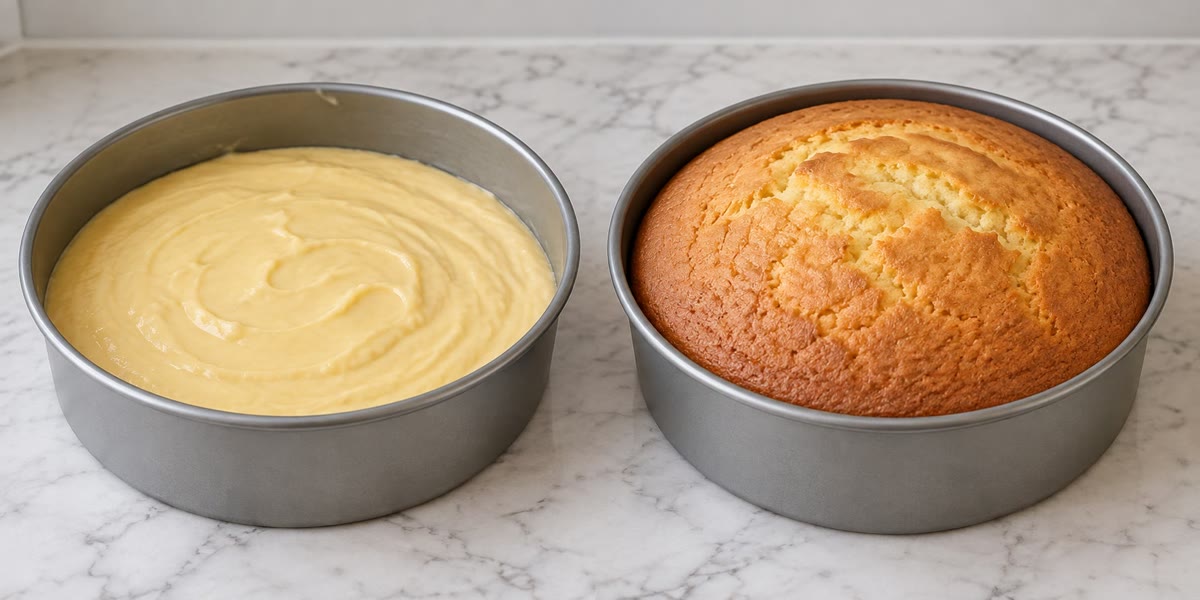
- Baking a cake: a runny batter becomes a spongy cake, brown on the outside, with a new smell.
- Burning: wood becomes ash, smoke, carbon dioxide and water vapour.
- Rusting: shiny iron left out in the rain becomes covered in a flaky orange-brown substance, rust.
- Milk turning sour: forgotten for days, milk thickens, forms lumps and smells sour.
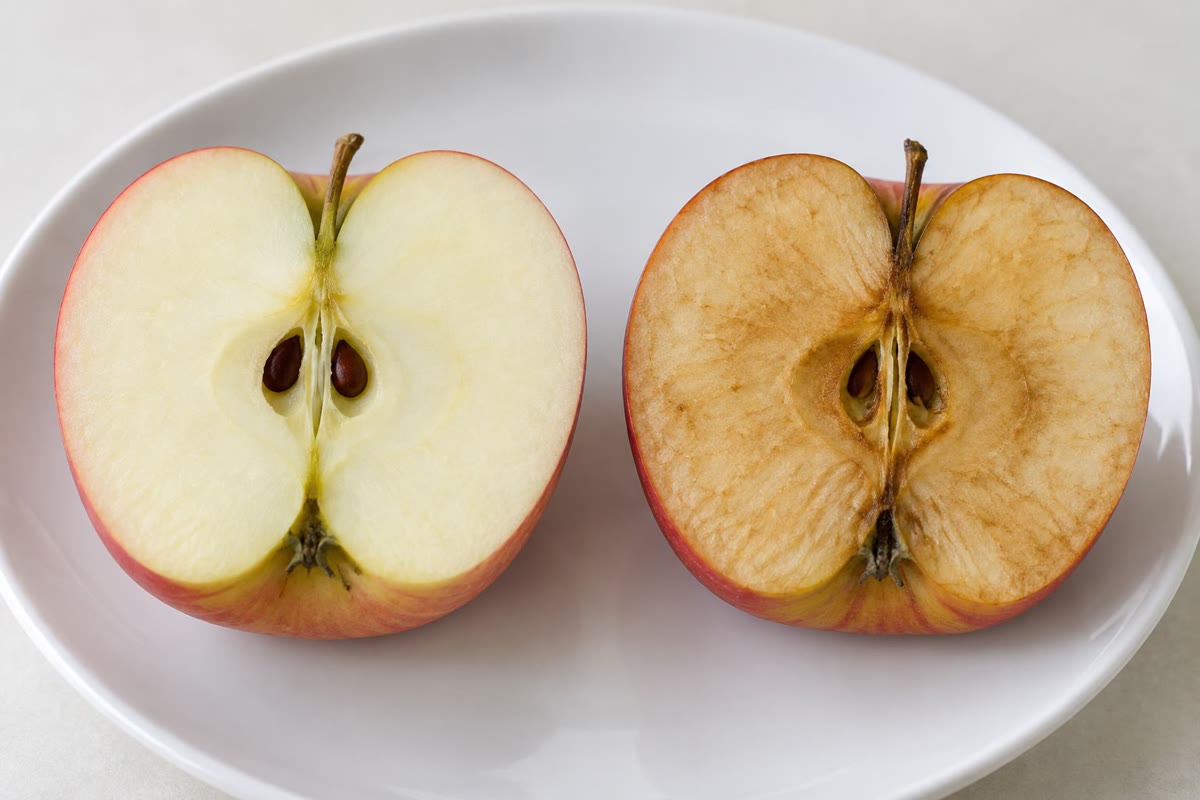
- A cut apple browning: its pale flesh turns brown in the air within an hour.
In each case something new has been made, and there is no simple way to get back what we started with.
6.3 Clues that a new substance has appeared
Method 6.7 (Is it a chemical change? Look for the clues)
A new substance is often given away by one of these clues:
- a new colour (the brown of a toasted slice of bread);
- bubbles of a gas appearing in a liquid without any heating (vinegar poured on baking soda);
- a new smell (sour milk, burnt toast);
- heat or light given out (a burning candle);
- a solid appearing in a clear liquid, or lumps forming (milk curdling).
One clue alone can mislead: boiling water bubbles, but nothing new is made — the bubbles are water vapour, and the water comes back when the vapour cools. Look for several clues, and ask: can it be undone?

In the lab — Vinegar on baking soda
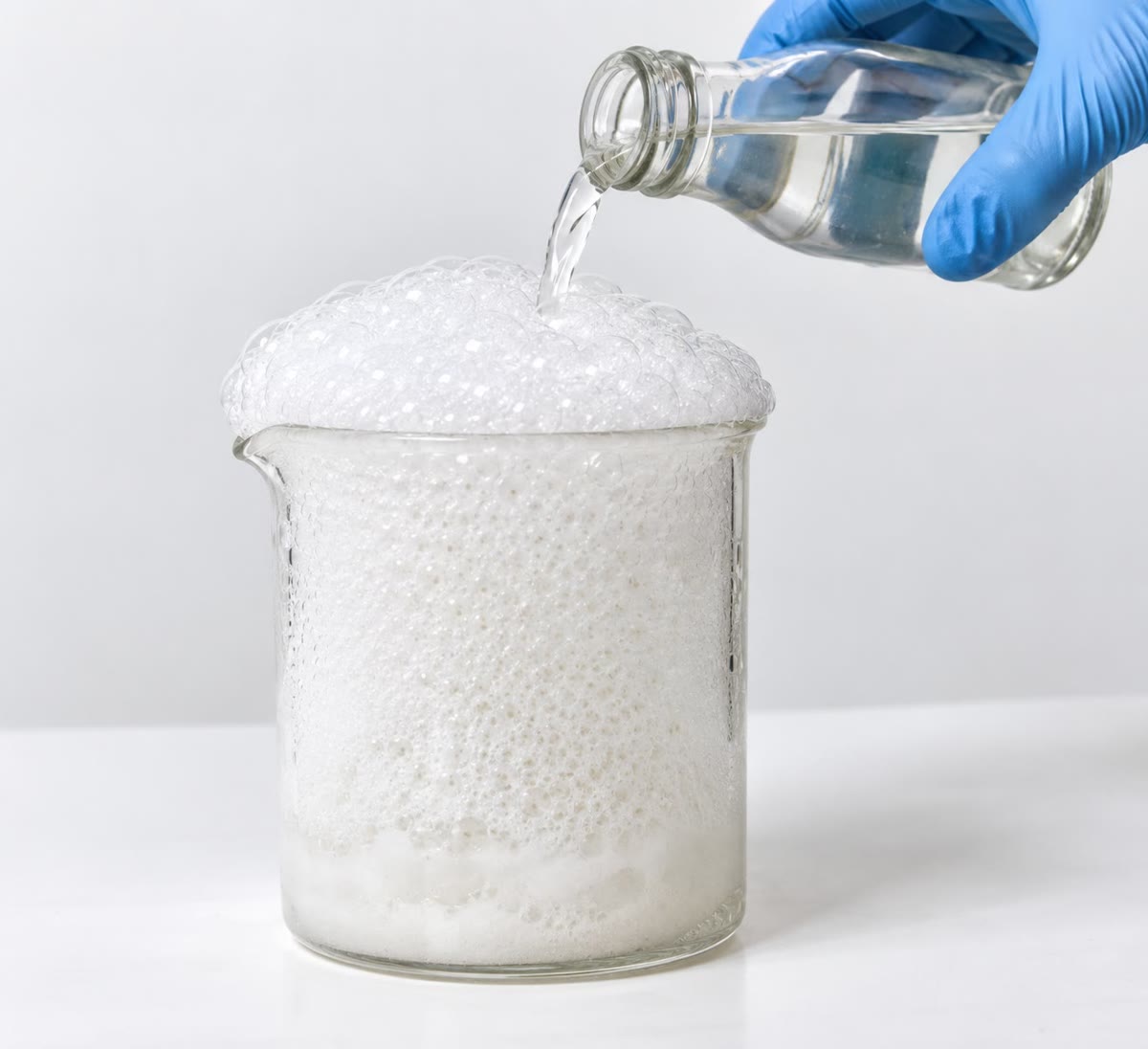
The teacher puts a spoonful of baking soda, a white powder, at the bottom of a beaker and pours in some vinegar. The mixture fizzes and foams up at once: a gas is given off, a clue of a chemical change. When the fizzing stops, the baking soda is gone and cannot be got back by drying.
6.4 Useful and harmful changes
Proposition 6.8 (Chemical changes around us)
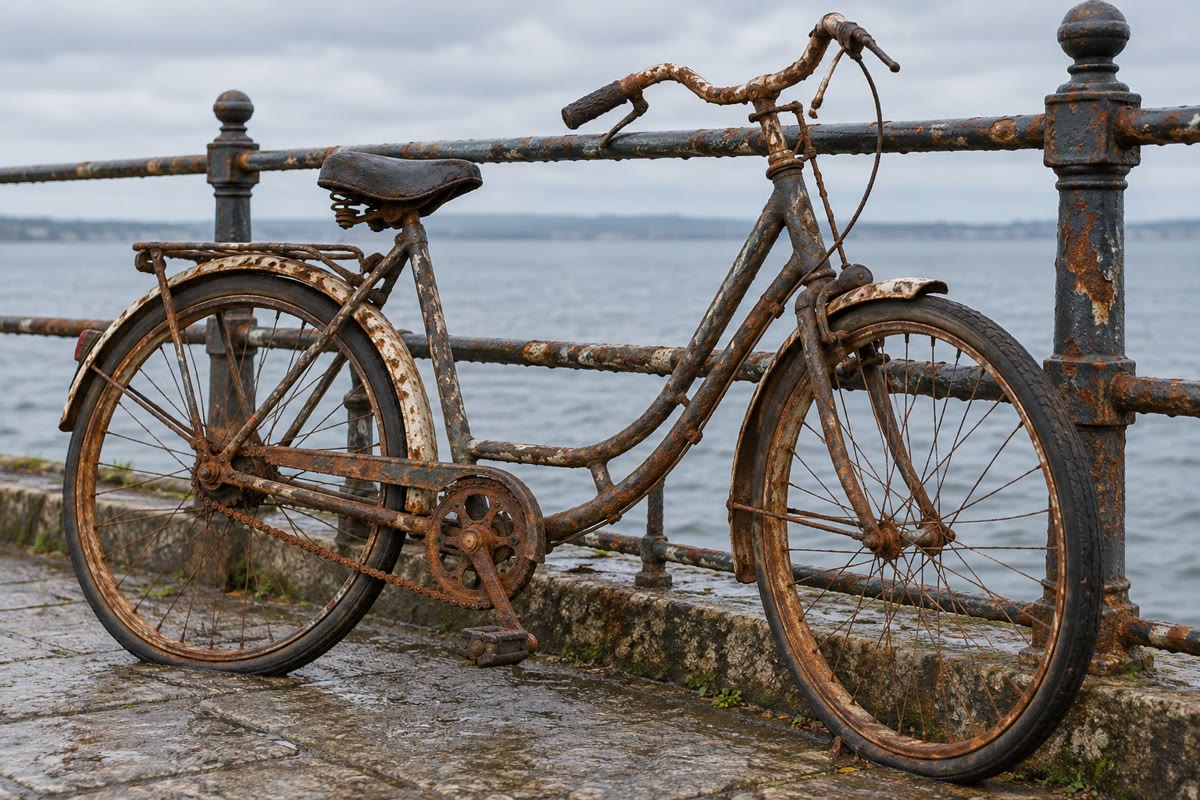
Many chemical changes are useful: cooking food, baking bread, burning gas to heat a home, plaster or cement setting hard. Others do damage: iron rusting, food going off, wood rotting. We cannot undo them, but we can slow them down:
- food keeps longer in the cold of a fridge;
- paint or a film of oil keeps air and water away from iron;
- a cut apple sprinkled with lemon juice browns more slowly.
Remark 6.9 (Undone, but not simply)
“Cannot be undone” means that there is no simple way back, like cooling or drying. Chemists can sometimes turn rust back into iron, but only with a furnace and new substances: that is another chemical change, not an undoing.
6.5 Exercises
Exercise 6.1 ★
Say whether each change can be undone: melting chocolate, burning a match, dissolving salt in water, toasting bread.
Solution
Solution of Exercise 6.1.
Melting chocolate: can be undone (it sets again when cooled). Burning a match: cannot. Dissolving salt: can be undone (evaporate the water). Toasting bread: cannot.
Exercise 6.2 ★
What is a chemical change? Give two examples from the kitchen.
Solution
Solution of Exercise 6.2.
A change in which new substances appear. In the kitchen: cooking an egg, baking a cake (also: toasting bread, a cut apple browning).
Exercise 6.3 ★
Salt is dissolved in water. How can the salt be got back? Is dissolving a reversible change?
Solution
Solution of Exercise 6.3.
By evaporating the water: the salt stays in the dish. Dissolving is a reversible change.
Exercise 6.4 ★
Which clue of a chemical change do you notice when milk turns sour? Give two.
Solution
Solution of Exercise 6.4.
A new smell, and lumps (a solid) appearing in the milk.
Exercise 6.5 ★
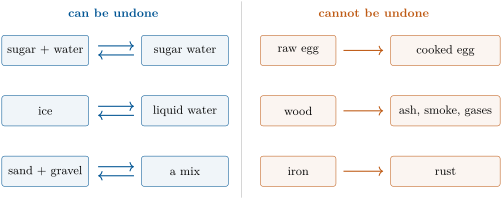
Look at the figure with two columns. Which changes have a double arrow? What does the double arrow mean?
Solution
Solution of Exercise 6.5.
The changes on the left: sugar dissolving in water, ice melting, sand and gravel mixed. The double arrow means that the change can go both ways: it can be undone.
Exercise 6.6 ★
Why is a bicycle chain oiled? Which chemical change does the oil slow down?
Solution
Solution of Exercise 6.6.
The oil keeps air and water away from the iron of the chain: it slows down rusting.
Exercise 6.7 ★
When vinegar is poured on baking soda, it fizzes. Which clue is this?
Solution
Solution of Exercise 6.7.
Gas bubbles appearing in a liquid without any heating.
Exercise 6.8 ★
Name one useful chemical change and one harmful chemical change.
Solution
Solution of Exercise 6.8.
Useful: cooking food, baking bread, burning gas for heating. Harmful: rusting, food going off, wood rotting.
Exercise 6.9 ★
Why do we keep milk in the fridge?
Solution
Solution of Exercise 6.9.
The cold slows down the chemical changes that make milk turn sour, so it keeps longer.
Exercise 6.10 ★★
Water bubbles when it boils. Is boiling a chemical change? Explain why a single clue is not enough.
Solution
Solution of Exercise 6.10.
No. The bubbles are water vapour, which turns back into water when it cools: nothing new is made, and the change can be undone. Bubbles alone do not prove that a new substance has appeared.
Exercise 6.11 ★★
Tom says: “When the candle burns, the wax just melts away, like ice.” Use two clues to explain why burning a candle is a chemical change, and not only melting.
Solution
Solution of Exercise 6.11.
A burning candle gives out heat and light, and makes new substances: water vapour (a cold glass mists up above it) and carbon dioxide. The wax that burns does not come back. Melting wax, on the other hand, sets again when it cools.