Primary & Middle School Biology · Grades 1–9
47How Animals Breathe
The trout under the bridge, the earthworm under the lawn, the dragonfly above it and you on it are all doing the same thing this minute: taking oxygen from your surroundings (Definition 46.1). But your surroundings differ — air, soil, water — and so does the equipment. This chapter is a tour of the animal kingdom’s breathing machines.
47.1 One problem, four machines
Proposition 47.1 (The common specification)
Every breathing organ, whatever its owner, is built to one specification, met before in Remark 26.4: a large, thin, moist surface where the animal’s blood (or body fluid) comes close enough to its surroundings for oxygen to cross in and carbon dioxide out. Large for enough crossing; thin for easy crossing; moist because the gases cross dissolved. The machines differ in how they hold that surface to the surroundings.
Proof. Admitted at this level. ∎
Definition 47.2 (The four machines)
Animals hold their exchange surfaces in four main ways:
- lungs: air-filled pockets folded inside the body, ventilated by breathing movements — mammals, birds, reptiles, adult amphibians;
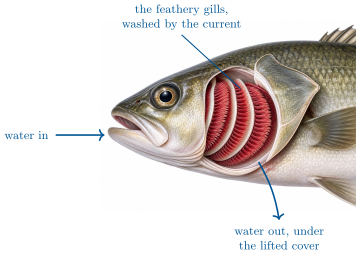
- gills: feathery surfaces held outside or at the body’s edge, washed by a current of water — fish (Exercise 26.11), tadpoles, many water larvae, mussels;
- tracheae: a network of fine air tubes piped from openings along the body straight to every organ — insects; air is delivered door-to-door, largely without the blood’s help;
- skin breathing: the whole moist skin as exchange surface — the earthworm entirely; amphibians as a large supplement to their simple lungs.
Example 47.3 (Watching the machines run)
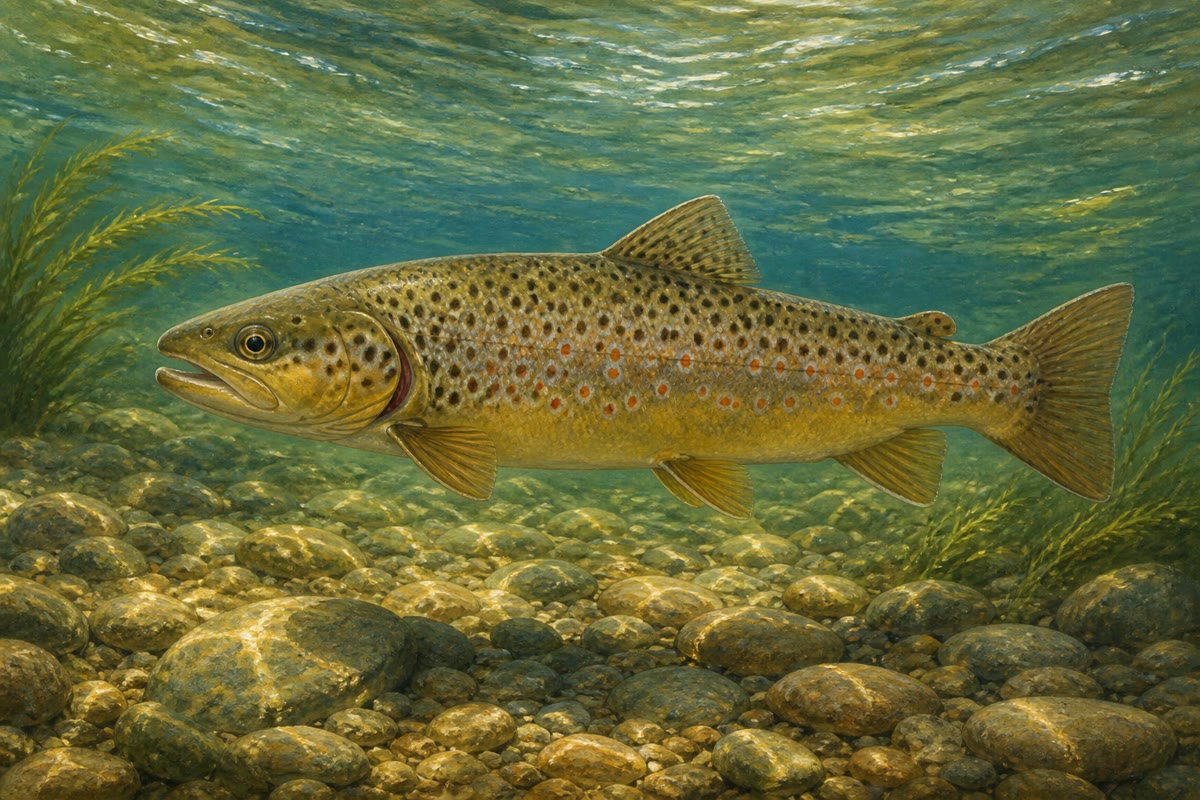
Each machine shows its rhythm. The trout’s mouth and gill covers pump in steady alternation — water in at the mouth, over the gills, out under the covers. The resting grasshopper’s abdomen pulses — pumping its air tubes. The frog’s throat flutters — pushing air into its lungs (no rib cage to do it). Only the earthworm shows nothing: skin breathing has no movements at all, which is exactly why Definition 46.1 distinguished the swap from the pumping.
47.2 The machine fits the medium — and the life
Proposition 47.4 (Why each machine where)
The machines map onto media and lives (Definition 28.1 at work on breathing):
- gills suit water: their feathery surfaces float apart in it, washed constantly — and collapse uselessly in air (Exercise 26.11’s suffocating trout);
- lungs suit air: folded inside, they stay moist where open water would be lost — but they cannot harvest water’s sparse dissolved oxygen;
- tracheae suit small bodies: superb over millimetre distances, they deliver too slowly over long ones — one reason insects stay small;
- skin breathing suits small, moist-skinned lives in damp places: the worm’s whole surface barely serves its thin body, and dry air kills it — remember the earthworms stranded after rain.
Proof. Admitted at this level. ∎
Example 47.5 (Two lives, two machines in one animal)
The frog runs the whole chapter in one life: gills as a tadpole (a water-dweller’s machine, Example 8.7), lungs plus moist skin as an adult — the lungs simple, the skin doing much of the work, especially through the cold pond-bottom winter (Exercise 38.11: that dormant frog breathes through its skin alone). Metamorphosis rebuilds even the breathing machinery.
Example 47.6 (Breathing air while living in water)
Water-dwellers with lungs must commute. The dolphin and whale surface to blow and inhale (Example 44.5: mammal lungs, inherited from land ancestors); the pond snail climbs to the surface to refill; the diving beetle carries a silvery air bubble under its wing covers — a diver’s tank, renewed at the surface. Habitat is negotiable; the machine’s medium is not.
Method 47.7 (Reading an animal’s breathing)
Given an unfamiliar animal:
- where does it live — and can it leave? (water, air, soil; commuter or resident);
- look for the machine’s signs: gill covers or feathery tufts; nostrils and a chest that moves; rows of tiny openings along an insect body; or nothing visible but a moist skin;
- watch the rhythm: pumping covers, pulsing abdomen, rising chest, surfacing visits;
- name the machine — and check it against the medium with Proposition 47.4.
Remark 47.8 (The specification never changes)
Under the variety, examine any of the four machines close up and Proposition 47.1 reappears: the gill’s feathers, the lung’s pockets, the tracheae’s finest tips and the worm’s skin are all large-thin-moist meeting places of surroundings and body. Four machines, one specification — unity of life (Proposition 29.2), written in breathing equipment.
47.3 Exercises
Exercise 47.1 ★
State the common specification every breathing organ meets, and why each of its three properties matters.
Solution
Solution of Exercise 47.1.
A large, thin, moist exchange surface where blood (or body fluid) meets the surroundings. Large: enough total crossing; thin: an easy crossing; moist: the gases cross dissolved.
Exercise 47.2 ★
Name the four machines, each with two owners.
Solution
Solution of Exercise 47.2.
Lungs: mammals, birds (also reptiles, adult amphibians). Gills: fish, tadpoles (also mussels, water larvae). Tracheae: grasshoppers, bees — insects generally. Skin breathing: the earthworm; amphibians as a supplement.
Exercise 47.3 ★
Describe the trout’s pumping: the water’s path in, across and out.
Exercise 47.4 ★
How do insects deliver oxygen without lungs — and largely without blood’s help?
Exercise 47.5 ★
Why does a stranded trout suffocate in oxygen-rich air?
Exercise 47.6 ★
Why does dry sunshine kill an earthworm on the pavement? Which machine fails, and how?
Solution
Solution of Exercise 47.6.
Skin breathing — and the moist condition fails: the drying skin can no longer pass gases, and the worm suffocates in the open air. Large and thin do not save a surface that is no longer moist.
Exercise 47.7 ★★
List the frog’s breathing machines across its life, with each one’s season or stage.
Exercise 47.8 ★★
The dolphin lives like a fish but drowns like a man. Explain with machine and ancestry (Example 44.5).
Solution
Solution of Exercise 47.8.
Its machine is the lung — inherited from milk-feeding land ancestors — so it must surface to breathe air, however fish-like its life: held under, it drowns. The dress is the water’s; the machine is the family’s.
Exercise 47.9 ★★
What is the diving beetle’s silvery bubble, and what must the beetle do about it regularly?
Solution
Solution of Exercise 47.9.
A carried air store — a diver’s tank under the wing covers, from which its tracheae draw. It must return to the surface regularly to renew the bubble.
Exercise 47.10 ★★
Run Method 47.7 on: (a) a mussel; (b) a grasshopper; (c) a grass snake swimming across the pond.
Solution
Solution of Exercise 47.10.
(a) Mussel: resident of water, no visible movements but gills inside the shell, washed by a pumped current. (b) Grasshopper: air resident; rows of tiny openings, pulsing abdomen — tracheae. (c) Grass snake: a reptile commuter — lungs; it swims with nostrils up and surfaces to breathe.
Exercise 47.11 ★★
Why are there no whale-sized insects? Answer with the tracheae’s limit.
Exercise 47.12 ★★★
“Four machines, one specification.” Defend the sentence: name the shared specification, and show how gill, lung, tracheae and skin each meet its three demands.
Solution
Solution of Exercise 47.12.
The specification: a large, thin, moist meeting surface of body and surroundings. Gills meet it with feathery surfaces spread by water; lungs with millions of pockets folded in moist shelter; tracheae with the summed inner surface of their finest tips, moist at the ends; skin with the body’s whole moist outside kept large relative to a small thin body. Four holders, one held thing.
47.4 Problem: The Pond Census of Breathers
Problem 47.1
Weekend problem — one pond, every machine at work
An afternoon at the pond with net, viewer box and notebook. The census: trout fry and sticklebacks; tadpoles (some with back legs); adult frogs; pond snails cruising the surface film; a diving beetle flashing silver; mayfly larvae with feathery tufts under stones; and, in the bank’s damp lawn, earthworms.
Part I — Naming the machines.
- Assign each census member its breathing machine.
- The mayfly larva’s feathery tufts wave constantly even in still water. What are they, and what is the waving for?
- Which census members must visit the surface, and why exactly those?
- The legless tadpoles and the legged ones may differ inside as much as outside. What rebuild is under way, by Example 47.5?
Part II — The machines under strain.
- A hot, windless week lowers the pond’s dissolved oxygen (Chapter 48 will explain why). Rank the census: who suffers first — the gill-users, or the surface commuters? Why?
- That week, the sticklebacks hang just under the surface, mouths working at the film. Interpret the behavior with the specification: what is special about the water’s top millimetre?
- A careless wader stirs clouds of fine mud. Which machine clogs, and what would you expect the affected animals to do?
- After a night’s rain, the lawn’s earthworms lie out on the path. Explain the classic sight: which machine, and which condition, drove them up?
Part III — The larger map.
- Draw up the census as a table: animal, machine, medium, commuter or resident. What single specification heads every machine column, by Remark 47.8?
- The pond freezes over in January, sealing the surface. Predict the winter fates: the frogs (Exercise 38.11), the snails, the beetle, the fish — who is troubled, who provided for?
- A newcomer arrives: a water spider that weaves a silk bell and stocks it with surface air. Place its trick beside the beetle’s, and name the machine it keeps serving.
- Conclude: why does one small pond need four different breathing machines to be fully inhabited? One sentence, using medium and oxygen.
Solution
Solution of Problem 47.1.
1. Trout fry and sticklebacks: gills. Tadpoles: gills (the legged ones mid-rebuild). Adult frogs: lungs plus skin. Pond snails: lungs — surface commuters. Diving beetle: tracheae, fed from its carried bubble. Mayfly larvae: gills (the feathery tufts). Earthworms: skin.
2. Gills. The waving renews the water against the gill surface — self-made current where the still pond provides none, keeping fresh oxygen-bearing water at the crossing.
3. The pond snails, the diving beetle, the adult frogs (and any visiting grass snake): all the lung- and bubble-users — their machines take oxygen from air, so the surface is their filling station.
4. The breathing rebuild of metamorphosis: gills serving the legless tadpole are being traded for the lungs (and breathing skin) the shore-bound froglet will need.
5. The gill-users suffer first: their whole supply is the water’s dwindling dissolved stock. The commuters — snail, beetle, frog — draw on the unlimited air above and merely commute more often.
6. The top millimetre touches the air: oxygen dissolves in from above, so the film-layer is the least poor water in a suffocating pond. The sticklebacks are queuing at the last well.
7. The gills clog: fine mud settles on the feathery surfaces and blocks the crossing. Expect the gill-breathers to flee the cloud, and cover-pumping to labor — coughing spasms to clear the silt.
8. Skin breathing, and the moist-but-airless condition: the waterlogged burrows hold too little oxygen, so the worms surface to breathe — trading suffocation below for drying risk above.
9. Table as assigned (machine and medium per animal; commuters: snail, beetle, frog). Heading every column: the large-thin-moist exchange surface — the one specification all four machines hold.
10. Frogs: provided for — torpid in the mud, skin-breathing their small winter need. Snails and beetle: troubled — their surface is sealed; they winter dormant with lowered needs or trapped bubbles. Fish: provided for while the water’s stock lasts — cold slows every engine note (Example 46.7), and gills serve the reduced demand under the ice.
11. The spider’s silk bell is a fixed air tank where the beetle’s bubble is a carried one: both store surface air below water and both keep serving an air-machine (the spider’s book-lung-and-tracheae equipment) in the wrong medium.
12. Because the pond offers oxygen in two media — sparse and dissolved below, rich above — and each machine harvests one medium at one size of life: only with all four at work is every corner, from mud to surface film, inhabited.