Primary & Middle School Biology · Grades 1–9
70The Immune Defenses
The doors are held (Proposition 69.6) — and still, sometimes, an invader lands: the splinter’s bacteria multiplying in the warm tissue, the virus already printing in the airway’s cells. What happens next is the body’s third great system after nerves and hormones: the immune defenses — a standing army, a specialist corps with memory, and the vaccination trick that trains it in advance.
70.1 The rapid response: inflammation
Definition 70.1 (The standing army)
Patrolling the blood and tissues stand the white blood cells — the immune system’s troops, made in the bone’s marrow, riding Proposition 27.1’s network. The first responders are the engulfers: cells that flow around an intruder and digest it (Example 45.5’s flowing blob ran the same maneuver as a free-living hunter — the body employs the ancient trick as a defense).
Proposition 70.2 (Inflammation, read correctly)
A splinter’s aftermath — redness, warmth, swelling, throb — is not the infection winning but the defense arriving. Alarm signals from the damaged tissue widen the local vessels (Proposition 49.4’s rerouting, requisitioned): more warm blood, walls made leaky, engulfers squeezing out of the capillaries and crawling to the site, eating bacteria as they come. Pus is the battlefield’s tally — spent engulfers, dead invaders, debris. Most landings end here, in days, unremarked.
Proof. Admitted at this level. ∎
Example 70.3 (Reading a healing cut)
Day one: red, warm, tender halo — vessels wide, troops arriving. Day two: a little pus — the tally. Day four: halo fading, scab dry — multiplication lost the race to engulfment, and the skin’s rebuild (Proposition 29.7) closes the door behind the war. The whole campaign, fought and won below the scale of worry.
70.2 The specialists: recognition and memory
Proposition 70.4 (The specific response)
When the rapid response is outpaced, the specialist corps takes the field — slower, and precise:
- every invader carries surface marks — its antigens — molecular shapes the specialists read as foreign (the self-markers of Example 66.5 are the same reading, aimed inward);
- among the specialist white cells, a few carry receptors fitting this antigen; contact selects them, and they multiply into a clone army (selection’s logic, run inside the body in days);
- their weapons: antibodies — fitted molecules poured into the blood that pin and clump the invader for the engulfers — and killer specialists that destroy the body’s own hijacked cells, the only way to stop a virus’s printers (Example 69.5);
- the battle’s cost is part of the illness: the fever (a body running hot on purpose — many pathogens multiply worse warm), the aches, the swollen lymph nodes — the specialists’ barracks, crowded in wartime.
Proof. Admitted at this level. ∎
Definition 70.5 (Immune memory)
After victory, part of the clone army stands down into memory cells: long-lived specialists holding the antigen’s description. A second landing of the same invader meets a prepared corps — response in hours, invader cleared before symptoms: you are immune. One measles, never two; last winter’s strain unable to relight this year’s outbreak (Problem 69.1). Memory is why the same cold seems never to come twice — and why colds keep coming: their viruses mutate fast (Proposition 65.6) into descriptions the memory does not hold.
70.3 Training the defense: vaccination
Proposition 70.6 (Vaccination)
Vaccination is immune memory created without the disease: present the specialists with the invader’s description — killed or weakened microbes, harmless fragments bearing the antigen — and the whole selection-and-memory program runs, minus the danger. The trained corps then meets the real pathogen, if ever, as a second landing. Two consequences carry the public-health weight:
- the vaccinated are protected before the first battle — decisive for diseases whose first battle can kill or maim;
- enough vaccinated neighbors starve an outbreak of catchable hosts (Problem 69.1’s fade-out): protection pools — the shield covers those too young or too ill to be trained themselves.
Proof. Admitted at this level. ∎
Example 70.7 (From the cowpox gamble to the eradication)
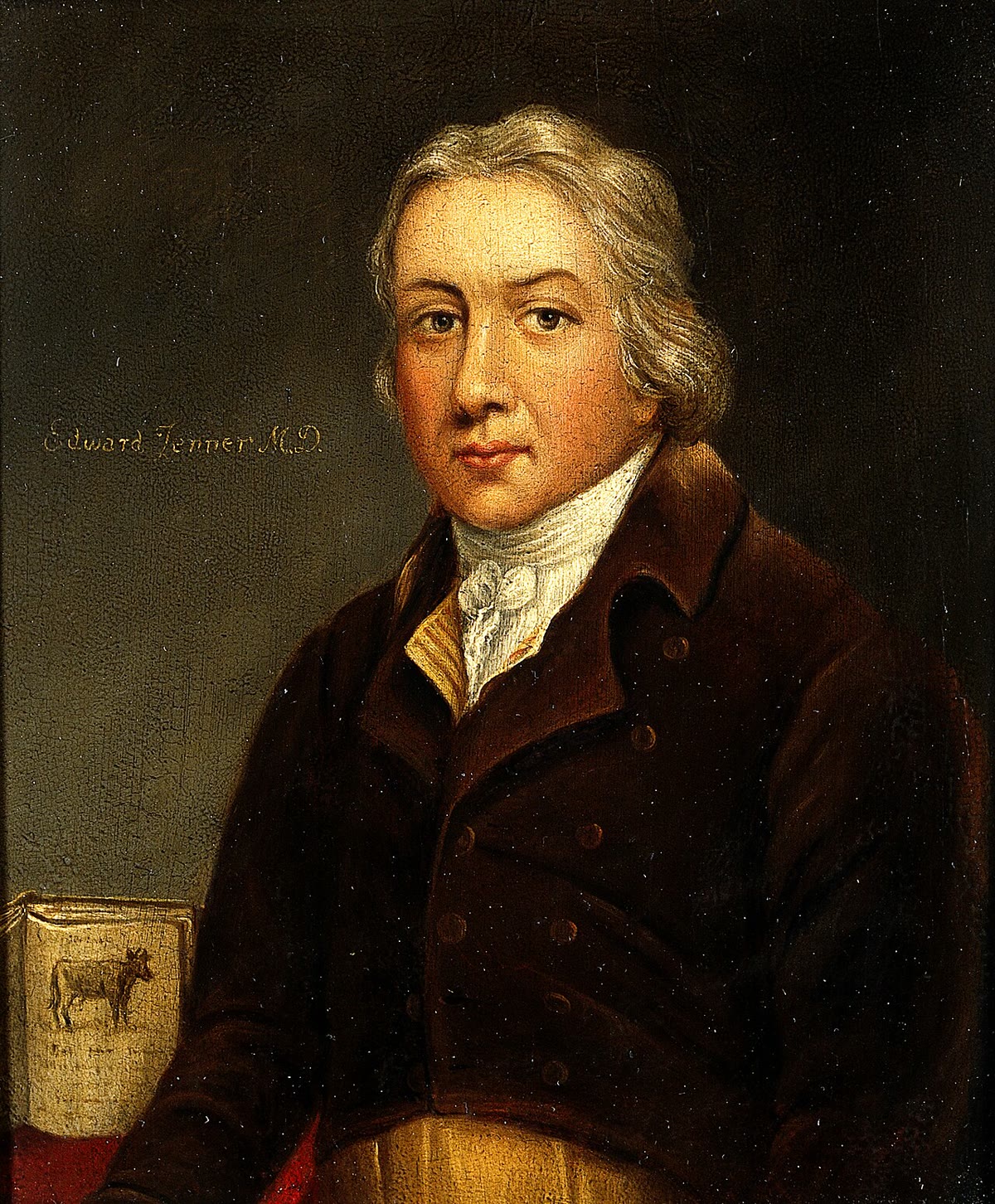
The history runs from Jenner’s 1796 gamble — milkmaids caught mild cowpox and never smallpox; a cowpox inoculation trained against the killer — through Pasteur’s deliberate weakened-microbe vaccines (Example 69.7’s author, completing his theory), to the twentieth century’s roll-calls: smallpox, humanity’s old scourge, eradicated — the virus extinct in the wild since the late 1970s — and polio driven to the map’s last corners. Trained memory, pooled, is the only weapon that has ever exterminated a human disease.
Method 70.8 (Reading any immunity event)
For any infection, recovery, vaccine or test result:
- stage the encounter: first landing or second? (memory changes everything);
- name the responders: engulfers’ rapid response, specialists’ clone army, or standing memory;
- read the signs correctly: inflammation and fever as defense at work, swollen nodes as barracks;
- for a vaccine: identify the presented description, and whose protection it pools.
70.4 Exercises
Exercise 70.1 ★
Who are the standing army and the first responders, and where are they made?
Solution
Solution of Exercise 70.1.
The white blood cells, made in the bone’s marrow and patrolling blood and tissues. First responders: the engulfers, which flow around intruders and digest them.
Exercise 70.2 ★
Translate the splinter’s four signs into defense events.
Exercise 70.3 ★
What is an antigen, an antibody, and the link between them?
Solution
Solution of Exercise 70.3.
An antigen is an invader’s surface mark — a molecular shape read as foreign. An antibody is a fitted molecule poured into the blood by the specialists. The link: the antibody’s shape fits that antigen, pinning and clumping its carrier for the engulfers.
Exercise 70.4 ★
Why must killer specialists destroy the body’s own cells in a viral infection?
Solution
Solution of Exercise 70.4.
Because a virus multiplies inside the body’s cells, on their machinery: no attack on the free virus stops the printing. Destroying the hijacked printer-cells is the only way to halt production.
Exercise 70.5 ★
What is a memory cell, and what does a second landing meet?
Solution
Solution of Exercise 70.5.
A long-lived specialist holding a beaten invader’s description. A second landing meets a prepared corps: response in hours, cleared before symptoms — immunity.
Exercise 70.6 ★
Define vaccination in one sentence built from “description” and “memory”.
Solution
Solution of Exercise 70.6.
Vaccination presents the immune specialists with an invader’s harmless description, so that memory is created without the disease.
Exercise 70.7 ★★
Why is fever a weapon rather than a malfunction — and what earlier conditions-rule does it exploit?
Solution
Solution of Exercise 70.7.
Because many pathogens multiply worse when warm — Proposition 42.8’s conditions-rule turned against the invader: the body deliberately runs hot to slow the enemy’s doubling while its clone army raises. Cost, yes; malfunction, no.
Exercise 70.8 ★★
“One measles, never two — yet colds forever.” Resolve both halves with Definition 70.5.
Solution
Solution of Exercise 70.8.
Measles’s antigens are stable: one victory’s memory fits every later encounter — one measles, never two. Cold viruses mutate fast: each winter’s strains wear descriptions the memory does not hold, so every cold is a first landing — colds forever, each one nonetheless remembered.
Exercise 70.9 ★★
The specialists’ clone army is “selection run inside the body”. Map the analogy onto Proposition 68.1’s three facts.
Solution
Solution of Exercise 70.9.
Variety: specialists with countless different receptors stand ready. Check: the antigen’s contact — only the fitting few are “selected”. Unequal multiplication: the selected multiply into the clone army, inheriting the fitting receptor. Selection’s three facts, run in days inside one body.
Exercise 70.10 ★★
Explain pooled protection — and who depends on it — with the outbreak’s fade-out.
Solution
Solution of Exercise 70.10.
An outbreak needs catchable hosts: each vaccinated neighbor is a dead end for transmission, and enough dead ends starve the spread before it reaches everyone — the fade-out. Dependents: those who cannot be trained — the too-young, the too-ill — who stand inside the pooled shield or nowhere.
Exercise 70.11 ★★
Run Method 70.8 on: (a) a tetanus booster after the rusty nail; (b) swollen neck nodes with a raging throat.
Solution
Solution of Exercise 70.11.
(a) Second-landing-by-arrangement: the booster re-presents tetanus’s description, restocking a fading memory — prevention timed to a fresh entry wound. (b) First landing, specialists’ phase: the nodes are the barracks, crowded with a clone army being raised against the throat’s invader — defense at work, not disaster.
Exercise 70.12 ★★★
Write the smallpox obituary as this book would: the virus’s mechanism, the trained memory that cornered it, the pooling that finished it — and why eradication is extinction (Proposition 30.8) worked for once in humanity’s favor.
Solution
Solution of Exercise 70.12.
The virus: a text borrowing human printers only — no animal reservoir, nowhere else to hide. The memory: Jenner’s trained corps, refined into a stable vaccine whose protection was lifelong. The pooling: a world campaign that vaccinated ring by ring until no landing found a catchable host — transmission starved everywhere at once. Eradication is extinction: the species-gone-forever of Proposition 30.8, achieved deliberately, mourned by no one — the one extinction humanity worked for, and the proof of what pooled memory can do.
70.5 Problem: The Vaccination Ledger
Problem 70.1
Weekend problem — a health center’s week, read by the immune method
A health center’s (invented) week: Monday, infant vaccinations; Tuesday, a farmer’s rusty-wire gash and booster; Wednesday, a measles case in an unvaccinated child, and the contacts checked; Thursday, blood tests reading antibody levels; Friday, the annual staff influenza vaccines.
Part I — The week’s cases.
- Monday’s infants receive weakened-microbe drops and fragment injections. Name what is being presented, and which program runs in the following weeks.
- Tuesday’s farmer: the gash is cleaned (which defense line?), and the booster given. What does a booster do to a trained memory — and why does tetanus, of all diseases, allow no first-battle gamble?
- Wednesday’s measles child: first landing, full program. Time-line the illness: rapid response outpaced, clone army raised, recovery — and what stands down after.
- The checked contacts divide: vaccinated (untroubled), recovered-long-ago (untroubled), and one unvaccinated infant, watched anxiously. Read each with Method 70.8’s first question.
Part II — The measurements.
- Thursday’s tests read antibody levels against past diseases and vaccines. What does a high level certify, and what cell stock does it imply?
- One patient’s levels have faded years after vaccination, and a booster is prescribed. Explain fading and boosting in memory-cell terms.
- Friday’s influenza vaccine is annual, unlike Monday’s once-or-twice programs. Which property of the influenza virus (Definition 70.5) forces the yearly retraining?
- Why does the center vaccinate its staff with special insistence? (Whose protection pools where, in a building full of the ill and the fragile?)
Part III — The ledger’s meaning.
- The unvaccinated measles child’s parents had feared vaccines and trusted “natural” first battles. Draft the doctor’s gentle arithmetic: compare the training’s cost with the first battle’s, for measles.
- The watched infant was too young for the vaccine. State who was supposed to be protecting it, and what that duty is called in Proposition 70.6.
- Connect Tuesday and Wednesday to the two historic names of Example 70.7: whose idea ran in each consultation?
- Close the ledger with the week’s one-sentence summary: what the center actually administers, in this chapter’s vocabulary.
Solution
Solution of Problem 70.1.
1. The invaders’ descriptions — antigens on weakened microbes and harmless fragments. The full selection-and-memory program: fitting specialists selected, clone armies raised, memory cells standing down into a trained corps.
2. Cleaning serves the first defenses — the door swept at entry. The booster re-presents the description and restocks the memory to full strength. Tetanus allows no gamble because its first battle is fought against a paralyzing poison from a deep, airless wound — the kind of battle bodies lose; training must precede it.
3. Days one to three: rapid response outpaced, the virus printing through the airways and skin. Week one’s fever and rash: the clone army raising — the battle’s cost worn visibly. Week two: antibodies and killers clear the printers; recovery. Standing down: a lifelong memory garrison — one measles, never two.
4. The vaccinated: trained — any landing is a second landing, cleared in hours. The recovered: same standing, memory from a real first battle. The infant: untrained — a first landing would run the full, dangerous program; hence the anxious watch.
5. That the corresponding memory stands: the antibody level is the garrison’s signature in the blood, implying memory cells stocked and ready to pour more on contact.
6. Memory garrisons thin with the years — levels fade below the rapid-clearance line. A booster is a fresh presentation: the surviving memory multiplies anew, restocking the garrison to strength.
7. Its fast mutation: each season’s strains carry re-spelled descriptions, so last year’s training mismatches this year’s antigens — the corps must be retrained annually to the current description.
8. Because staff are the building’s connectors — daily beside the ill and the fragile, exactly those whose own training is absent or weakened. Vaccinated staff are dead ends between beds: their pooled protection shields the ward’s most dependent.
9. The training’s cost: a sore arm and a day’s grumbles, memory gained without a battle. The first battle’s cost, for measles: a week’s high fever at best, with a real fraction of pneumonias, and worse — run on a child with no memory at all. “Natural” names the expensive road to the same memory, minus the safety.
10. The vaccinated around it — family, classes, the town: pooled protection, the shield that covers those too young to be trained. The duty’s name in the proposition: protection pooling — the shield held over the untrainable.
11. Tuesday ran Pasteur’s line: the deliberate weakened-or-inactivated presentation, refined into boosters. Wednesday’s watched contacts and starving outbreak ran Jenner’s: trained memory standing between a virus and its next host.
12. “The center administers memory: trained, boosted, and pooled — the one medicine that works before the enemy arrives.”