Primary & Middle School Biology · Grades 1–9
69Microbes and Infection
They have shadowed this book since grade one’s invisible germs (Definition 6.1): risen to workforce in the bakery (Chapter 43), to decomposer crews in the soil, to evolving adversary in the hospital ward (Example 68.4). This chapter finally gives the microbes their full account: what they are, how the harmful minority attacks, and how the body’s outer defenses — and ours — hold the doors.
69.1 The microbial world
Definition 69.1 (Microbes, sorted)
Microorganisms — microbes — are living things too small to see unaided. The main kinds:
- bacteria: single cells without a true nucleus, far smaller than your cells, dividing fast (Definition 45.4’s world) — everywhere, in numbers beyond count;
- single-celled fungi and others: yeasts (Example 43.5), molds’ spores, the pond drop’s swimmers;
- viruses: smaller still, and different in kind — a packaged scrap of genetic text (Definition 65.4’s letters) in a coat, with no cell and no life of its own: a virus does nothing until it enters a living cell and turns that cell’s reading machinery to copying the intruder’s text. On the signs of Proposition 1.3, viruses sit at life’s very edge.
Proposition 69.2 (Mostly harmless, often essential)
The harmful reputation is a minority report. Most microbes ignore us; many serve us: the decomposer crews (Definition 42.3), the food workforces, the soil’s chemists — and your own resident flora: the trillions of harmless bacteria carpeting skin and gut, aiding digestion and, by sheer occupation, crowding intruders off the ground. Only a small minority — the pathogens — cause disease.
Proof. Admitted at this level. ∎
Example 69.3 (One body, three relations)
On your skin this minute: residents by the billion, holding the surface (relation one: alliance). In your yogurt at breakfast: workers, souring on command (relation two: employment, Example 43.6). On the rusty nail in the shed: spores of the lockjaw bacterium, waiting for a deep cut (relation three: the pathogen minority, and the reason for Chapter 70 and the tetanus booster).
69.2 Infection: the attack, staged
Definition 69.4 (Infection’s stages)
Infection runs in stages, each with its name:
- transmission: the pathogen travels — touched surfaces and hands, coughed droplets, contaminated food and water, blood, and the sexual route Definition 59.2 flagged;
- entry: through a breach — cut skin, or the body’s open doors: airways, gut, and the routes above;
- multiplication: warm, wet and fed, the arrivals divide — bacteria by Proposition 42.8’s conditions-rule, hours doubling their numbers; viruses by turning cells into copy-shops;
- disease: symptoms — from the damage itself, from bacterial poisons, and partly (next chapter) from the defense’s own battle.
Example 69.5 (Two invaders, contrasted)
The cut’s bacterium against the winter’s cold virus. The bacterium: enters the breach, multiplies between cells in the warm wet tissue, its wastes poisoning the neighborhood — the throb and pus of a septic finger. The virus: rides a droplet to the airway lining, enters the lining cells themselves, and each hijacked cell releases a crowd of copies before failing — the raw throat and streaming nose of its trail. Different mechanics; the antibiotic that starves the first cannot touch the second, for the second borrows your machinery, and drugs against it are hard to aim.
69.3 Holding the doors
Proposition 69.6 (The first defenses)
Before any battle, the body holds its borders:
- skin: dry, layered, self-renewing — the wall (Definition 5.1’s organ, on garrison duty);
- linings and their brooms: the airways’ cleaning surfaces (Proposition 51.6 showed them overloaded), tears’ and saliva’s rinsing chemistry, the stomach’s acid bath (Problem 50.1 sterilizes as it digests);
- the residents: the flora’s occupied ground, little room for landings;
and hygiene extends them: the soap of Method 6.3 (now with its full mechanism — transmission interrupted), safe water, cooked and cold-kept food (Remark 43.7’s conditions-refusal), the sterilized needle, the condom’s barrier. Every hygiene rule of this book is a transmission or entry stage, blocked.
Proof. Admitted at this level. ∎
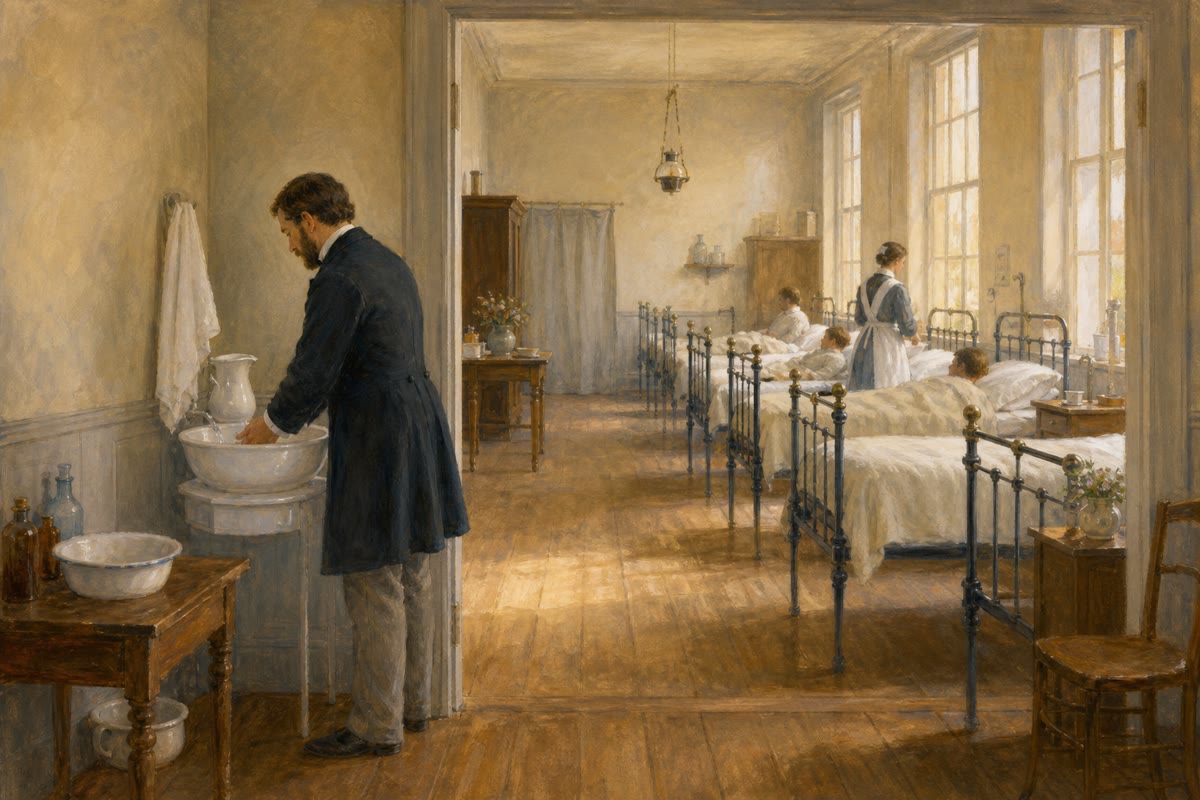
Example 69.7 (The two doctors who moved the numbers)
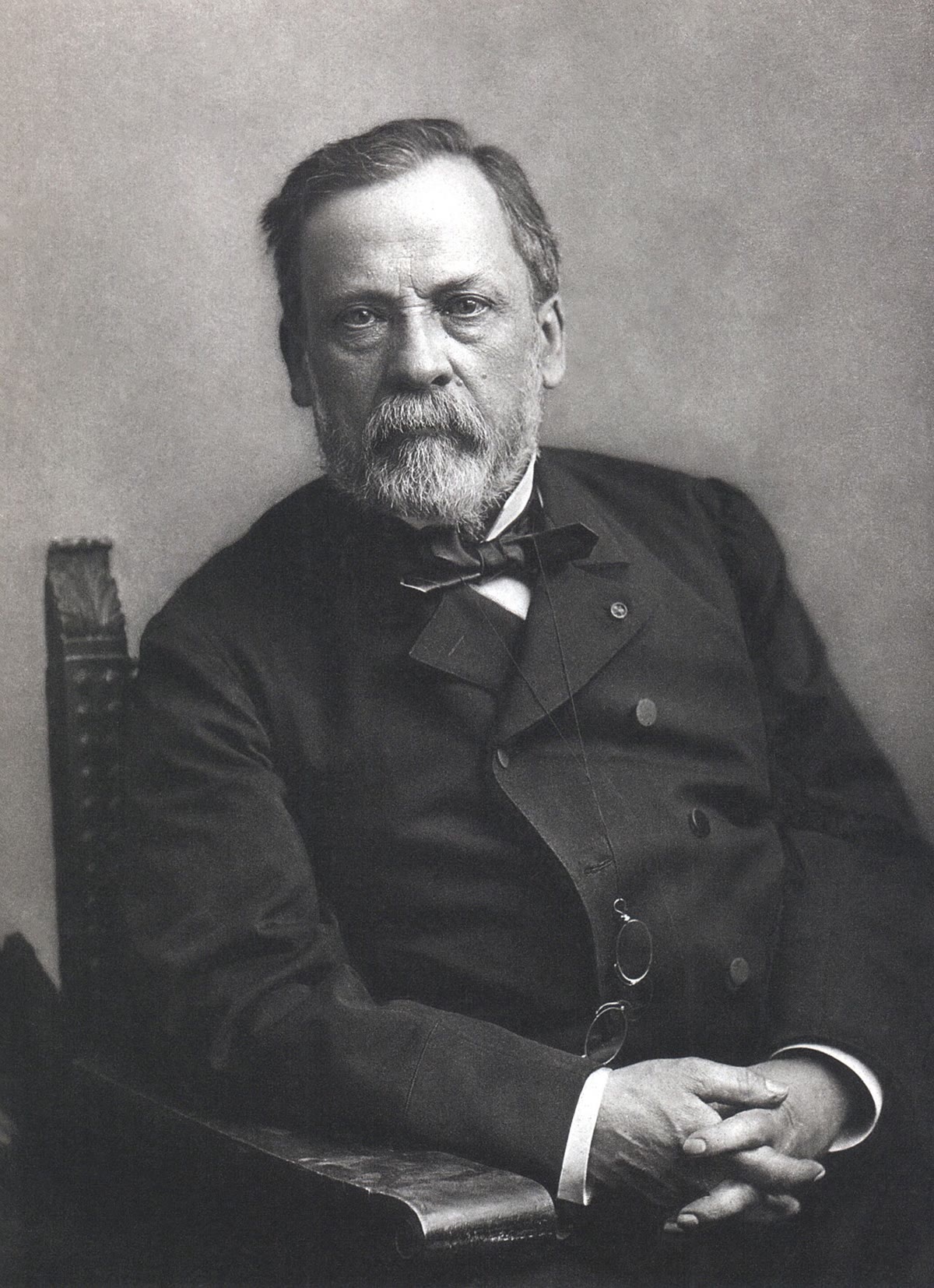
Two names anchor the history. Semmelweis, 1840s Vienna: childbed fever deaths collapsed on his maternity ward when doctors washed hands between autopsy room and delivery — transmission interrupted before anyone had seen the traveler. Pasteur, a generation later, showed the travelers themselves: microbes, not “bad air”, souring the wine, killing the silkworms, infecting the wounds — and heat (his pasteurization) or sterilization stopping them. Germ theory turned hospitals from dangers into defenses within a lifetime.
Method 69.8 (Auditing an infection risk)
For any situation — kitchen, wound, ward, crowd:
- name the plausible pathogen and its kind (bacterium, virus, fungus);
- trace its transmission route to you;
- find its entry door;
- ask what multiplies it — warmth, moisture, food, time;
- block the cheapest stage: wash, cook, cover, chill, sterilize, vaccinate (Chapter 70 explains the last).
69.4 Exercises
Exercise 69.1 ★
Name the main microbe kinds, and what sets viruses apart.
Exercise 69.2 ★
What is the resident flora, and what two services does it render?
Exercise 69.3 ★
List infection’s four stages with one example each.
Solution
Solution of Exercise 69.3.
Transmission (a cough’s droplets); entry (a cut, the airways); multiplication (divisions doubling by the hour, or hijacked cells copying); disease (the septic finger’s throb, the cold’s raw throat).
Exercise 69.4 ★
Contrast the septic cut and the cold: where does each invader multiply?
Exercise 69.5 ★
Name four first defenses and the stage each holds.
Solution
Solution of Exercise 69.5.
Skin: the wall at entry. The linings’ brooms and baths (airway cleaning, tears, stomach acid): entry and early multiplication. The resident flora: entry — ground occupied. Hygiene’s soap, cooking and cold: transmission and multiplication.
Exercise 69.6 ★
What did Semmelweis’s hand-washing interrupt, and what did Pasteur add?
Exercise 69.7 ★★
Why do antibiotics leave colds untouched? Answer with the two invaders’ mechanics.
Solution
Solution of Exercise 69.7.
Antibiotics starve and break bacteria — independent cells with their own machinery to poison. A cold’s virus has no machinery of its own: it runs on yours, and a drug aimed at its workings aims at your cells’ — which is why the bacterium’s medicine leaves the virus untouched.
Exercise 69.8 ★★
Re-derive three childhood hygiene rules (Chapter 6) as stage-blocks, mechanism named.
Solution
Solution of Exercise 69.8.
Wash before eating: blocks hand-to-mouth transmission. Wash after the toilet: blocks the gut route’s exit-to- entry loop. Blow-and-cover the cough (and the sneeze’s elbow): blocks droplet transmission at the source. (Teeth and food rules block the mouth’s multiplication sites.)
Exercise 69.9 ★★
Run Method 69.8 on a summer picnic’s chicken salad, car-warmed for three hours.
Solution
Solution of Exercise 69.9.
Pathogen: food-poisoning bacteria, on the chicken. Transmission: the dish itself. Entry: the gut. Multiplied by: three warm car hours — conditions-rule feeding a doubling every half hour or so. Cheapest block: the cold chain — a cool-box (or eating it fresh); next-cheapest, thorough cooking beforehand.
Exercise 69.10 ★★
Why does washing hands between tasks matter more than washing often? (Semmelweis’s ward holds the answer.)
Solution
Solution of Exercise 69.10.
Because hands are couriers between compartments: Semmelweis’s doctors were clean by any daily standard yet carried the ward’s killer from corpse to mother. The wash that matters is the one at the boundary — raw chicken to salad, toilet to table — where the route would otherwise connect.
Exercise 69.11 ★★
Place the ward of Example 68.4 in this chapter: which stage does the antibiotic attack, and what does its ragged use breed?
Solution
Solution of Exercise 69.11.
The antibiotic attacks multiplication — breaking the dividing bacteria. Used raggedly it becomes a selection check run half-way: the susceptible die, the resistant minority inherits the ward — breeding the pathogen the next patient meets.
Exercise 69.12 ★★★
“A virus is a text that borrows a printer.” Unfold the image with Definition 65.4 and Definition 69.1 — and use it to say why viruses sit at life’s edge, and why they are hard to drug.
Solution
Solution of Exercise 69.12.
The text: a scrap of genetic letters, the same alphabet as every cell’s (Remark 65.7). The printer: a living cell’s reading-and-building machinery, which the entered text turns to printing copies of itself. Life’s edge: alone, the virus does nothing on Proposition 1.3’s list — no feeding, no growth, no division; borrowed, it runs a parody of reproduction. Hard to drug: there is no virus-machinery to poison — only the printer, and the printer is you.
69.5 Problem: The Outbreak Notebook
Problem 69.1
Weekend problem — a school outbreak, traced stage by stage
A (fictional) school outbreak: within one week, half of class 9B reports fever and cough; cases then dot the other classes. The school nurse keeps an outbreak notebook and asks the biology class to help read it.
Part I — Reading the spread.
- The first case — the index — sat in 9B; the next eight share her row and her table-tennis partners. Name the likely transmission route, and the entry door.
- Cases double every two days at first. Which stage’s arithmetic is showing, and whose machinery is doing the copying if the agent is a virus?
- The nurse’s checklist: fever’s onset, cough, raw throat. Which stage do symptoms mark, and from what two sources do they arise?
- Why did the outbreak leap classes at exactly the week’s two whole-school assemblies?
Part II — The counter-attack.
- The school’s measures: sick students home; windows opened (Exercise 26.10); hand-washing drilled; shared equipment wiped. Assign each measure its blocked stage.
- A parent demands antibiotics for all. Draft the doctor’s answer for a viral outbreak — and the selection warning (Exercise 68.10) if antibiotics were scattered anyway.
- The canteen simultaneously reports two stomach cases traced to an unrefrigerated dessert. Audit that side-outbreak by Method 69.8 — different agent kind, different stages.
- Why does the nurse map who sat where rather than treat cases as random? What is an outbreak map, in transmission terms?
Part III — The debrief.
- Write the outbreak’s biography in the four stages, index case to fade-out.
- The outbreak faded before reaching every student. Offer two mechanisms — the measures’ blocks, and the next chapter’s hint: those already immune from last year’s cousin strain.
- Add the history paragraph: which two nineteenth-century lessons (Example 69.7) did the school’s whole response descend from?
- Close the notebook with the audit method as a motto: one sentence on where outbreaks are cheapest to stop.
Solution
Solution of Problem 69.1.
1. Droplet transmission — coughed and spoken — with shared-surface help at the table-tennis bats; entry by the airways.
2. Multiplication’s: each case’s hijacked lining cells print copies that seed the next cases — the doubling is the virus’s borrowed machinery, compounding.
3. Disease. From the damage of hijacked, failing lining cells — and, in part, from the defense’s own battle, as the next chapter details.
4. Because assemblies connect every class’s droplet-range for an hour: transmission scales with crowding, and the school’s two densest mixings were the route between compartments.
5. Sick students home: transmission removed at source. Windows: droplet doses diluted — transmission. Hand-washing: the surface route cut — transmission. Wiping equipment: the shared-object route cut — transmission. (All aimed at the same cheapest stage.)
6. “Antibiotics kill bacteria; this agent is a virus running on the children’s own cells — the drug cannot touch it, and scattering it anyway would only run a selection sieve over everyone’s resident bacteria, breeding resistance for the day antibiotics are truly needed.”
7. Agent: food-poisoning bacteria. Transmission: the dessert. Entry: the gut. Multiplication: unrefrigerated hours — warmth, moisture, food, time, all granted. Block: the fridge — conditions refused; the two outbreaks share a school and nothing else.
8. An outbreak map is transmission made visible: who-sat-where draws the route — rows, partners, assemblies — and the route, once drawn, shows where to cut. Random treatment fights cases; the map fights the spread.
9. Transmission: the index case’s droplets, row and partners first, assemblies to the school. Entry: airways, class by class. Multiplication: two-day doublings through week one. Disease and fade-out: fevers crest, measures cut the routes, the susceptible pool thins — the curve turns down.
10. The measures’ blocks starved the routes — and the pool itself was smaller than the roll: students carrying last winter’s cousin-strain immunity could not be lit, and an outbreak dies when too few catchable remain: the next chapter’s memory, previewed.
11. Semmelweis’s: cut the courier routes — home isolation, washed hands, wiped bats. Pasteur’s: know the traveler — name the agent, refuse it conditions, aim the remedy at its kind and not at custom.
12. “Outbreaks are cheapest to stop at transmission — soap, air, distance and a closed cool-box beat any medicine that waits for multiplication.”