Primary & Middle School Physics · Grades 1–9
29Energy in Everyday Life
A wind-up toy scurries across the floor, slows, and stops — until you wind it again. A flashlight dims as its batteries tire. You yourself run out of steam before lunch. Everything that moves, shines, sounds or warms seems to be spending something. Physics has a name for that something, and it may be the most important word in this whole book: energy.
29.1 The something that gets things done
Definition 29.1 (Energy)
Energy is what it takes to make things happen: to set things moving, to lift them, to light them up, to warm them, to make them sound. Nothing goes, glows, or grows without energy being spent on it — and whatever is doing the spending must first have energy to spend.
Definition 29.2 (Energy stores)
An energy store is anything holding energy ready for use. The great everyday stores: food (your body’s fuel), fuels like wood and petrol, charged batteries, a wound-up spring, water held high behind a dam — and the hot Sun, pouring energy down on everything, all day, for free.
Example 29.3 (Spot the store)
Every going thing has a store behind it. The scurrying toy: its wound spring. The flashlight: its batteries. The car: the fuel in its tank. You: your breakfast. The sailboat: the moving air of the wind. When the store runs empty — spring unwound, batteries flat, tank dry, lunchtime near — the going stops.
Remark 29.4 (No feeding, no going)
For centuries, inventors chased machines that would run forever on nothing — wheels that turn themselves, clocks that never need winding. Every single one failed. Their failure is one of physics’ deepest lessons: energy is never conjured from thin air. Whatever runs is being fed — find the store, and you understand the machine.
29.2 Energy changes form
Example 29.5 (Forms of energy)
Energy shows itself in different forms: motion energy in the rolling ball and the blowing wind; light energy pouring from lamp and Sun; heat energy in everything warm; electrical energy traveling through wires; stored energy waiting quietly in food, fuel, springs and lifted things. Same something, many forms.
Proposition 29.6 (The energy chain)
Whenever something happens, energy is drawn from a store and passed along, usually changing form on the way. It is never created from nothing — and never truly destroyed either: what a machine “uses up” has only been passed on, most often ending, sooner or later, as gentle warmth spread into the surroundings.
Method 29.7 (Reading an energy chain)
To understand any device, trace its chain:
- find the store the energy comes from;
- find the converter — the part where the energy changes form;
- name the forms coming out — the useful one, and the warmth that leaks alongside.
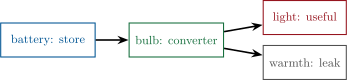
The flashlight, traced: battery (store) bulb (converter) light (useful) a little warmth (the leak — feel the bulb).
Example 29.8 (Chains everywhere)
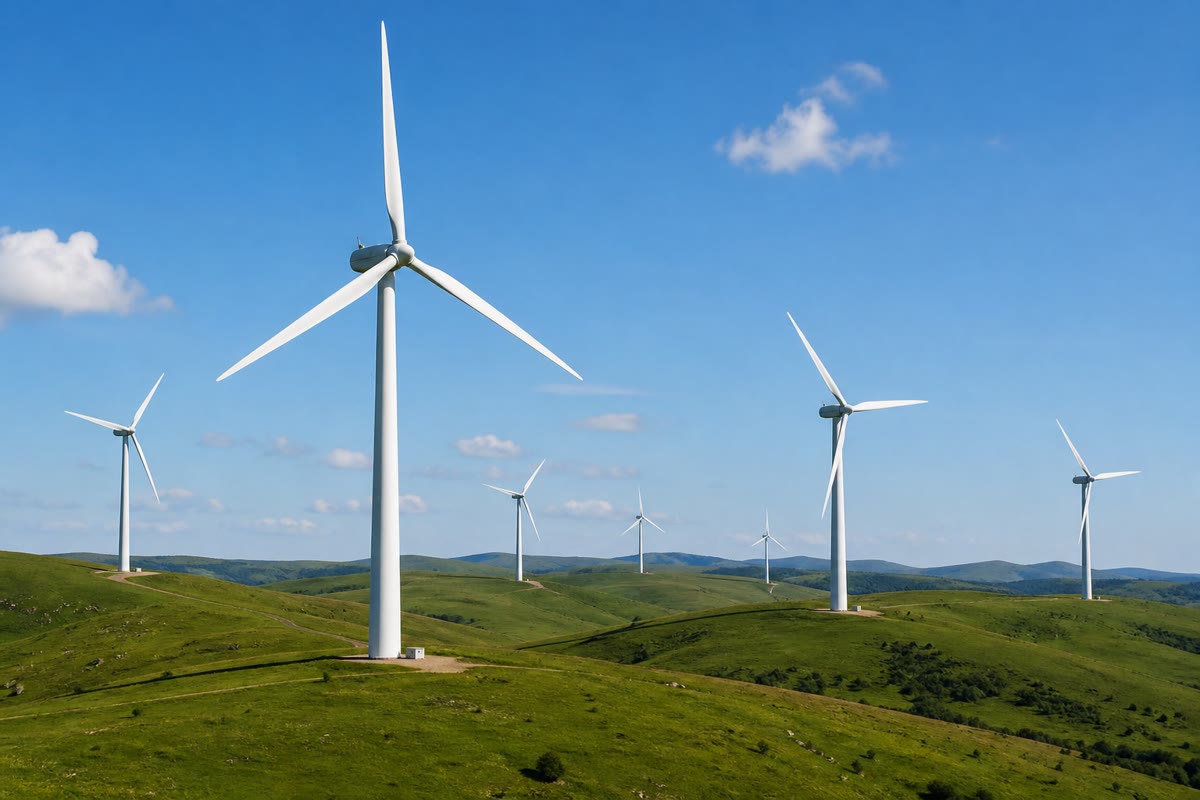
Your morning ride, traced: breakfast (store) your muscles (converter) motion of the bicycle warmth (you feel it — you glow). The wind farm: moving air turning blades electrical energy in the wires light in your lamp tonight. The dam: high water falling water spins the turbines electrical energy. Long chains are just short ones linked: form after form after form.
29.3 The Sun at the head of the table
Example 29.9 (Almost every chain starts at the Sun)
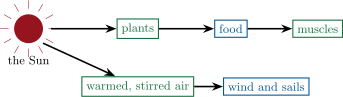
Follow most chains backward and you arrive at the Sun. Breakfast? Plants grew it by catching sunlight; your cereal is tinned sunshine. Wind? The Sun warms the lands unevenly, and the stirred air is wind — so even sailboats run on sunlight. Wood? Sunlight stored by trees. The dam’s high water? The Sun lifted it: it evaporated the sea, the vapor rained on the mountains. Solar panels just skip the middlemen.
Remark 29.10 (A word we will sharpen)
For now, energy is a story well told: stores, forms, chains. Can it be measured, like length in metres and mass in grams? It can — energy has its own unit and its own exact bookkeeping, and they arrive later in this book, once you have met speed and force properly. The chains you trace this year are the map; the numbers will come to live on it.
29.4 Exercises
Exercise 29.1 ★
What is energy, in the words of this chapter? Name four things that cannot happen without it.
Exercise 29.2 ★
Find the store: a scurrying wind-up mouse; a cyclist; a campfire; a sailboat; a flashlight.
Exercise 29.3 ★
Name five forms of energy, with one example of each from your own day.
Exercise 29.4 ★
Trace the energy chain of a toaster, as in Method 29.7: store, converter, forms out.
Exercise 29.5 ★
Trace the chain from a dam’s lake to your reading lamp tonight.
Exercise 29.6 ★
A phone “dies”. What has actually run out? Where did that energy go, according to the chain proposition?
Exercise 29.7 ★
Why does a laptop grow warm underneath while you use it? Which link of the chain is showing itself?
Exercise 29.8 ★
Show that a sailboat runs on sunlight, by tracing its chain backward step by step.
Exercise 29.9 ★★
An inventor announces a lamp that “needs no battery, no plug, no fuel — it simply shines forever”. Which lesson of Remark 29.4 does the announcement defy? What question should you ask the inventor first?
Exercise 29.10 ★★
A rubber ball dropped from shoulder height bounces lower and lower and finally lies still. “Its energy is destroyed,” says Leo. Use Proposition 29.6 to defend a better ending to the story — into what final form did the bouncing energy slip?
Exercise 29.11 ★★
Some houses heat water in black rooftop panels; some cook with sunlight and curved mirrors; solar cells make electricity from daylight. Explain the phrase “solar panels just skip the middlemen” from Example 29.9: which middlemen stand between the Sun and a wood fire’s warmth?
Solution
Solution of Exercise 29.11.
Between Sun and wood fire stand the middlemen: trees, which spent years catching sunlight and storing it as wood, and the fire that finally unpacks the store. The rooftop panel takes the sunlight’s energy directly — no tree, no years, no fire.