Primary & Middle School Physics · Grades 1–9
6Magnets
On the refrigerator door, little figures hold up drawings without glue, without tape, without hooks. Pull one off: nothing sticky on its back — yet it jumps back and holds on. These little figures hide a magnet, and magnets are full of surprises worth a whole chapter of experiments.
6.1 What a magnet grabs
Definition 6.1 (Magnets)
A magnet is a special piece of stone or metal that pulls certain things toward itself without touching them. We say the magnet attracts them. The things it attracts stick to it; the rest do not care about it at all.
Example 6.2 (Try it: the grabbing test)
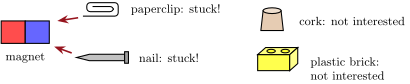
Walk around your home with a magnet and try it on: a paperclip, a nail, the refrigerator door, a wooden spoon, a plastic brick, a sheet of paper, a glass, a cork. The magnet grabs the paperclip, the nail and the refrigerator door — and ignores every one of the others. Only some things obey magnets.
Example 6.3 (The magnet’s favorite metal)
Look at what got grabbed: paperclip, nail, refrigerator door. They are all made of iron (or of steel, which is mostly iron). Wood, plastic, paper, glass, stone: never. And here is the fine surprise: even some metals are ignored — try a coin or a sheet of kitchen foil. A magnet is not a metal-lover; it is an iron-lover.
6.2 The magnet’s reach
Example 6.4 (Try it: grabbing through things)
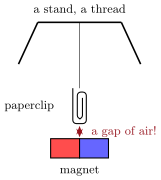
Put a paperclip on the table and hold your magnet under the tabletop, just below the clip. Move the magnet: the clip slides around the table as if by magic — the pull goes right through the wood. It also works through paper, through cardboard, through a glass of water: drop a clip in the glass and walk it up the side with the magnet, keeping your fingers dry.
Remark 6.5 (Pulling without touching)
Think how strange this is. To move a toy, you must touch it: push it, pull it, kick it. The magnet moves the clip across empty air, through wood, through water, touching nothing. Only very few things in nature can act without touching — keep this wonder in a corner of your head, for it will come back, much later, as one of the deepest ideas in this course.
Method 6.6 (Magnet fishing)
A game for two, and a fair test of the reach:
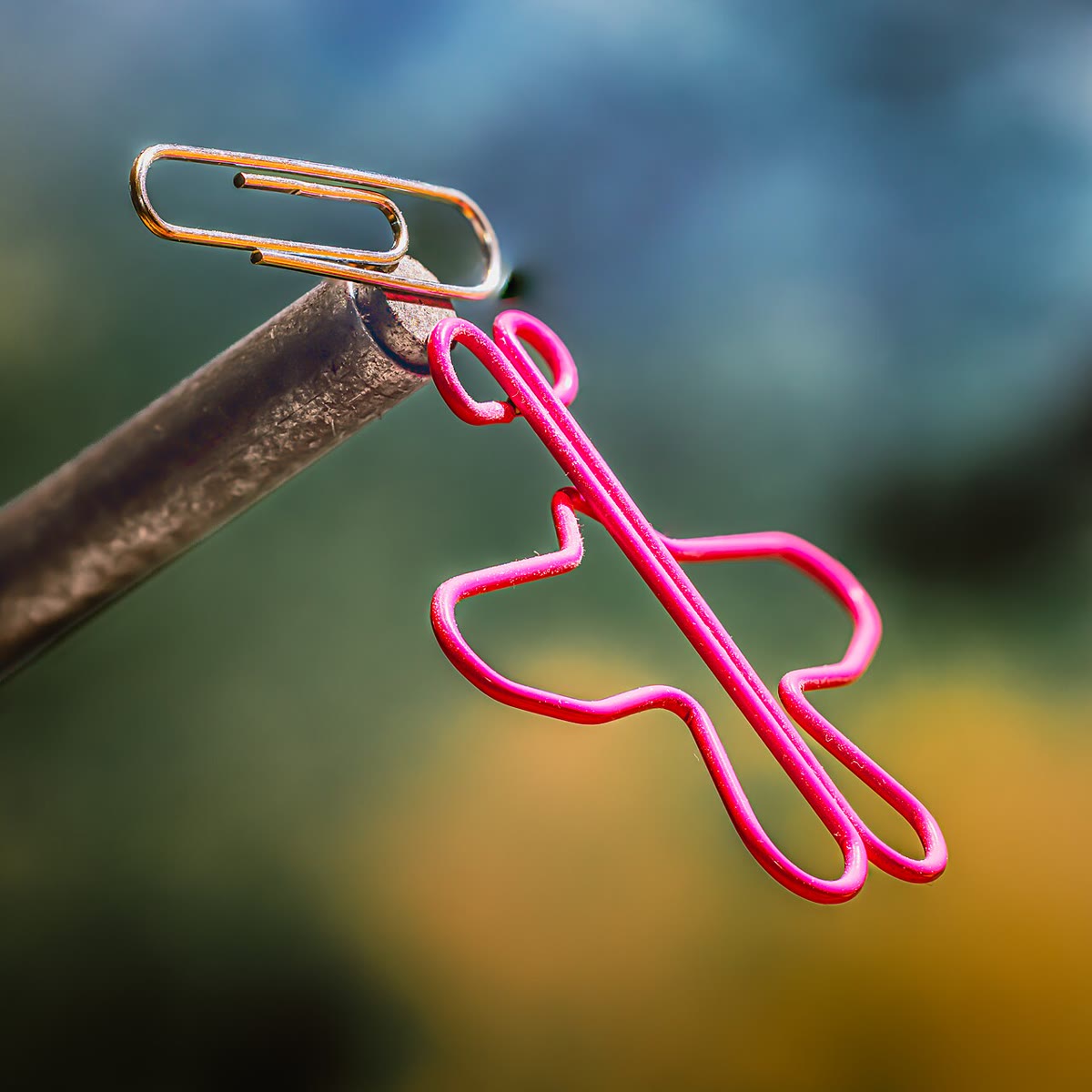
- Tie a magnet to a string — this is the fishing rod;
- scatter paperclips on the floor — these are the fish;
- lower the magnet slowly from high above one clip;
- stop lowering the moment the clip jumps up to the magnet.
The jump happens only when the magnet is close: the pull is strong near the magnet and fades quickly farther away.
6.3 Two magnets together
Example 6.7 (Try it: pull or push?)
Take two magnets, one in each hand, and bring their ends slowly together. Sometimes they leap at each other and snap together. Now turn one magnet around, other end first: bring them together again, and this time you feel a soft, springy push — the magnets refuse to touch, as if an invisible cushion sat between them. Same two magnets: one way they pull, turned around they push.

Remark 6.8 (The two ends)
So the two ends of a magnet are not the same, even when they look alike! Each magnet has two different ends, and the game of pull and push depends on which ends meet. Try the paperclip test too: clips cluster at the two ends of a bar magnet and mostly ignore its middle. These two special ends have names and a famous job — guiding travelers across the world — but that story waits for a later year of this book.
6.4 Exercises
Exercise 6.1 ★
Sort into “the magnet grabs it” and “the magnet ignores it”: a nail; a cork; a paperclip; a plastic duck; a steel spoon; a sheet of paper.
Solution
Solution of Exercise 6.1.
Grabbed: the nail, the paperclip, the steel spoon. Ignored: the cork, the plastic duck, the sheet of paper.
Exercise 6.2 ★
Which stuff does a magnet love? Name two metals or materials the magnet ignores anyway.
Solution
Solution of Exercise 6.2.
Iron (and steel, which is mostly iron). Ignored anyway: a coin and kitchen foil — metals, but not iron.
Exercise 6.3 ★
A drawing holds on the refrigerator door under a magnet figure. What is between the magnet and the door? What does this show about the magnet’s pull?
Solution
Solution of Exercise 6.3.
The sheet of paper (the drawing) is between them. The magnet’s pull goes right through the paper to the iron door — it works through things.
Exercise 6.4 ★
A paperclip falls into a glass full of water. How can you get it out with a magnet, without wetting your fingers?
Solution
Solution of Exercise 6.4.
Slide the magnet against the outside of the glass, next to the clip, and walk it slowly up the side: the clip follows inside, up to the rim, pulled through the glass and the water.
Exercise 6.5 ★
In the magnet fishing game of Method 6.6, the clip jumps only when the magnet comes close. What does this tell you about the pull far from the magnet?
Exercise 6.6 ★
Bring two magnets end to end: they snap together. What single move makes the same two magnets push apart instead?
Solution
Solution of Exercise 6.6.
Turning one of the two magnets around, so that the other end comes first. Then they push apart instead of snapping together.
Exercise 6.7 ★
Where do paperclips cluster on a bar magnet: at the middle, or at the ends? What does this say about where a magnet is strongest?
Solution
Solution of Exercise 6.7.
At the ends — clips mostly ignore the middle. A magnet is strongest at its two ends.
Exercise 6.8 ★
Name one way a magnet is like your hand moving a toy, and one way it is completely different. (Think of Remark 6.5.)
Solution
Solution of Exercise 6.8.
Alike: both can pull a thing toward you. Different: your hand must touch the toy, while the magnet pulls the clip across empty air, through wood and through water, touching nothing.
Exercise 6.9 ★★
Tom says: “Magnets attract everything made of metal.” Design a little experiment with a coin, a nail and kitchen foil to test Tom’s sentence, say what will happen — and correct his sentence.